A Christian View of Government – Part II

Factors that deliver a nation from tyranny or anarchy: … (continued)

4. Adequate power of government

a) Governments must have enough power to maintain their own stability.

=a “lack of centralization” in a government leads to disorder and poverty. The Bible recognizes the evil that results when there is no effective government and anarchy prevails. Judges 17-21 shows what happens when there is no effective government at all (Judg 17:6; 18:1; 19:1; 21:25).

5. Limited power of government

a) The power of a government must be limited enough so that it does not take too much freedom from the people.

i. Tradeoff between government power and individual freedom. (greater power = greater potential of corruption)

b) In the United States there are many provisions in the Constitution designed to limit the power of government:

i. I) Freedom of speech, freedom of the press, freedom of religion, and freedom of assembly, II) Freedom to petition the

government for redress of grievances, III) Right to bear arms, IV) Term limits for the office of president, and V) Regular

election of members of Congress.

6. Separation of powers in Government

a) In the Bible several passages support the ideas of limited governmental power and separation of powers.

i. The OT gives many examples of kings who had unchecked power and abused it: Saul, David (2 Sam 11), Solomon (1 Kings 11:3-4; 10:14-20 cf. Deut 17:17), the divided monarchy (1-2 Kings; 1-2 Chronicles).

ii. The Bible also contains a number of positive examples of divided power: Tribes, clans and families in the OT, the calling of 12 apostles (Matt 10:1-4; Acts 1:15-26), shared roles as seen with Peter and James as the spokesman for the apostles (Acts 2:14; 3:12; 15:7; 15:13; 21:18; Gal 1:19; 2:9, 12), the Jerusalem Council (Acts 15:22), and government of local churches by elders (Titus 1:5; James 5:14).

7. Government accountability to the people

a) Regular, fair elections, free access to information about government actions and spending, and term limits for the most powerful offices all help to insure such accountability.

b) Examples in scripture indicate that government works best with the consent of those who are governed.i. Ex 4:29-31; 1 Sam 7:5-6; 1 Sam 10:24; 2 Sam 2:4; Acts 6:3.

c) There are negative examples in scripture of tyrants who did not gain the consent of the people but ruled harshly. i. Rehoboam (1 Kings 12:15), Pharaoh (Ex 3:9-10), Philistines (Judg 14:4), Nebuchadnezzar (2 Kgs 25:1-21).

Should a Christian Vote?

A Christian in a democracy has, by birthright, been given responsibility to govern the nation, through an elected representative. The problem with representative democracy is that unless you run for office yourself, you will seldom find a representative who represents you exactly. We are forced to choose between principled voting or pragmatic voting.

If we vote on principle, we vote for the representative who most closely represents our vision of society and government, regardless of his or her chances at overall success.

If we vote pragmatically, we vote for the least evil representative, or for the most likely contender to the party we do not wish to see in government.

Ethics sometimes requires a ‘greater-good’ choice, or a limiting ‘evil’ choice. However, there are certain matters where the pragmatism in question could become evil:

Right to life: no one we vote for should be in favour of murdering the unborn.

Justice: no one we vote for should be in favour of rehabilitating convicted murderers.

Theft: no one we vote for should be in favour of taking another’s private property. To abstain from voting altogether should usually be because you see no viable representative. This is then an abstention out of conscience. We should not refuse to vote out of apathy, disdain or cynicism.

Civil Disobedience

We know from the example of Daniel, the apostles, and the Hebrew midwives, that we do not have to obey
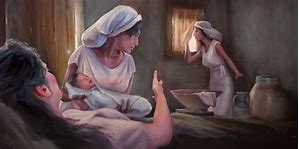
government at all times. When then are we permitted to disobey? Two positions have emerged:

Antipromulgation Anticompulsion
When it permits evil When it commands evil
When it promulgates evil laws When it compels evil actions
When it limits freedom When it negates freedom
When it is politically oppressive When it is religiously oppressive

Biblically, we see the anti-compulsion position:

  1. Refusal to kill babies (Ex 1:15-21)
  2. Refusal to worship an idol (Dan 3)
  3. Refusal to pray to the king and not to God (Dan 6)
  4. Refusal to stop preaching (Acts 4:18)
  5. Refusal to worship the anti-Christ (Rev 13)

Civil Disobedience should be non-violent resistance, not violent rebellion.

How to Respond to Oppressive Governments

  1. Pray for them (1 Tim 2:1-2)
  2. Work peacefully and legally to change government.
  3. Disobey oppressive commands. (Dan 3, 6)
  4. Flee Oppressive Governments (1 Kings 18)
  5. Patiently Endure Suffering (1 pet 4:12-13)
  6. Trust the Providence of God (Rom 12:19)

What about revolution?

Revolution = violent fight against existing government. 

  1. God exhorts against joining revolutionaries (Prov 24:21) b.
  2. Revolutions are condemned (Korah, Absalom, Jereboam). The God-ordained revolution against Athalia was necessary to preserve the bloodline of Messiah.
  3. Israel didn’t fight Pharaoh, it fled.
  4. Jesus exhorted against using the sword for that reason (Mat 26:52), or retaliating against others, including government (Matt 5:38-39).

Adapted from Wayne Grudem & Norm Geisler
  – David De Bruyn, Professor of Church History, Shepherds’ Seminary Africa

A Christian View of Government – Part I

The Reason for Government
The civil authority “is God’s servant for your good” (Rom 13:4). Government is meant to protect its citizens from certain evils. In the NT believers are invited to pray for their government officials so that they will be protected (1 Tim 2:2).

1. Protection against crime
a. The Bible teaches that prevention of crime is a primary responsibility of civil governments (1 Pet 2:14; Rom 13:4, Eccl 8:11; Prov 17:15; Isa 5:22-23).

2. Protection against disease
Epidemics of disease have economic implications in reducing productive work, hindering economic  growth.

3. Protection against the violations of contracts 
Violation of contracts creates a hostile environment for businesses and business transactions (Ex 20:15-16).

4. Protection against violations of patents and copyrights
If a nation decides not to protect patents and copyrights (i.e. China), it encourages people to steal (Ex 20:15).

5. Protection against foreign invasion
When Israel did evil, God allowed them to be conquered (Judg 6:3-6), but when they repented and prayed and obeyed God, he brought the blessing of deliverance (several times in Judges; see also 1 Sam 17). The result of the Lord’s blessing was safety (1 Kgs 4:25), giving skill to soldiers to defend (Ps 18:34).

6. Avoidance of wars of conquest and civil wars

7. Protection against destruction of the environment
a. Economically productive nations must protect natural resources from careless human destruction.
b. The Bible teaches that God has given mankind responsibility for stewardship of the environment (Gen 1:28; Ps 8).

Things government should promote. The Bible does not mandate these things, but pursuing these things will create a stable order.

1. Universal education
The Bible emphasizes the responsibility of parents to train their children (Deut 6:5-7; Ps 1:2). While public schools and public education are seldom a good thing, access to literacy programmes, training centres, and means for citizens to become more skilled is a good thing.

2. Stable family structures
a. A child growing up in a family with both father and mother present is far less likely to end up in poverty.
b. Governments should adopt laws that provide incentives to getting/staying married and for raising children.

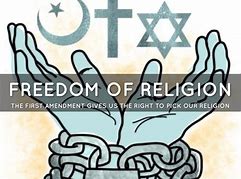
3. Laws that protect freedom of religion for all religious groups and give some benefits to religions generally. 
a. Religions generally teach good moral values to citizens, and bring good to society, including economic benefits.
b. Denial of freedom of religion means that many economically productive people are kept out of a country.


Forms of Government:
Monarchy – Absolute (e.g. Swaziland), Constitutional (United Kingdom)
Oligarchy – power resides in a few people or a class of people, e.g. North Korea, Russia
Democracy – direct democracy (representative democracy)
Autocracy – power resides in one.

The Bible does not call for one system over another, and God’s people have lived under each of these forms. What the Bible has done is shape the thinking about humanity, civilisation, power for 3500 years, which has affected political experiments through the centuries. Only one form of government will ever be perfect: a Theocracy under Christ. Until then, we must seek the best kind of government that factors in the fallenness and sinfulness of man.

Factors that deliver a nation from tyranny or anarchy:
1. Rule of law: all people are equally accountable to the laws
a. This is the most basic guarantee that leaders will use their power for the benefit of the people as a whole. (2 Samuel 11-12);

2. Fair court system: courts show no favoritism or bias, but enforce justice impartially
a. The courts are the primary means for guaranteeing that everyone in a nation is subject to the rule of law.
b. The Bible strongly emphasizes that judges must be fair and not pervert justice (Deut 16:18-20; Ex 23:3).

3. Absence of bribery and corruption in government offices
a. Again and again in the Bible officials are warned against taking bribes.
i. Ex 23:8; Pss 26:10; 82:2; Prov 15:27; 17:23; 24:23; Isa 33:15; Ezek 22:12.
b. Government officials should be reasonably compensated for their service, but laws should prevent them from becoming wealthy through ‘gifts’ or promises received while they are in office. Bribery and thus corruption have enormously hindered economic development in Eastern Europe, preBritish India, and in many African societies. Similar corruption is common in communist countrie generally and in many Islamic countries.
The OT wisely warned against a powerful official such as a king becoming wealthy while in office (Deut 17:17).
i. Positive examples: Samuel (1 Sam 12:3-4); Paul to Timothy (1 Tim 5:21).


  – David De Bruyn, Professor of Church History, Shepherds’ Seminary Africa
A Christian View of Corporal Punishment

Corporal punishment has largely been outlawed in most public institutions: police forces or schools. As the cultural momentum moves away from retributive justice (death penalty) to reformatory justice (prisons/ ‘correctional facilities’), spanking is now viewed as an act of brutality, a vengeful and abusive form of correction. Increasingly, governments are attempting to outlaw corporal punishment in the home as well.

Many professing Christians are using a hermeneutic that claims spanking is not what the Bible teaches, and that it is a violent and brutal form of action that will only produce more violence and resentment.

Does the Bible teach the use of corporal punishment in the home?

Correction in The Home is Commanded

1) Proverbs 23:13-14. Notice the command is a prohibition: do not withhold correction. Parents must correct. The correction is then explained: “beat him with a rod”. The limit and purpose is then given: it is not to harm and kill, but it will deliver the child from untimely death, brought about by his own sin or foolishness. It will deliver him from eternal destruction by introducing him to the Gospel.

2) Proverbs 13:24. This explanation of corporal punishment turns on its head the erroneous thinking that correction is unkind and spiteful. Instead, the parent who refuses to do this is actually pleasing himself, and acting selfishly, in neglect of his son’s needs. Love – benevolent kindness – leads to prompt discipline.

3) Proverbs 29:15, 22:15. Correction is necessary to bring wise living. The absence of correction will allow a child’s native and natural foolishness to grow and eventually bring destruction and shame to all.

Some object that ‘the rod’ is just a metaphor for correction, not an actual rod. But the natural question is, how would a rod be a metaphor for correction, unless it was literally used that way? Things don’t become metaphors unless there is some association. If the rod was not literally used to spank, it is hard to imagine why the Bible would use it as an association. Furthermore, if the Bible thought of physical spanking as abusive, it is hard to see why it would employ a metaphor with abusive associations.

Correction in The Home Must Be Qualified

1) Spanking is not the only method of correction. (Proverbs 29:15 – the rod and rebuke) God does not only chasten his children with stripes – such as physical pain or loss. He also warns, rebukes, threatens, removes blessings or privileges, allows negative consequences. Parents can use discretion as to which offences merit physical correction.

2) However, the Bible assumes that spanking will be the chosen method at some point. The Bible’s emphasis on the rod means that we do not get to use spanking as a last resort or never at all.

3) Correction is not vengeance (Proverbs 19:18) Spanking should not be done to vent one’s anger on a child that has annoyed, humiliated or exasperated you. Do not spank in anger. Fleshliness in a parent only provokes fleshliness in a child.

4) Correction must be appropriate. Correction out of proportion with the offence will provoke anger in a child at its unfairness. Too little correction encourages sin patterns to continue. The goal is to have enough of a consequence to feel regret and to fear repeating the offence, but not one so painful that fear or a desire for revenge builds in the child.

5) Correction must be consistent. Overlooking an offence on one day and then punishing without warning the next will exasperate a child. Likewise punishing harshly for something that personally annoys you, while being lenient on something that does not frustrates a child’s sense of justice.

6) Correction must be controlled. Telling yourself and your child how many spankings he/she will receive encourages self-control.

7) Correction should include communication: what has happened, why the spanking must take place, and what this reveals about the child’s desires. Christ’s sufficiency, the Spirit’s enablement for obedience must be shared. Love for the child and concern for his/her obedience must be shared, and often enough, prayer.

8) Physical correction should lessen in proportion to a child’s emotional and spiritual maturity and growing self-discipline. The goal of enforced discipline is to create that discipline within the child. Christian discipline is Christ-centred and grace-enabled. A promise is attached to consistent discipline, and that is of a pleasant relationship (Prov 29:17)

9) Wherever possible, correction should be in private, and avoid humiliating the child in front of others.

What About Corporal Punishment in Other Venues?

We are moving away from cultures of shared responsibility for parenting, and becoming more individualistic. The amount of litigation, combined with the ability to easily publicise acts of abuse on the Internet means most schools will probably outlaw it.

In secular nations, beatings administered by police or religious authorities no longer occur. Even though Israel included corporal punishment (Deut 25:1-3) in its justice system, as have most cultures, that is not likely to return.

Christian schools should be advised to avoid corporal punishment that does not include the written consent of the parents, or flouts the laws that apply to public life in South Africa.

Parents should exercise extreme caution when considering some form of chastening in public. Though this may be necessary for very little children, the ubiquitous nature of cell-phone cameras, and self-appointed guardians of the liberal order make this something, if at all possible to delay until in one’s home again.

What If Spanking Is Outlawed in The Home?

In 2016, the SAHRC recommended to Parliament that the 2005 Children’s Act be amended to outlaw spanking in the home. The matter is still under review. Should it be passed, it would represent two things:

1) A violation of God-given parental responsibility with gross interference by the State;

2) A violation of Christian conscience, which requires us to, at least at certain times, apply reasonable and moderate physical chastening to our children in a loving environment.

This would represent one of those rare circumstances when the government is actively commanding evil or  forbidding obedience to God. Christians would have to wisely continue to obey the Bible on this matter, in a quiet resistance to what would be ungodly overreach by a government.


  – David De Bruyn, Professor of Church History, Shepherds’ Seminary Africa
A Christian View of Bio-Ethics – Part II

Ethics of Particular Bio-Medical Technologies

Organ Transplants. Organ transplants have been used to prolong life successfully for some time. In many ways, these represent charity and love toward one’s neighbour. However, several ethical matters come up in the transplant. First, it should never be taken involuntarily, even in death. The body is not to be pilfered. Second, it should not be taken from the unborn, or even the aborted. Two wrongs do not make a right, and a ‘consensual’ abortion does not make harvesting organs or cells from those babies ethically permissible. Third, the principle of the greater good means giving s transplant to the very elderly may not always be better when there is a much younger candidate, particularly if survival of the operation is less likely. Fourth, it can not take the life of the one giving the organ. Harvesting organs from clones would be a deep violation of human dignity and sanctity.

The growing ability to 3D print organs may eventually make organ donation a thing of the past. It will not require donors, and organ rejection will no longer be the case. It may raise other problems: do they become commodities, and those with more money can simply afford them, while the poor cannot? Further, what if ‘super-organs’ can be printed? Again, the principle of correcting vs creating must guide. Maintaining life as God made it, not engineering it as we want it to be, is the Christian ethic. Third, what if we could simply keep replacing those body-parts that are wearing out? Could we not eventually print a 20-year old version of ourselves, and ‘transfer’ consciousness? This would violate the biblical notion of the spirit and soul being related to your body.

Bionics/ Cybernics. Certain technologies attempt to fuse machine or computer technology with human biology. Examples include: robotic limbs, bionic eyes/ ears, portable pancreas, portable kidney, and direct links from brain to machine. Nano-machines, that would do internal cell repair or tissue repair are being developed.

Where these technologies repair what is broken, deformed or not functioning, they serve God and love man. The more sinister applications include linking the brain to the Internet to have a permanent ‘interface’ with the knowledge or entertainment on the web. This will be unethical on several levels. It will destroy the dignity of each human, instead immersing him into a consciousness more like a hive or ant colony than a human society. It will blur the distinction between human learning and memory and machine storage, erasing a sense of value and interpretation of facts. Finally, the humanness of a human in society will be swallowed up in people living a virtual contact with a virtual society.

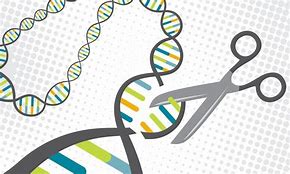
DNA Editing. The breakthrough technology CRISPR will potentially allow everything from sex selection, to the eradication of latent diseases and deformities. However, it will also allow the manipulation of size, body shape, strength, appearance, or even mental ability. It could create hybrid creatures, mixtures between human and animal. It could create ‘super-foods’, develop new viruses, and new cures.

First, some of the experimental work on CRISPR for human DNA is already unethical, experimenting on human embryos that are destroyed after two weeks of life. Second, the question will be, is the attempt here to restore and correct life as God made it, or an attempt to reconstruct life as we would have it? CRISPR for curing cancer, correcting deformity, preventing disease is a submissive use of God’s creation. Using it to ‘design’ a baby, select sex, elect abortion, develop superhumans, would be wrong.

Genetically modified food is not all of a piece. Humans have actually been genetically engineering for thousands of years with selective breeding, cross breeding, plant splicing. Most food will have to be genetically engineered in the next 50 years to keep up with the population. The ethical question comes in developing diseases to wipe out certain bugs, or crops which can resist certain insects. The delicate balance of nature is easily upset, and the age of superviruses, new diseases, new bacteria is an almost inevitable result of this technology. Stem-Cell Research & Cures. There is a difference between nonembryonic (“adult”) stem cells and embryonic stem cells. Using the latter is wrong for all the reasons abortion is wrong. Further, nonembryonic stem cells are just as effective, and some have been found to be more valuable.

Cloning. Cloning producing an identical copy of a human through non-sexual fertilisation. Enormous ethical problems exist with cloning. First, it bypasses God’s plan for procreation and the family. Second, it attempts to be a creator of life instead of its custodian. Third, it opens up enormous possibility for exploitation: one can barely imagine all the evil applications in terms of harvesting body parts, prostitution, forced labour, or military use. Third, clones of existing humans will present massive legal and social problems of identity and even rivalry. Fourth, it will become another futile attempt to avoid mortality, by having one’s clone live on after your death, or perhaps using it as a host body for your brain.

Augmented Reality – glasses, contact lenses, visors, headsets that will add information, or record it for health or legal purposes. Applications include: navigation, consumer information, facial recognition, The primary concern here is privacy: that your words and actions may be being recorded and stored without your consent. However, just as dashcams are becoming more and more standard to solve insurance claims, it is not unlikely that medical insurance companies may increasingly make use of these technologies to permanently track the health and even habits of its clients.


Longevity, Cryonics & Transhumanism. Longevity technologies include many of the biomedical technologies already mentioned: bionics, internal monitoring, DNA editing, replacement organs. Currently, technology has not changed the aging process, but scientists hope to change aging at the cellular level. Cryonics freezes human bodies at death, hoping to resuscitate them in the future when the technology exists. Transhumanism encourages the use of all bio-medical technologies that would create a post-human, or even post-biological state. Some hope to be able to ‘upload’ their consciousness to a machine, which would allow for immortality.

On the face of it, nothing is wrong with seeking to slow aging, or combat its effects, considered as part of the curse. On the other hand, seeking a human life beyond what is broadly given to mankind represents a kind of rebellion. Cryonics denies biblical truths: apart from resurrection, a person cannot be resuscitated. The Bible is clear that our lifespan is limited by God (Ps 90:10). Seeking to avoid death is desiring the tree of life while we are under the curse of sin, something God forbad. Seeking immortality through transhumanism is equally rebellious, and also insults the dignity of man being physical and biological. These are not constraints to be escaped,  but wonders to be rejoiced in (Ps 139:14).

Material adapted from Norm Geisler


  – David De Bruyn, Professor of Church History, Shepherds’ Seminary Africa

A Christian View of Bio-Ethics – Part I

We are entering what some have called the Fourth Industrial Revolution. Part of this revolution is the field of biomedical technology and engineering, where technological advancements are outpacing ethical reflection on their appropriateness. Among the many biomedical technologies developing are:

* Robotic replacement organs/ neurologically-driven artificial body-parts * Augmented Reality & wearables * Organ harvesting/ transplants/ Regrown organs/ 3D Printed organs *Stem-Cell Research * Cloning *CRISPR DNA editing, Gene splicing/ sex selection/ Gene therapy *Cryonics/ Longevity Technologies/ Transhumanism.


A Biblical Versus Secular View of Medicine and Healing

1. Humans are creatures made by special creation by a Creator, the Triune God. This God is sovereign over life and death (Job 1:21, Deut 32:39). By contrast, secular humanism insists that mankind is sovereign over life, having the authority to begin life, end it, or manipulate it at will. We have the authority to correct the effects of the curse, not to attempt to create new life on our own. Correcting imperfect humans is one thing, creating perfect humans of our own is another.

2. Being made in God’s image, human life has both dignity and sanctity. Being reflections of God, murder, and even cursing is forbidden (Gen 9:6. Jas 3:9). This image includes the body which is to be cared for. While dignity calls for respect, sanctity calls for reverence. Human life is holy in the sense that it is God’s direct creation (Ps 8:5). Secular humanism does not hold these principles, it focuses almost entirely on quality of life. This quality of life is simply utilitarianism: whatever tools will lead to a ‘happier’ outcome are justified. But how is this quality judged? Is I physical, social, spiritual or a combination? Who gets to decide – the patient, doctor, or society? Who gets this quality – do we distinguish between age, race, wealth? And who knows what will bring about this quality of life?


3. Human life is mortal (Rom 5:12, Heb 9:27). Death is a judgement, not merely something ‘natural’. Human attempts to altogether avoid morality are futile and misdirected.

4. Human life can be repaired, maintained, or improved, in cooperation with God’s order, and in conformity to it. By contrast, secular humanism believes we have a duty to create a superior race. Believing in Darwinian evolution, they believe we will artificially engineer the next ‘leaps’ in evolution through technology. This is the opposite of repairing, maintaining and improving – it is re-creating, engineering life through control and domination of nature. Furthermore, many of them believe this needs to be compulsory, and not voluntary, sterilising the ‘weak’, aborting children with Down’s Syndrome, eliminating those with a predisposition for disease or disability.


       I. Biblical Worldview:                      Serving God II. Secular Worldview: Playing God
    God is sovereign

Treatment must be voluntary

Improve human life

Repair human life

Maintain human life

Cooperate with creation

Conform to creation

Sanctity of life is the key                 principle

Ends do not justify means

Man is sovereign

Treatment can be compulsory

Create human life

Re-create human life

Engineer life

Control creation

Dominate creation

Quality of life is the key principle

The ends justify the means

5. The goal of medicine is to serve God and love man, not to rebel against God in Babel-like independence. With no submission to a created order, bio-medical technology quickly becomes nightmarish.

6. Secular humanism operates on several ethical principles that the Bible forbids: The ends justify the means (if aborted babies can provide organs or stem cells to treat patients – then it justifies aborting them). If it can be done, it should be done. If it becomes possible to link everyone’s eyes to a recording camera and upload it to the web, it should be done. If it is being done, it should be done. Since cloning is a reality, if a country wishes to clone an athlete 100 000 times over to make an army, it should be done. Scripture forbids pure pragmatism, utilitarianism, or the logical fallacies of is-ought.


  – David De Bruyn, Professor of Church History, Shepherds’ Seminary Africa

A Christian View of Emigration and Immigration – Part II

Biblical Reasons For Leaving a Nation… (continued)

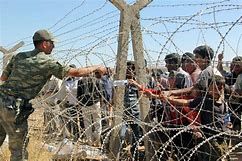
4. Fleeing Genocide, War or Lawlessness. Similar to political revolution, believers have permission to preserve life by fleeing in the face of imminent threat to life. The book of Esther shows the legitimacy of protecting oneself against a targeted genocide. Jeremiah warned Judah to surrender to Nebuchadnezzar, and Jesus warned believers to get out of Jerusalem before its Roman siege. Broader lawlessness and social decay are more difficult to judge. There are tipping points when the fragile cords that bind the social order together can come undone, causing the collapse of policing, justice, the penal system, and a rise in vigilantism, gangs, and corruption.

These four reasons supply a legitimate cause to flee, not an obligation to do so. John Bunyan said it this way:

“If it is in thy heart to flee, flee: if it be in thy heart to stand, stand. Anything but a denial of the truth. He that flees, has warrant to do so; he that stands, has warrant to do so. Yes, the same man may both flee and stand, as the call and working of God with his heart may be. Moses fled (Exo 2:15), Moses stood (Heb 11:27). David fled (1 Sam 19:12), David stood (24:8). Jeremiah fled (Jer 37:11,12), Jeremiah stood (38:17). Christ withdrew himself (Luke 9:10), Christ stood (John 18:1-8). Paul fled (2 Cor 11:33), Paul stood (Acts 20:22,23).”
There are therefore few rules in this case. The man himself is best able to judge concerning his present strength, and what weight this or that argument has upon his heart to stand or flee. I [would hate to] to impose upon any man in these things; only, if you [flee] take two or three cautions with thee:

I] Do not flee out of a slavish fear, but rather because fleeing is an ordinance of God, opening a door for the escape of some, which door is opened by God’s providence, and the escape [accepted] by God’s Word (Matt 10:23).

II] When you have fled, do as much good as you can in all [places that you come to], for therefore the door was opened to you, and you [sought to make your escape.](Acts 8:1-5).

III] Do not think yourself secure when you have fled; it was providence that opened the door, and the Word that did call you to escape: but where, and why, that you do not know yet. Uriah the prophet fled into Egypt, because there dwelt men that were to take him, that he might be brought again to Jerusalem to die there (Jer 26:21).

IV]  But flee not, in fleeing, from religion; flee not, in fleeing, for the sake of a trade; flee not, in fleeing, that you may have ease for the flesh: this is wicked, and will yield neither peace nor profit to thy soul; neither now, nor at death, nor at the day of judgment.

Matters to Balance With Legitimate Reasons to Flee

Ministry. Another matter of conscience is whether or not you believe you have been called to stay to make a difference. “Yet who knows whether you have come to the kingdom for such a time as this?”(Esther 4:14). As believers, our mission is not merely to seek the safest, most comfortable place in the world. As pilgrims, citizens of heaven, and ambassadors of Christ, we are to be salt (a preservative) and light (a guide) in places where darkness and corruption are spreading.
 

Rootedness. The man who is always looking to some other church, country or place he will arrive in fails to build the place he is in (Prov 17:24). Jim Eliot: “Wherever you are, be all there.” We should seek the welfare of whatever place we find ourselves in (Jer 29:7).

Loyalty. Patriotism to one’s nation is broadly, a good thing. It may even be a form of obedience to the fifth commandment. A nation is something of a parent and a home to us, and we do owe it respect, gratitude and a qualified loyalty.

* National patriotism should never rise above loyalty to Christ and His church. When laws conflict, Christ’s takes precedence. [Type text] * A nation may betray its citizens by violating its own constitution, committing genocide against a particular ethnicity or religion. In these cases, one must choose between loyalty to the ideas originally enshrined in the Constitution (and so resist its corruption) or disloyalty to the corrupted version of the nation.

How to Treat Immigrants

  1. Unless immigration law contradicts biblical principles, we should obey the laws that restrict entry or residence in another country.
  2. Believers should obey the law of the country they are in. If a believer is illegally residing in South Africa, he should take active steps to rectify that situation. This may involve seeking legal residence through whatever means are available to him, be it legal counsel or other social services, or it may necessitate leaving South Africa until such a time as immigration can legally take place.
  3. The church’s role is not to police immigration, nor to adopt immigration as a political position (pro or against). It may provide counsel to believers struggling with this, or assist believers to obey the law (financially or otherwise). The church should also respect the law when hiring its own staff. 4. Immigration is an evangelistic opportunity: where the nations come to us. Rather than being fixated on the economic and social problems that illegal immigration brings, Christians should be aware that immigration is missions without having to travel.
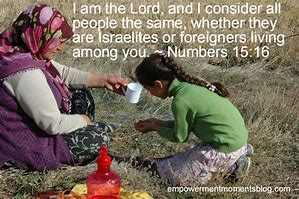
  4. God told Israel to treat foreigners as if they were at home (Lev 19:33-34). Hospitality to the foreigner living lawfully among us is expected of the Christian (Heb 13:1). Living in a nation with different customs, ways, foods, manners, accents, languages is a difficult experience. It is painful to be ‘the outsider’ perpetually. Christians should seek to make lawful immigrants feel at home, and particularly fellow-believers.




  – David De Bruyn, Professor of Church History, Shepherds’ Seminary Africa

A Christian View of Emigration and Immigration – Part I

South Africa’s history makes it a strange combination of emigration and immigration. People from other countries have come to South Africa for a better life, and people have fled South Africa, seeking a better life.

The Bible does not forbid or prescribe movement between nations, though it does touch on the motives for leaving a nation, and how to treat the foreigner within your nation.

Unbiblical Reasons For Leaving a Nation

1. Fleeing Moral Or Lawful Obligations

1.1 Leaving a country to escape financial support of one’s family (wife & children, elderly parents) is wrong (1 Tim 5:4, 8).

1.2 Similarly, fleeing lawful financial obligations (personally accrued debt, bank loans, legitimate taxation) is a wrong reason to flee (Rom 13:7-8).

1.3 Fleeing the justice of a land, insofar as the laws do not compel evil or forbid obedience to God, is wrong.

2. Fleeing Out of Unbelieving Fear. The fear of man brings a snare (Prov 29:25). We are prone to fall into difficulties of our own making when fear controls us. A healthy sense of self-protection, of looking after life and limb is normal and good. However, irrational and consuming fretting over the future and over hypothetical situations will not lead to prudent judgement. Jeremiah 42-43 illustrate what happens when fear is controlling thought. The ten spies who brought an evil report likewise demonstrate this.

3. Greed. Wealth is good, but dangerous. Wanting to improve your material state is not forbidden. Being able to provide, meet your needs, and avoid utter poverty is why many people have left one nation for another. However, the pursuit of wealth for its own sake is forbidden (Prov 23:4-5, 1 Tim 6:9-10). Leaving a country only for a more luxurious lifestyle may be a pursuit of greed, which the Bible promises will pierce one through with sorrows.
 

Biblical Reasons For Leaving a Nation

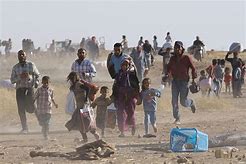
1. Fleeing An Oppressive Government (Acts 8:1). Here you have persecution breaking out, and believers fleeing for their lives. Their action is not condemned, it is simply recorded. And, as we find out, the scattering of the believers led to the Gospel being preached wherever they went. Church history supplies us with many examples of believers who fled persecution. The followers of John Hus fled persecution and ended up on Nicolaus von Zinzendorf’s land, because they were fleeing, and launched the Moravian missionary movement. The Inquisition caused whole populations to migrate and flee Spain, and Portugal, leaving the Protestant movement almost non-existent in those countries. You might remember from school history that the French Huguenots fled France and settled in South Africa, America and Holland. Believers of the ages have known that unless God directs them otherwise in conscience, there is a time to flee persecution, to save their own lives, and to preserve a Gospel witness to others. So, I will say something which I will say often in this message and [Type text] come back in order to explain – fleeing a country due to persecution is a matter of conscience, and can be God’s will for you. This oppression can take the form of compelling a Christian to do evil or forbidding a Christian from doing right.

2. Fleeing Economic Hardship Or Disaster. As early as the book of Genesis, we have examples of believers leaving Canaan due to a severe famine and going to a land where there was plenty. While there were times they were instructed to stay in the land, there were other times, such as when Jacob was told to go down and settle in Goshen, that God permits believers to flee because of economic disaster. Later, a famine in Israel caused Elimelech, the husband of Naomi, to go into the land of Moab. In times of famine in Israel, some believers stayed, some fled. When the believers in Jerusalem were going through poverty, some probably left, but some clearly stayed This means the opportunity to find work, to provide faithfully, to give food, shelter and reasonable comfort to your family is hindered. What about fleeing before disaster? (Prov 22:3) Economic collapses are like predicting the weather. It is extremely difficult to know exactly which way an economy is going to go. 

3. Fleeing Political Revolution (Matthew 24:2, 14-16). It is a fact of history recorded by Eusebius that the Christian Jews fled Jerusalem four years before the final disaster in 70 A.D. The reason for this is that Christ had warned them of the coming disaster and had told them to flee. On the other hand, believers have remained in countries when the Nazis took over, when the Communists took over, when military coups in Africa and South America took over. Revolution is always frowned upon in Scripture and getting out of harm’s way before the bloodshed is not condemned.


  – David De Bruyn, Professor of Church History, Shepherds’ Seminary Africa

A Christian View of Burial and Cremation – Part II

The Real Issue: Treatment Vs Preservation

The issue is not how to best preserve the body; it is how to treat the body in death.

It is common for advocates of cremation to point out that a buried person will undergo decay, and nothing will be left of that body, just as very little is left of the cremated body. They conclude that both modes come out at the same place, therefore neither one is preferable. However, this misses the point. The point of burial is not to preserve the remains of the loved one.

How God will do the miracle of resurrection is beyond our understanding, as are all miracles. We can be certain that Christians who were eaten by lions, burned by Nero, drowned and lost to the sea or died in some other violent or destructive way will be partakers of the resurrection.

Burial does not pretend to help God out when it comes to resurrection. In other words, we miss the point when we say that both burial and cremation end up with the same amount of destruction done to the body. None of us is trying to embalm bodies to perfectly preserve them so as to give God more to work with on the day of resurrection.

Instead, the point is that we are to honour a human being, even in death. A human being is body, soul & spirit (1 Thes 5:23). In fact, we are told that the body is the Temple of the Holy Spirit. While it is true that the spirit is absent from the body at the point of death (2 Cor 5:8), this does not mean that the body loses all dignity and honour. Indeed, observe how we dress and beautify the body placed in the casket for viewing. We understand that though the person has gone on to face heaven or hell, his or her body remains and we show respect to them in respecting the body. I suggest that respect for the body has always been understood as giving it a proper burial.

Are funerals simply the way in which we dispose of remains? For Christians, burial is not the disposal of a thing. It is caring for a person. In burial, we’re reminded that the body is not a shell, a husk tossed aside by the “real” person, the soul within. To be absent from the body is to be present with the Lord (2 Cor. 5:6–8; Phil. 1:23), but the body that remains still belongs to someone, someone we love, someone who will reclaim it one day.

The Christian view of Resurrection

When Paul discusses the future resurrection of the body, he uses an analogy.

1 Corinthians 15:35-38 – “But someone will say, “How are the dead raised up? And with what body do they come?” 36 Foolish one, what you sow is not made alive unless it dies. 37 And what you sow, you do not sow that body that shall be, but mere grain — perhaps wheat or some other grain. 38 But God gives it a body as He pleases, and to each seed its own body.”

1 Corinthians 15:42-44 – “So also is the resurrection of the dead. The body is sown in corruption, it is raised in incorruption. 43 It is sown in dishonor, it is raised in glory. It is sown in weakness, it is raised in power. 44 It is sown a natural body, it is raised a spiritual body. There is a natural body, and there is a spiritual body.”

When Paul keeps using the term sow, it is because he is comparing the human body to a seed, because that is what one sows. How does one sow seed? You put it into the ground. The act of Christian burial is an act of sowing the now dead human body into the ground, in anticipation of its resurrection as a glorified body. Christian burial is a witness to an onlooking world. We say by our actions that we believe this body will be raised up to new life, as a dead seed sprouts in spring. By contrast, a materialist sees no need to symbolise a future for the body, because he doesn’t believe one exists. In that case, the body can be destroyed totally. Another image frequently used of the death of a Christian is found in verse 51.

1 Corinthians 15:51 – “Behold, I tell you a mystery: We shall not all sleep, but we shall all be changed” –Sleep. The image of sleeping is one of lying down, waiting to be awakened.

When we think of these two events – burial and cremation, we have to ask, which better pictures the idea of sowing the body, expecting the future harvest of resurrection? Which pictures someone lying down, resting? Christians believe that the afterlife is not some ghostly, transparent and nonmaterial existence. We believe in a final resurrection that will be more real and physical than we are now. If the funeral rites communicate something like: so-and-so is gone, and we will never again know him and see him in the physical form in which we knew him here, then I suggest the message is sub- Christian.

Do symbols matter? We must remember that God cares about how we symbolise matters, particularly at such significant events. We care about the mode of baptism, because we think it is important to demonstrate that identification with Christ is a full immersion into His death and resurrection. God cares about the analogies and messages we make and send. For a funeral act to communicate that we think the body is of little more significance to the deceased person seems to send a message that is not thoroughly biblical and Christian. The mode of funeral is not commanded like the mode of baptism is, but it should give us some thought.

Practically

1) Given the meaning of the body, the meaning of resurrection, and the meaning of symbolising this, it is a poor choice to favour cremation purely for simplicity’s sake.

2) Cost may eliminate burial for some people as a viable option. However, the cost is not night and day, if one opts for a modest burial. Also, new laws require that every cremation must be preceded by a full autopsy, which drives up the price. What tends to make burials expensive is the choice of casket, the kind of tombstone, or even the location of the burial ground, and these can be negotiated.  I do understand when cost is simply prohibitive, and a family chooses cremation. But if your conscience is persuaded to see the value of burial for a Christian, then I would suggest researching the costs, and seeing if they are really beyond you. Typical funeral policies will cover the cost of either a cremation or a low-cost burial. The prevalence of Jewish and Moslem populations at least means that the authorities cannot make burials prohibitively expensive.
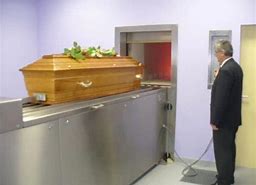
3) When a person has written it into his or her will that he or she desires to be cremated, we must honour that request. However, to all living Christians I say: the desire to bless your families with simplicity and cost-effectiveness by asking for a cremation might be well-intentioned, but consider if you might not bless them even more, by allowing them to honour you once more, in the act of sowing your body to the ground in expectation of resurrection, by laying your body down to rest, to sleep, awaiting the day of your awakening.

Consider if this might not be a far greater blessing than saving some money, and saving some time.


  – David De Bruyn, Professor of Church History, Shepherds’ Seminary Africa

A Christian View of Burial and Cremation – Part I

In the last century or so, cremation technology, available land for burial, and a changing view of death in secular culture has shifted the favoured form of funeral from burial to cremation. Too often, this decision is made with an ethic of pragmatism (ends justify means) or utilitarianism (what will bring the family the least pain/ what will cost the family the least is best). 
Before considering cost and convenience, Christians would do well to consider certain other facts. Biblically, there is no explicit command to bury or cremate. This is precisely what places this topic in the realm of ethics. Instead, we have to gather some historical, theological and cultural information.


History of Burial and Cremation

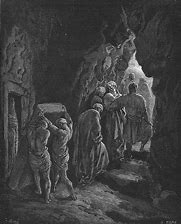
From the book of Genesis, we find God’s people burying their dead (Gen 23:19, 25:9, 35:8, 35:19, 35:29). This pattern continues right throughout the Old Testament and into the New. The Bible does not contain a single account of a believer’s body being cremated. (King Saul’s dismembered body was burned, and the bones then buried out of respect, 1 Sam 31:12-13).
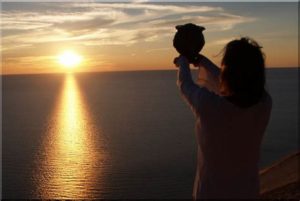
Being narrative, these do not become imperatives. There could be many reasons they buried and did not cremate. There could have been instances of cremation not recorded. However, it is instructive to ask: “Why did God’s people not bury and burn the way we do?” We could argue that technology is part of the answer, but many ancient cultures did cremate. At the very least, the absence of cremations in Scripture should give us pause before embracing it wholeheartedly.

This practice of burial continued well into the Christian era, as the Roman catacombs prove. It seems that wherever Christianity spread, cremations ceased. The Roman Church generally frowned upon cremation, as did the Eastern Orthodox church. Protestants universally buried until the late 19th century, when the technology to cremate more simply and practically was pioneered.

Cremation was present in Ancient China, and sometimes in Ancient Greece. In the western Roman empire, cremation was the standard until the first century A.D., often associated with military honors. With the spread of Christianity, cremation was frowned upon and disappeared for the most part in Europe by the fifth century A.D., except in unusual cases such as epidemics or war. The Vikings practiced cremation until around 1050, by which time Christianity had penetrated most Viking nations.

Modern cremation began in the late 1800’s with the invention of a practical cremation chamber by Professor Brunetti, who presented it at the 1873 Vienna Exposition. Championed by Queen Victoria’s surgeon, Sir Henry Thompson, and driven by public concern for hygiene and health and clerical desires to reform burial practices, crematories slowly began opening in Europe and abroad. The first modern crematory in America was established in Pennsylvania in 1876.


The View of the Body As Seen in Funeral Rites

The view of the body’s relationship to the soul influences the view of what to do with the body in death. Religions such as Hinduism, Jainism, Sikhism and Buddhism, mandate cremation. According to Hindu traditions, the reasons for preferring to destroy the corpse by fire, over burying it into ground, is to induce a feeling of detachment into the freshly disembodied spirit, which will be helpful to encourage it into passing to its next destination, lest it remain near its former body. Islam and orthodox Judaism forbid cremation, demanding that the body be treated with respect in life and death, and some even claiming that cremation will affect resurrection.
Scripture’s View of the Body

What are the images used for the body in 2 Corinthians 5:1-9? Tent, habitation, clothing.
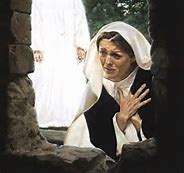
It is possible to be absent from the body and still be alive. It is better to be with the Lord, but is is not desirable to be absent from the body. What then is the best situation? Is the body you or is it not you? Russell Moore: “The Gospel of John tells us that “Lazarus had already been in the tomb four days” (John 11:17). The Holy Spirit chose to identify this body as Lazarus,communicating continuity with the very same person Jesus had loved before and would love again. After the crucifixion of Jesus, the Gospels present us with an example of devotion to Jesus in the way the women—and Joseph of Arimathea—minister to him, anointing him with spices, specifically anointing, Mark speaks of him and not just “his remains” (Mark 16:1), and wrapping him in a shroud. Why is Mary Magdalene so grieved when she finds the tomb to be empty? It is not that she doubts that a stolen body can be resurrected by God on the last day. It is instead that she sees violence done to the body of Jesus as violence done to him,dishonor done to his body as dishonor to him. When Mary mistakes Jesus for the gardener, she tells him she is despondent because they “have taken away my Lord, and I do not know where they have laid him” (John 20:13). This body was, at least in some sense, still her Lord, and it mattered what someone had done to it. Jesus and the angelic beings never correct the devoted women. They simply ponder why they seek the living among the dead.

Your soul apart from your body is an unclothed you. There is a very real way in which the body, even in death, is identified with the person.

Does it matter how we treat the body? (1 Cor 6:19-20) How you treat the body defiles or does not defile you. Does it matter how you treat the body after you die? Is it possible to dishonour someone after they have died? (e.g. Wickliffe) When pagan armies have wanted to show the deepest dishonour to conquered enemies, what would they do? They would dismember and mutilate the bodies of those they had already killed. They would pile the bodies in heaps and burn them. They would leave the bodies exposed for carrion and animals. Conversely, respect for one’s enemies in warfare has always been shown in burying the bodies.



  – David De Bruyn, Professor of Church History, Shepherds’ Seminary Africa

A Christian View of the Arts – Part III

Questions to Help Evaluate Artistic Expressions:

    1. What message does the author seem to want to convey? What is the feeling or atmosphere created by the work? How would you describe what the composer is trying to communicate to his audience?
    2. What is the apparent moral stance of the work in question? Are good and evil truly represented, or are they blurred or even reversed? Is man represented as good, evil or both?
    3. What is the apparent worldview of the author? Is God in the universe? What does the work say about God? Is the artist suggesting that life is meaningless and random? Is he saying anything untrue about God?
    4. Is there any truth in it? Is it an accurate representation of the facts? How does it correspond with the Bible? What must be rejected as untrue?
    5. With what is this associated? What kind of people produce and/or enjoy this art?  Do mature Christians usually use this?
    6. How is this art usually used? What do people do when enjoying this form? Do mature Christian people participate in this art form? Are Christians generally agreed that this expression is suitable for Christians to enjoy, or do they normally avoid it?
    7. Can one enjoy this “to the glory of God”? Is it edifying or corrupting? Will participation be detrimental to one’s spiritual life? Does it desensitize the user to sin? Does it promote worldly values? Can you participate with a good conscience?
    8. Has it displayed any permanence, yet? The best art displays a timelessness and permanence that perseveres over time.  People still revere great artists long since dead because their art has value. It’s an expression of true beauty that never goes out of style. Today’s commercial art (e.g., pop music, TV, movies, novels, etc.) is short-lived and few people mourn its loss as it passes off the charts and fades into oblivion. That’s the nature of “pop” culture—temporary, commercial, trivial, shallow, throw-away. Such junk should have no attraction for Christians.

What about Preference?

Each individual responds to art differently. There is a subjective aspect of beauty— a combination of influences affects why we have certain preferences.  We don’t deny that individual responses will vary. Nevertheless, when we call something beautiful, we are in some ways calling for universal recognition of its beauty, not just a statement of preference. Christians within the same culture, with the same affections would agree on a spectrum of art, with preferences allowed within a certain band of the spectrum.  God is the ultimate standard in beauty, and art that conforms most closely to God’s nature is the best and loveliest. Granted, this quality may be hard to judge, but judge it we must.


  – David De Bruyn, Professor of Church History, Shepherds’ Seminary Africa