
John MacArthur writes (in endorsing a catechism book), “One of the most urgent tasks facing the contemporary church is that of teaching doctrine, not only to the future, but to present generations.” J.I. Packer has said that the greatest challenge for the 21st century Church is to recatechise and disciple believers. I offer, therefore, these ten reasons why we should catechise in our churches.
 Commandments as a summary outline of His entire Law; In Deut. 6:20-25, parents are told to answer a child’s question by giving a summary of God’s great work of redeeming Israel and giving them His Law. God also gave parents the Passover meal and other memorials and stone monuments as means by which to teach and pass on the faith to future generations; In the Gospels, Jesus gave us “The Lord’s Prayer” as a brief guideline for all our praying (Matt. 6:9-13); The NT has many examples of Christian summaries and thumbnail sketches of the faith, which the early church appears to have memorised, sung, and confessed together – e.g., Eph. 4:4-6, 1 Tim. 3:15-16, Php. 2:6-11. The purpose of Christ’s two ordinances, baptism and the Lord’s Supper, are also a kind of visible catechism to keep a church gospel-centred. Paul speaks often to Timothy and Titus of the “faithful sayings” which were loved and recited in the churches (1 Tim. 1:15; 3:1; 4:9; 2 Tim. 2:11; Tit. 3:8). 2 Tim. 1:13 also speaks of how we must “retain, hold on to” the “form, standard, pattern, outline” of “sound words”. There is great benefit to creeds, confessions, and catechisms that show us the “form” and essence of the apostolic teaching.
 God uses prior knowledge to bring later conviction and salvation, as God was using His Law to prepare His people for Christ (Rom. 3; Gal. 3, etc.). Paul states this explicitly in Timothy’s case, saying that “from childhood you have known the sacred writings which are able to give you the wisdom that leads to salvation through faith which is in Christ Jesus” (2 Tim. 3:16). This word, “childhood”, in the NT normally means “infant, baby”. Long before Timothy understood what he was learning, the
spiritual ‘braai’ was already being prepared: the coals and fire-lighters were well-laid in his heart, making him all the more ready for the day when the Holy Spirit would come to ignite those truths through regeneration, conviction and conversion and to set him ablaze for Christ.
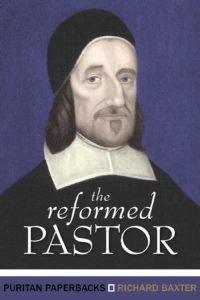 The Reformation became the ‘Golden Age of Catechisms’, as reformers like Luther and Calvin heralded the need to recover catechising as essential to the survival of the Church. Many of the Reformers seized the providential opportunity granted by Gutenberg’s new printing press to produce and spread biblical catechisms as mighty tools for the reformation and strengthening of the Church. Calvin spoke of the need for the Church to write out treatments “in succession of the principal matters” of Christian truth, and that those who used such catechisms would “make more progress in the school of God in one day than any other person in three months”! You may have heard the stirring story of how God used faithful Baxter, the 17th century Puritan pastor, to transform the whole village of Kidderminster through catechising every household, children and parents alike. Cambridge used to have the position of “college catechist”, filled by a succession of godly, notable pastors. Even during the Dark Ages, the great medieval emperor, Charlemagne, said that catechising was essential to rescue his era from its embarrassing ignorance. To this day, the 4th most widely circulated book of all time (after the Bible, Pilgrim’s Progress, and The Imitation of Christ) is the Heidelberg Catechism, which is a rich treasury of gospel teaching that stirs the soul. We have included a few favourites from that catechism in this booklet also.
 people’s ignorance. …You can never pitch upon a better project, to promote and secure the success of your labours, than catechising.”
The more grounded you are in doctrine, the more alert you will be against error. A good catechism acts as a hedge against heresy and false teaching and aberrant doctrine. As Spurgeon wrote: “I am persuaded that the use of a good Catechism in all our families will be a great safeguard against the increasing errors of the times….In matters of doctrine you will find orthodox congregations frequently changed to heterodoxy [error] in the course of thirty or forty years, and that is because, too often, there has been no catechising of the children in the essential doctrines of the Gospel.”
 – Tim Cantrell, President and Professor of Systematic Theology, Shepherds’ Seminary Africa