
What used to be a rather nerdy activity done by a few teenagers has now come to dominate culture. Few adults have not encountered some sort of electronic game on their phones. 63 % of U.S. Adults play games, and the average age of a gamer is now 35. Not only are more people playing, and playing at later ages, people are playing for longer hours. In 2007, the average gamer who player World of Warcraft was playing for 17 hours a week – essentially a part time job.
The industry is now valued at around $100 billion. Companies such as Facebook and Google have invested billions of dollars into Virtual Reality, which is certain to overwhelm current gaming in the next 5-10 years.
What aspects of gaming are hostile to Christianity?
- Immaturity
Dr. Leonard Sax, in his book Boys Adrift, states, “The proportion of young men (age eighteen to thirty-five) living at home with parents or relatives has surged over the [last] thirty years. That proportion has roughly doubled, while the proportion of young women in the same age group living with parents or relatives has remained constant. Young women and young men are now following different life scripts. Young women are getting jobs, establishing themselves in the workplace, then (in many cases) thinking about having children. But a growing number of young men are just not on the same page.” 
Many young men are shunning adult responsibilities, including financial independence, marriage and family (but not sexual intimacy), a career path. There is instead a deliberate rejection of wisdom, a juvenile infatuation with fun and selfish pursuits. “At some point the responsibilities of adulthood should make regular devotion to video games impossible.”
A near addiction to video games allows an immature person to wallow in substitute reality and responsibility: pretending one is an adventurer, a hero, or a conquerer, while in reality, the person lacks self-discipline, hard-work, sacrifice, and service.
- Substitute Reality
Stories and fantasy are helpful to the degree that they return us to our world improved, shaped and more rightly viewing reality.
To the degree that they simply show us the world-as-we’d-prefer-it, or some non-existent heroic form of ourselves, it is an exercise in flattery and self-deception. This is where we prefer the fantasy-world. It is the reality we enjoy more, we like ourselves more in that world, and is problems and challenges seem more compelling than the problems in the real world. 
The use of avatars encourage an obsession with ourselves in a fantasy-context, which may nurture more narcissism instead of love for others.
True stories exist of marriages that have broken up because a husband or wife was so obsessed with the alternate reality of gaming that the real-life marriage collapsed.
While playing the occasional game is harmless, a near-devotion to gaming can warp a Christian’s view of reality. At the very least, it can dull him to the realities that are pressing on us: Heaven, Hell, the Gospel, prayer, and our needy neighbours.
What are some of things we’d want to consider as we think on the place of computer games and virtual reality in the lives of a believer?
- Time and Eternity
Due to their computerized complexity, today’s video games often require days to master and weeks to beat. A game that costs only $40 or $50 to purchase may actually cost hundreds of hours in wasted time. In many games, the player’s character develops as he advances through the virtual story line and becomes more skilled and better equipped. Time invested in such pursuits is forever lost and cannot be reused for things that matter. Hours that could be spent working, praying, reading, serving, fellowshipping, evangelizing, or just thinking are instead spent on activities that have no lasting value. God’s Word teaches us that time is precious (Psalm 90:12; cf. 39:4-5). Using it wisely is an issue of good stewardship. We must not forget that our lives are not our own; we belong to Christ (1 Corinthians 6:20). When we waste time consistently, a few hours each day, we waste the very lives we have dedicated to Christ.
- Purity
It should be obvious, but games (no matter how popular) that glorify violence, denigrate the value of human life, promote greed, reward deceit, contain profanity, or flirt with sexual immorality should be avoided by believers (Proverbs 6:17; Ephesians 5:3; 1 Timothy 4:12). Our entertainment must honor the Lord and reflect His character. Our amusements should not reinforce values that are diametrically opposed to how we ought to think (Philippians 4:8) and what we are to do (Mark 12:30-31; 1 Corinthians 10:31).
Many games are rated “M” for mature. In one of the most popular games, Grand Theft Auto,  where layers gain points as they murder, steal, deceive, covet, and solicit sexual favors, all while trying not to get caught.
Does the content of the game encourage anything like Philippians 4:8, and Ephesians 5:3-8?
Adapted from Austin Duncan in MacArthur, John. Right Thinking in a World Gone Wrong: A Biblical Response to Today’s Most Controversial Issues.
 – David De Bruyn, Professor of Church History, Shepherds’ Seminary Africa
 distinctively male or female by your overall appearance. But in a culture of transgenderism, the move is now to blur the lines as much as possible. Christians need to find ways within current clothing styles, to glory in biblical manhood and womanhood. Certain occasions particularly call for celebrating manhood and womanhood. In dressing our children, we should provide them with occasions to revel in being distinctively male or female.
  simply ask yourself, what kind of occasion is this? What are we doing here? Is it a light-hearted event, or a serious one? What am I telling myself about the meaning of the Lord’s Day by how I dress, and what am I telling my neighbours?
  The more she is consumed with the fact that her nakedness has been covered with robes of righteousness, the more she will desire to physically clothe herself in a manner that will richly—and not skimpily—demonstrate that covering. As she grows in grace, she will begin to more fully understand that, as a redeemed child of God, her clothing represents more than a physical covering. She will develop a shamefaced attitude that comes from a heart that remains keenly aware that the shame of her sin was covered by the precious blood of her beloved Savior, a covering she was unable to procure for herself. A yearning to “conceal, not reveal” will grow within her heart as she gains deeper understanding of that marriage, a beautiful picture of the Gospel that has covered her sin, offering the one venue where her nakedness can be shamelessly exposed. This truth will drive her to joyfully preserve herself for a holy union she will cherish whether she is married or not.
 women in our world, do our hearts compassionately yearn to share the news of the Gospel? I must sadly admit that instead of that response, I too often find myself mumbling sarcastic phrases of frustration under my breath. Does the immodesty that surrounds us fill our hearts with a passion to humbly offer instruction in righteousness and to lovingly disciple others toward Christ-likeness? Are we faithfully modeling before our daughters the garments of grace that will stir their minds to be soberly set upon Him? May each day find us voraciously feasting on the Word of God and diligently attending to the slightest prompting of the Holy Spirit so that, in spite of human limitations and difficulties, graceful modesty reigns within our hearts and our homes.
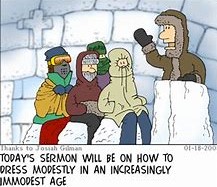 The reaction to stringent rules about clothing and dress codes has produced an unfortunate backlash which dresses rebelliously, or
  If it is not sinful for a parent to say so, it is not sinful, in principle, for a Christian to say so to another Christian in a discipleship relationship.
  between proper dress and dressing to be the center of attention? The answer starts in the intent of the heart. A woman should examine her motives and goals for the way she dresses. Is her intent to show the grace and beauty of womanhood? Is it to reveal a humble heart devoted to worshiping God? Or is it to call attention to herself and flaunt her beauty? Or worse, to attempt to lure men sexually? A woman who focuses on worshiping God will consider carefully how she is dressed, because her heart will dictate her wardrobe and appearance.” -John MacArthur.
 dressed woman (and he should). But once we have agreed that onlookers have a moral responsibility to be pure in thoughts, do we not also have a loving responsibility to help onlookers to do so? Is it loving to your neighbor to make it easier to lust, or harder to resist doing so? This goes back to the inner qualities of modesty.
  Assumption of this diet would reduce what is today called libido, and this reduction of the ‘animal’ in man would be passed on to one’s children, who would grow up with less ‘original sin.’ Salvation through diet passed into the popular imagination through the writings of liberals like Horace Bushnell, sectarians like Kellogg and Charles Finney, and cultists like Mary Baker Eddy. As a result there is a pervasive orientation toward dietetic theology in American Christianity that colors our discussion of the Sinaitic dietary laws.” Wilson, Douglas. Confessions of a Food Catholic (pp. 25-26). Canon Press. Kindle Edition.
  and shame dominate every meal, idolatry is present.
  Most food requires the use of some artifice to get it into an edible state. Another great example is petroleum. There’s a natural product for you—right out of the ground, from the bosom of mother nature. Boil it off and you get sugars, and then flavor chemists can tinker with it and get you some stupendous flavorings. Now suppose we have defined natural, and defined the limited number of steps to keep a product natural. We have determined that this particular product falls within that stipulated definition. Poisonous mushrooms can fit within the definition, and almond-flavored petroleum sugars won’t.
 for which natural would work as a term of unqualified praise. Second, they are not able to find a food anywhere that is not made out of chemicals. Chemical-free food would a sight to behold, and a miracle in its own right. And third, they are giving weight, and moral weight, at that, to standards that have little to do with objective value and much to do with marketing.
 How about the carburetor and the distributor cap? May I buy petrol from a joint that has three racks of porn behind the counter? May I buy books from a company that has a soft porn division? May I buy unit trusts that include corporate farms and plantations in the portfolio?

 some Christians place their personal health over the importance of table fellowship with other Christians. Some allergies are very serious immediately , while others should be filed under certain foods “ not agreeing with ” your constitution . There are food allergies , with varying degrees of seriousness , and there is food intolerance, with varying degrees of seriousness . The law of love should govern in all instances. Hosts should be thoughtful hosts , and guests should be thoughtful guests.
 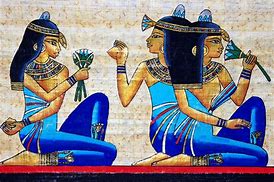 For example, the pagan cultures surrounding the nation of Israel used drugs as part of their religious ceremonies. Both the OT and New Testament condemn sorcery and witchcraft. In those days, drug use was associated with sorcery (the word translated “sorcery” comes from the Greek word from which we get the English words pharmacy and pharmaceutical). A witch or shaman prepared drugs. They used drugs to induce an altered state of consciousness that allowed demons to take over the mind of the user. In our day, many use drugs merely for so-called recreational purposes, but we cannot discount the occult connection.
 drugs like marijuana, cocaine and crack are illegal substances. The use, possession and sale of these drugs is against the law. Law-abiding citizens should not participate in the use of illegal drugs.
 Strong drink refers to intoxicating drink of any sort not made from grapes. Various concoctions made from pomegranates, apples, dates, barley, etc. were known to the ancients and must have been used in Palestine also. Isaiah denounces those that “rise up early in the morning, that they may follow strong drink; that continue until night, till wine inflame them!” (Isa 5:11). He expresses his contempt for the priest and the prophet who “have erred through wine, and through strong drink are out of the way” (Isa 28:7). Isaiah assails the “greedy dogs” who say, “I will fetch wine, and we will fill ourselves with strong drink; and to morrow shall be as this day, and much more abundant.” (Isa 52:12-13). Most of the alcoholic drinks of our society today would be considered “strong drink” by biblical standards because of their high alcohol content. Many modern wines have been strengthened (fortified) to increase their alcohol content and thus contain more alcohol than the wines of biblical times would have, especially once mixed with water.
  Some Christians feel to avoid all of the serious problems associated with alcohol, the best policy when it comes to wine, beer and other alcoholic drinks is total abstinence. If one wants to live a holy, righteous, blameless lifestyle, abstinence from alcohol is a wise commitment to make. Refraining is not a biblical mandate but a choice to avoid the dangers, compromises and associations that alcohol represents. Drinking may be lawful, but it is not profitable (cf. 1 Cor 6:12). For one’s own sake and for the sake of others, the best practice is to abstain from alcohol use.
 (Luke 10:34). It was used not only to disinfect wounds, but to sterilise water. It was used as an opiate for the terminally ill (Prov 31:6). The matter under dispute is whether alcohol or drugs should be used merely for pleasure, as recreational drinks or substances.
 :priests (Lev 10:9-10), kings (Prov 31:4-5), Nazarites (Nu 6:2-3).
 Common mixture of wine with water was in ratios of 20:1 down to 3:1, which reduced the alcohol to less than 2%. There are references to this mixing of water with wine in several historical sources (2 Maccabees 15:39, Homer 20:1, Pliny 8:1, Clement (Instructor 2.2), Cyprian Epist 62.2.11). While the goal in the ancient world was to reduce the alcoholic content of beverages, the modern world has sought ways to increase it. Standard table wines have as much as 14% alcohol due to the addition of extra yeast and the control of the heat generated by the fermentation process.
 Jesus himself was accused of being a “glutton and a drunkard,” literally “one given to wine” (Luke 7:34). It’s clear that the Corinthians were using fermented wine when they celebrated (inappropriately) the Lord’s Supper because they were getting drunk (1 Cor 11:21). Thus, biblical wine, for the most part, was fermented and was capable of causing intoxication.
 The traditional law was taught from the age of ten to the age of fifteen, and Jewish law beyond that. The brightest of the boys could go to Jerusalem to one of the law schools. Paul apparently participated in such training. He states that he had been brought up “at the feet of Gamaliel,” a respected Rabbi in Jerusalem, where he was taught “the law of the fathers” (Acts 22:3).
 Co-ops are the seed-form for thoroughly Christian schools operating out of churches.
  effectively. Some biblical methods: Verbal instruction/lecture, Small groups, Mentoring/apprenticeship, Question and answer, Stories, Historic events, Sermons, Songs/poems.
 A worldview is not one window for your mind to look out from. Your worldview is the lens through which you see everything. Worldview is how you understand the past, the present, and the future. Worldview is your standard of judgement: what is good, true and beautiful. Worldview defines God, others, the world, and yourself. Worldview is your idea of reality, your understanding of what is real. Not satisfied with teaching poetry, literature, geography, biology, history or business economics lightly seasoned with Bible verses, it insists that every domain of knowledge be understood as God sees it, and used as God commands it. This means that Christian education has a uniquely Christian
  (2 Cor 10:4-5). A rigorous education is required for those who desire to “contend for the faith” (Jude 3) against skeptics and critics. God calls upon believers to develop their minds for the purpose of intellectual warfare, and the educational process provides an essential mechanism to assist in this task.
 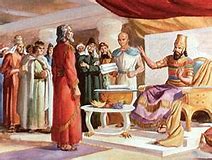 We cannot claim that it is anti-biblical for the government to administrate the education of its citizens. A well-educated citizenry is certainly in the best interests of the nation, and without state resources, many citizens would not be educated. The Bible nowhere prohibits governmental sponsorship or control of education, unless such control interferes with parental desires or with biblical expectations. Unfortunately, modern state-run education often conflicts with both.