
Corporal punishment has largely been outlawed in most public institutions: police forces or schools. As the cultural momentum moves away from retributive justice (death penalty) to reformatory justice (prisons/ ‘correctional facilities’), spanking is now viewed as an act of brutality, a vengeful and abusive form of correction. Increasingly, governments are attempting to outlaw corporal punishment in the home as well.
Many professing Christians are using a hermeneutic that claims spanking is not what the Bible teaches, and that it is a violent and brutal form of action that will only produce more violence and resentment.
Does the Bible teach the use of corporal punishment in the home?
Correction in The Home is Commanded
1) Proverbs 23:13-14. Notice the command is a prohibition: do not withhold correction. Parents must correct. The correction is then explained: “beat him with a rod”. The limit and purpose is then given: it is not to harm and kill, but it will deliver the child from untimely death, brought about by his own sin or foolishness. It will deliver him from eternal destruction by introducing him to the Gospel.
2) Proverbs 13:24. This explanation of corporal punishment turns on its head the erroneous thinking that correction is unkind and spiteful. Instead, the parent who refuses to do this is actually pleasing himself, and acting selfishly, in neglect of his son’s needs. Love – benevolent kindness – leads to prompt discipline.
3) Proverbs 29:15, 22:15. Correction is necessary to bring wise living. The absence of correction will allow a child’s native and natural foolishness to grow and eventually bring destruction and shame to all.
Some object that ‘the rod’ is just a metaphor for correction, not an actual rod. But the natural question is, how would a rod be a metaphor for correction, unless it was literally used that way? Things don’t become metaphors unless there is some association. If the rod was not literally used to spank, it is hard to imagine why the Bible would use it as an association. Furthermore, if the Bible thought of physical spanking as abusive, it is hard to see why it would employ a metaphor with abusive associations.
Correction in The Home Must Be Qualified
1) Spanking is not the only method of correction. (Proverbs 29:15 – the rod and rebuke) God does not only chasten his children with stripes – such as physical pain or loss. He also warns, rebukes, threatens, removes blessings or privileges, allows negative consequences. Parents can use discretion as to which offences merit physical correction.
2) However, the Bible assumes that spanking will be the chosen method at some point. The Bible’s emphasis on the rod means that we do not get to use spanking as a last resort or never at all.
3) Correction is not vengeance (Proverbs 19:18) Spanking should not be done to vent one’s anger on a child that has annoyed, humiliated or exasperated you. Do not spank in anger. Fleshliness in a parent only provokes fleshliness in a child.
4) Correction must be appropriate. Correction out of proportion with the offence will provoke anger in a child at its unfairness. Too little correction encourages sin patterns to continue. The goal is to have enough of a consequence to feel regret and to fear repeating the offence, but not one so painful that fear or a desire for revenge builds in the child.
5) Correction must be consistent. Overlooking an offence on one day and then punishing without warning the next will exasperate a child. Likewise punishing harshly for something that personally annoys you, while being lenient on something that does not frustrates a child’s sense of justice.
6) Correction must be controlled. Telling yourself and your child how many spankings he/she will receive encourages self-control.
7) Correction should include communication: what has happened, why the spanking must take place, and what this reveals about the child’s desires. Christ’s sufficiency, the Spirit’s enablement for obedience must be shared. Love for the child and concern for his/her obedience must be shared, and often enough, prayer.
8) Physical correction should lessen in proportion to a child’s emotional and spiritual maturity and growing self-discipline. The goal of enforced discipline is to create that discipline within the child. Christian discipline is Christ-centred and grace-enabled. A promise is attached to consistent discipline, and that is of a pleasant relationship (Prov 29:17)
9) Wherever possible, correction should be in private, and avoid humiliating the child in front of others.
What About Corporal Punishment in Other Venues?
We are moving away from cultures of shared responsibility for parenting, and becoming more individualistic. The amount of litigation, combined with the ability to easily publicise acts of abuse on the Internet means most schools will probably outlaw it.
In secular nations, beatings administered by police or religious authorities no longer occur. Even though Israel included corporal punishment (Deut 25:1-3) in its justice system, as have most cultures, that is not likely to return.
Christian schools should be advised to avoid corporal punishment that does not include the written consent of the parents, or flouts the laws that apply to public life in South Africa.
Parents should exercise extreme caution when considering some form of chastening in public. Though this may be necessary for very little children, the ubiquitous nature of cell-phone cameras, and self-appointed guardians of the liberal order make this something, if at all possible to delay until in one’s home again.
What If Spanking Is Outlawed in The Home?
In 2016, the SAHRC recommended to Parliament that the 2005 Children’s Act be amended to outlaw spanking in the home. The matter is still under review. Should it be passed, it would represent two things:
1) A violation of God-given parental responsibility with gross interference by the State;
2) A violation of Christian conscience, which requires us to, at least at certain times, apply reasonable and moderate physical chastening to our children in a loving environment.
This would represent one of those rare circumstances when the government is actively commanding evil or 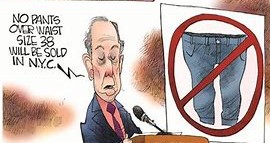 forbidding obedience to God. Christians would have to wisely continue to obey the Bible on this matter, in a quiet resistance to what would be ungodly overreach by a government.
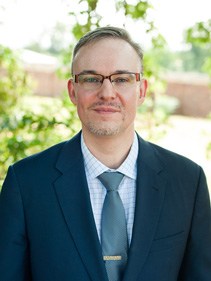 – David De Bruyn, Professor of Church History, Shepherds’ Seminary Africa
 computer technology with human biology. Examples include: robotic limbs, bionic eyes/ ears, portable pancreas, portable kidney, and direct links from brain to machine. Nano-machines, that would do internal cell repair or tissue repair are being developed.
 the experimental work on CRISPR for human DNA is already unethical, experimenting on human embryos that are destroyed after two weeks of life. Second, the question will be, is the attempt here to restore and correct life as God made it, or an attempt to reconstruct life as we would have it? CRISPR for curing cancer, correcting deformity, preventing disease is a submissive use of God’s creation. Using it to ‘design’ a baby, select sex, elect abortion, develop superhumans, would be wrong.
 Enormous ethical problems exist with cloning. First, it bypasses God’s plan for procreation and the family. Second, it attempts to be a creator of life instead of its custodian. Third, it opens up enormous possibility for exploitation: one can barely imagine all the evil applications in terms of harvesting body parts, prostitution, forced labour, or military use. Third, clones of existing humans will present massive legal and social problems of identity and even rivalry. Fourth, it will become another futile attempt to avoid mortality, by having one’s clone live on after your death, or perhaps using it as a host body for your brain.
 visors, headsets that will add information, or record it for health or legal purposes. Applications include: navigation, consumer information, facial recognition, The primary concern here is privacy: that your words and actions may be being recorded and stored without your consent. However, just as dashcams are becoming more and more standard to solve insurance claims, it is not unlikely that medical insurance companies may increasingly make use of these technologies to permanently track the health and even habits of its clients.
 Currently, technology has not changed the aging process, but scientists hope to change aging at the cellular level. Cryonics freezes human bodies at death, hoping to resuscitate them in the future when the technology exists. Transhumanism encourages the use of all bio-medical technologies that would create a post-human, or even post-biological state. Some hope to be able to ‘upload’ their consciousness to a machine, which would allow for immortality.
 Secular humanism does not hold these principles, it focuses almost entirely on quality of life. This quality of life is simply utilitarianism: whatever tools will lead to a ‘happier’ outcome are justified. But how is this quality judged? Is I physical, social, spiritual or a combination? Who gets to decide – the patient, doctor, or society? Who gets this quality – do we distinguish between age, race, wealth? And who knows what will bring about this quality of life?
 He that flees, has warrant to do so; he that stands, has warrant to do so. Yes, the same man may both flee and stand, as the call and working of God with his heart may be. Moses fled (Exo 2:15), Moses stood (Heb 11:27). David fled (1 Sam 19:12), David stood (24:8). Jeremiah fled (Jer 37:11,12), Jeremiah stood (38:17). Christ withdrew himself (Luke 9:10), Christ stood (John 18:1-8). Paul fled (2 Cor 11:33), Paul stood (Acts 20:22,23).”
 safest, most comfortable place in the world. As pilgrims, citizens of heaven, and ambassadors of Christ, we are to be salt (a preservative) and light (a guide) in places where darkness and corruption are spreading.
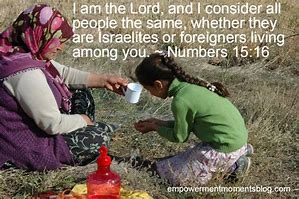 Hospitality to the foreigner living lawfully among us is expected of the Christian (Heb 13:1). Living in a nation with different customs, ways, foods, manners, accents, languages is a difficult experience. It is painful to be ‘the outsider’ perpetually. Christians should seek to make lawful immigrants feel at home, and particularly fellow-believers.
 Being able to provide, meet your needs, and avoid utter poverty is why many people have left one nation for another. However, the pursuit of wealth for its own sake is forbidden (Prov 23:4-5, 1 Tim 6:9-10). Leaving a country only for a more luxurious lifestyle may be a pursuit of greed, which the Bible promises will pierce one through with sorrows.
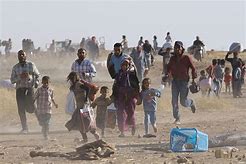 populations to migrate and flee Spain, and Portugal, leaving the Protestant movement almost non-existent in those countries. You might remember from school history that the French Huguenots fled France and settled in South Africa, America and Holland. Believers of the ages have known that unless God directs them otherwise in conscience, there is a time to flee persecution, to save their own lives, and to preserve a Gospel witness to others. So, I will say something which I will say often in this message and [Type text] come back in order to explain – fleeing a country due to persecution is a matter of conscience, and can be God’s will for you. This oppression can take the form of compelling a Christian to do evil or forbidding a Christian from doing right.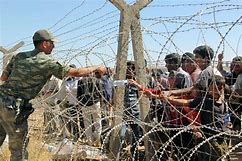
 as are all miracles. We can be certain that Christians who were eaten by lions, burned by Nero, drowned and lost to the sea or died in some other violent or destructive way will be partakers of the resurrection.
 How does one sow seed? You put it into the ground. The act of Christian burial is an act of sowing the now dead human body into the ground, in anticipation of its resurrection as a glorified body. Christian burial is a witness to an onlooking world. We say by our actions that we believe this body will be raised up to new life, as a dead seed sprouts in spring. By contrast, a materialist sees no need to symbolise a future for the body, because he doesn’t believe one exists. In that case, the body can be destroyed totally. Another image frequently used of the death of a Christian is found in verse 51.
 I do understand when cost is simply prohibitive, and a family chooses cremation. But if your conscience is persuaded to see the value of burial for a Christian, then I would suggest researching the costs, and seeing if they are really beyond you. Typical funeral policies will cover the cost of either a cremation or a low-cost burial. The prevalence of Jewish and Moslem populations at least means that the authorities cannot make burials prohibitively expensive.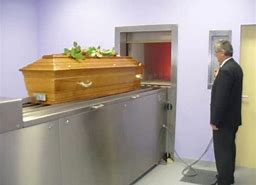
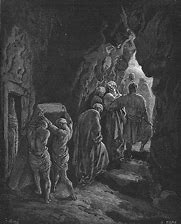 throughout the Old Testament and into the New. The Bible does not contain a single account of a believer’s body being cremated. (King Saul’s dismembered body was burned, and the bones then buried out of respect, 1 Sam 31:12-13).
 with the invention of a practical cremation chamber by Professor Brunetti, who presented it at the 1873 Vienna Exposition. Championed by Queen Victoria’s surgeon, Sir Henry Thompson, and driven by public concern for hygiene and health and clerical desires to reform burial practices, crematories slowly began opening in Europe and abroad. The first modern crematory in America was established in Pennsylvania in 1876.
 the reasons for preferring to destroy the corpse by fire, over burying it into ground, is to induce a feeling of detachment into the freshly disembodied spirit, which will be helpful to encourage it into passing to its next destination, lest it remain near its former body. Islam and orthodox Judaism forbid cremation, demanding that the body be treated with respect in life and death, and some even claiming that cremation will affect resurrection.
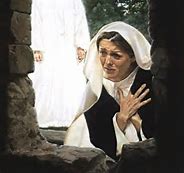 After the crucifixion of Jesus, the Gospels present us with an example of devotion to Jesus in the way the women—and Joseph of Arimathea—minister to him, anointing him with spices, specifically anointing, Mark speaks of him and not just “his remains” (Mark 16:1), and wrapping him in a shroud. Why is Mary Magdalene so grieved when she finds the tomb to be empty? It is not that she doubts that a stolen body can be resurrected by God on the last day. It is instead that she sees violence done to the body of Jesus as violence done to him,dishonor done to his body as dishonor to him. When Mary mistakes Jesus for the gardener, she tells him she is despondent because they “have taken away my Lord, and I do not know where they have laid him” (John 20:13). This body was, at least in some sense, still her Lord, and it mattered what someone had done to it. Jesus and the angelic beings never correct the devoted women. They simply ponder why they seek the living among the dead.
 Does it matter how you treat the body after you die? Is it possible to dishonour someone after they have died? (e.g. Wickliffe) When pagan armies have wanted to show the deepest dishonour to conquered enemies, what would they do? They would dismember and mutilate the bodies of those they had already killed. They would pile the bodies in heaps and burn them. They would leave the bodies exposed for carrion and animals. Conversely, respect for one’s enemies in warfare has always been shown in burying the bodies.
 Bible? What must be rejected as untrue?
 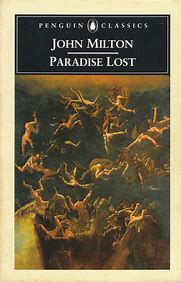 Paul obviously had read the works of pagan writers. Similarly, the Reformers (Luther, Calvin) were thoroughly trained in the classics of literature and philosophy. Pagan sources are generally wrong when they speak about God, but not always. Puritan writer John Milton’s great poem, Paradise Lost, retells the story of the fall of Satan and of mankind. In it he alludes to about 1,500 authors, some Christian but many pagan. So the attitude that prohibits access to anything not created by Christians is inconsistent with history and good sense.
 What is this expressing about the artist’s understanding of the world? If he is suggesting that the universe is ugly, chaotic and random, we would have to disagree. That’s bad art because it is not true. Some art may truly represent an ugly, immoral, or corrupt image, but such art would not be good or beautiful. Paul tells us to “think about that which is true, honest, just, pure, lovely, of good report, virtuous, and praiseworthy” (Phil 4:8). We must be concerned with such values because they reflect characteristics true of God. Many things in nature are beautiful, and many things that man makes are also beautiful. God is good, true and beautiful, and Christians should value things that share those characteristics. What God is determines what is good and beautiful and true. All things beautiful find their source and foundation in the character of God himself. He is the norm for judging what is good, true and beautiful.
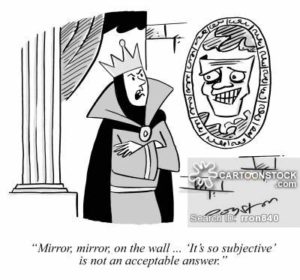 many would say. However, from a biblical point of view, we must affirm that beauty is a reflection of the character and ways of the Creator. A God-centered view of beauty locates that quality in certain characters inherent in nature or in God himself. If we reject an objective standard of beauty, it becomes no more than personal opinion, in which case everything goes. There is a kind of art that corresponds to norms found in the character of God that we ought to appreciate it (even if we don’t currently). If God is the foundation of beauty, and if there are norms of beauty found in the character of God, then we should understand these norms and embrace them for ourselves instead of relying on private preferences.
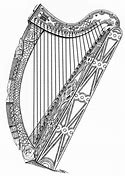 cultural advancement when it speaks of the descendants of Cain fathering those who play instruments. A man named Jubal “was the father of all such as handle the harp and organ” (Gen 4:21). The first “inspired” artists created the Tabernacle and all the associated items “for glory and for beauty” (Ex 28:2, 40).An artist was not originally separate from any other artisan – one who made furniture, or a stone mason, or weaved clothing. What we think today of an artist was simply an artisan, working with paint, words, or music.
 Even atheistic scientists wax eloquent about the beauty of the heavens and the earth. The deeper we probe into the mysteries of nature, the more beauty we find—in space, on the bottom of the sea, in the composition of a molecule. God’s creative hand is seen everywhere.
 Man is a sub-creator, who fleshes out the meaning of the world in culture. Human creativity is a direct reflection of the image of God in man (Gen 1:26-27). God empowered certain individuals with artistic skills (Ex 31:6). Unfortunately, such powers were often corrupted to make idols (Ps 135.15-18; Rom 1:23).
  A man speaks (or writes or paints or composes) from the abundance of his heart. Those whose nature is still “dead in trespasses and sin” will usually produce art that reflects the depravity of the lost soul. A culture is lost deeply affected by whatever religion is dominant, which will come through in its art. The Scriptures speak of this life and culture as worldly, earthly, fleshly, sensual, and demonic. This [value system] and this lifestyle are ungodly, unholy, and unfit. Although the nature of this culture is also deeply spiritual (living in the spirit of this age), the evidences of this culture are, likewise, quite objective. There are styles of personal appearance and dress that purposefully and plainly identify with antichristian culture and, thus, offend both the letter and tenor of God’s revealed truth and innate holiness. There are certain genres of language and speech that are clearly antichristian and unbefitting a child of God. There are specific art forms and particular music styles that are unmistakably identified with godless culture and living. These forms and styles ought not to be embraced by those who claim to be Christ’s. To associate oneself with such dress, speech, art, and music is to disassociate oneself with Christ, his [value system] and lifestyle.
 has to take place somewhere, and there are forms involved whenever you worship. Even very plain auditoriums include liturgical forms. We cannot remove all art from church. Every form is an art form, and every art form communicates something. E.g., the pulpit, the platform, the building, chairs, clothing, music, offering plates—all have meaning and value. Everything has style and aesthetic value. Whether simple or sophisticated, all elements and items used in worship have meaning and value. Some things are done primarily for beauty, artistic merit and/or style (e.g., clothing has style; it’s not simply to cover us up or keep us warm). All forms are art forms, and every form communicates something. E.g., cathedrals include expressions of transcendence and holiness, and thus inspire awe and reverence—that’s a planned, designed response. A very different feeling comes from a civic hall or theater.