Spiritual Disciplines in the Life of the Minister – Part I

Proverbs 24:30-34 – I went by the field of the lazy man, And by the vineyard of the man devoid of understanding; And there it was, all overgrown with thorns; Its surface was covered with nettles; Its stone wall was broken down. When I saw it, I considered it well; I looked on it and received instruction: A little sleep, a little slumber, A little folding of the hands to rest; So shall your poverty come like a prowler, And your need like an armed man.

I imagine Solomon riding his chariot, perhaps in entourage, and suddenly a vineyard catches his eye. He diverts his course, brings his horses to a halt next to the stone wall. With a finger he pushes on a deep crack in it and sees the unmaintained wall lose a few more bits of clay. He props one leg up on it and looks over the vineyard. Growing through the wall is a tall and healthy weed. He tugs at it and stares at the sight in front of him – thorns, weeds, thistles. Instead of lines of trestles with vines hung, there are vines growing on the ground. Some have been choked out of life, and are just dead branches, but here and there some vines survive. But without the trestles, the pruning, the protection, there is little or no fruit. As Solomon looks, he is being taught by the owner of this field. The sluggard of the field is instructing Solomon without saying a word. Solomon is no doubt thinking, “All this land, land which was purchased at a cost, land which could be bringing the owner the joy of its fruit, and money through the sale of it, instead lies here, being used for no other purpose. Sheer laziness, sheer slothfulness has brought about this state of affairs, and instead of fruitfulness, we have a sad and tragic waste”.

I wonder if it is too much to say that this scene might picture the lives of many pastors. Like the field, they have been purchased at a great price. Like the field, they have been seeded – not with grape-seed, but with gifts – spiritual abilities to teach, lead, help, administer, exhort. But instead of great fruitfulness, their lives are characterised by the thorns of poor family relationships, spiritual dryness in their own lives, spiritual apathy at church, a narrowing effectiveness with the lost, and an overall sense of ineffectiveness. Instead of fruit, there are thorns. But the reason is the same: instead of the discipline of a farmer, the evil of slothfulness has entered in.

The farm illustration is certainly valuable. A field does not organise itself. If you neglect it, it will revert to chaotic, wild and random growth. Creation tends to go from order to disorder, unless you intervene and impose order upon it.
The human heart is the same. Left to itself, it does not organise itself into goals, plans, schedules, tasks and accountability. Left to itself, it pulls the blankets over its head, sleeps longer, watches more TV, surfs the web aimlessly, putters away its time.
The truth is, without spiritual disciplines, a pastor can be like the field Solomon saw – full of potential, but lying in effective ruin, useless to God and man until the hardship of discipline is applied.

A.W. Tozer spoke about the great temptation to laziness in the ministry: “It is easy for the minister to be turned into a privileged idler, a social parasite with an open palm and an expectant look. He has no boss within sight; he is not often required to keep regular hours, so he can work out a comfortable pattern of life that permits him to loaf, putter, play, doze and run about at his pleasure. And many do just that. The ministry affords limitless opportunity for the lazy man to indulge his talents. Doing nothing can be accomplished more gracefully in the Lord’s work than anywhere else, for the simple reason that the minister has no one to check up on him. The average church requires little of its pastor except to mark time decorously; the preacher with a propensity for loafing is strongly tempted to do just that. However much we may dislike to hear it, loafing and puttering are deadly habits for the young minister. He will either conquer them or they will break him”.  (A Word In Season)

A pastor without discipline will soon show the signs of his neglect. His barren prayer life will show up in his powerless preaching and ineffective witness. His lack of meditation will show up in his irritable spirit, and joyless attitude. His lack of illumination will show up in his counselling and decision-making which lack wisdom. His lack of sermon preparation and further reading will show up in his messages being repetitive, clichéd, and shallow. His lack of family time will show up in the increasing distance between him and his family. His lack of pastoral oversight will show up in the multiplying problems and discontent in his church. In short, his personal life, family and local church will start to look like that field.
Discipline for the pastor is like furrows and trestles to the vineyard farmer. Making a furrow in the soil won’t get you grapes, but you won’t get them without one. Building a trestle to tie the vines to won’t make you grapes, but you won’t get grapes without them. In the same way, spiritual disciplines will not give you spiritual fruit, but you won’t get fruit without it.
Discipline is simply responding to the realities of the Fall. Our hearts tend to go from order to chaos, from diligence to sloth, from organisation to mess. In a world where the current pushes us downstream towards making a shipwreck of the faith, discipline is the hard row upstream.
Discipline is imposing order upon disorder, opposing the bent of a depraved heart. In fact, Paul made it clear that the reason he imposed discipline upon himself, was that without it, he feared he would be disqualified.

1 Corinthians 9:27 – But I discipline my body and bring it into subjection, lest, when I have preached to others, I myself should become disqualified.
He believed disqualification, failing to make the grade, was a real threat if he simply followed his whims, impulses and comforts. When speaking to the young pastor Timothy, Paul enlists the illustrations of three of the most disciplined professions:
2 Timothy 2:3-6 – You therefore must endure hardship as a good soldier of Jesus Christ. No one engaged in warfare entangles himself with the affairs of this life, that he may please him who enlisted him as a soldier. And also if anyone competes in athletics, he is not crowned unless he competes according to the rules. The hard-working farmer must be first to partake of the crops.

The farmer is known for his consistent discipline. The soldier is known for embracing rigorous military discipline. The athlete is known for undergoing rigid bodily discipline. You couldn’t make the point more if you wanted to. Pastors are not compared to playboy actors, to Internet stockbrokers or to part-time landscapers. They are compared to the people who day-in and day-out live by a rigid form of structure, organisation and self-denial so as to accomplish their goals.
Put simply, discipline makes something else possible. Discipline by itself doesn’t do anything. Tying your shoelaces does not make you walk; it just stops you from tripping over them, or from slipping out of your shoes. Lifting the handbrake doesn’t make your car go; it just helps you to go without much hindrance.

Hebrews 12:1 – Therefore we also, since we are surrounded by so great a cloud of witnesses, let us lay aside every weight, and the sin which so easily ensnares us, and let us run with endurance the race that is set before us,…
So we might want to ask at this point, what is the aim of our discipline? Unless we know what we are aiming at, we will miss it. If we are going to embark upon a disciplined structure, we want to understand the shape of what we are building.


The Aim of Discipline

1 Timothy 1:5 – Now the purpose of the commandment is love from a pure heart, from a good conscience, and from sincere faith,…
Notice here is the aim of the commandment – or the law. The law is amongst other things, a kind of discipline – a kind of structure. The Bible says correctly understood, God’s structures are there to lead us to love Him, purely in good conscience with all sincerity.

The aim of discipline is the aim of the Christian life – to love the Lord our God with all our hearts, soul and mind. Now, again, I will reiterate, discipline by itself does not enable you to love God. Loving God only happens when we are exposed to God’s glory by the illuminating work of the Spirit, and our response is to love Him. That is a work of God, not a work of man. But the Holy Spirit does not typically illuminate disordered and chaotic lives. Furthermore, since laziness is a sin, the laziness of ill-discipline grieves the Spirit and quenches what He might otherwise do. Laziness clouds our way and impedes our progress:

Proverbs 15:19 – The way of the lazy man is like a hedge of thorns, But the way of the upright is a highway.
Discipline makes possible continual access to the means of grace by which God reveals Himself. It is when we see God and are illuminated, that we love Him and respond to Him. You could think of discipline as the plans and structures you build around your obedience to help it happen, and happen consistently. Your primary goal is to love God by seeing Him through the Word and prayer and ministry, therefore, discipline is the structures you build so as to make that possible. Building roads doesn’t get you anywhere, but it makes the journey possible.

 

  – David De Bruyn, Professor of Church History, Shepherds’ Seminary Africa
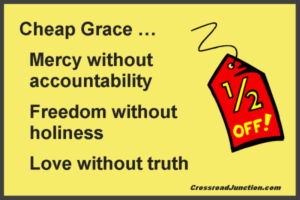
GRACE IS FREE, by Marci Preheim: A Biblical Critique & Pastoral Caution

The least pleasant part of a pastor’s job is Titus 1:9, “to refute those who contradict”.  But when I think of all those who have loved me enough to warn me, I’m deeply thankful. I shudder to think where I’d be if they had not done so (Jam 5:19-20; Prov. 27:5-6).  Protecting others from error is part of Jesus’ golden rule, a labour of love, and the work of a true shepherd (Matt. 7:12; 1 Cor. 13:6; Php. 1:9-11; Acts 20:17-38). A member of our church recently asked me about a Christian book making the rounds. It’s by Marci Preheim entitled, Grace is Free: One Woman’s Journey From Fundamentalism to Failure to Faith. As I read it, there was much that I agreed with.  Not for a moment would I defend any of the awful legalism and soul-killing, joy-stealing, pride-fuelling, church-splitting doctrines of some fundamentalists.[1] I share Preheim’s righteous anger against all the spiritual ruin caused by moralism, externalism, empty ritual and dead, willpower religion.

Who doesn’t grieve any time we hear of hypocrisy causing God’s dear children to stumble, harming their faith, disillusioning their children, tempting them to be mad at the Church, suspicious of authority, and distrusting of God’s Word? The Lord reserves His strictest judgment for those spiritual leaders who wreak such havoc (Matt. 18:1-6; Matt. 23). I agree with Mrs. Preheim that we must wage a lifelong war against the Pharisee inside of us all. However, there is also a pagan inside of us all that requires constant combat. The ditches on both sides of the biblical road of sanctification are deep and deadly. They are legalism and license.[2] We never have the luxury of fighting one while ignoring the other.

In seeking to expose error, I believe Preheim overstates her case and falls into error herself. When we warn against “the leaven of the Pharisees”, we must ensure that we don’t embrace the leaven of the licentious. While reading this book, I could hear the echoes of other voices in the Church today that are also cheapening God’s grace, redefining Christian liberty and misleading many[3]. So I am compelled to write. Here are three reasons why I believe Grace is Free is a costly and harmful book: it is antinomian; it contains false dichotomies; it misinterprets Scripture.


Antinomianism

We can disagree with church history, but we cannot ignore it. Solomon tells us there is “nothing new under the sun” (Eccl. 1:9), so we should expect bad ideas to get recycled. Scripture tells us to be on the alert for Satan’s lies in every age (2 Cor. 11:3; Col. 2:8; 1 Pet. 5:8), and the past 2,000 years of church history tell the story of old errors that refuse to die. One of those is Antinomianism. Though this word was coined by Martin Luther, the error is as old as Eden, when Satan tempted Adam to turn “against God’s Law” (anti-nomos = against law). Antinomianism has been called the original heresy, the mother of all theological errors that have troubled God’s people. It says that God’s Law is not important, or necessary for sanctification, or for living the Christian life.[4]

Romans 6 warns against the subtle lie of antinomianism: “What shall we say then?  Are we to continue in sin so that grace may increase? May it never be!” (vv. 1-2).  Jude’s entire epistle is against antinomianism: “For certain persons have crept in unnoticed…ungodly persons who turn the grace of God into licentiousness” (v. 4). In today’s Church there is a new wave of those eager to celebrate God’s ‘extravagant, scandalous, lavish’ grace by minimising obedience.[5] They downplay deeds, behaviour and striving, at the expense of resting and abiding. They treat effort like a four-letter swear word.[6] It’s exactly what an indulgent, worldly Christianity has been wanting; it’s everything my flesh craves.
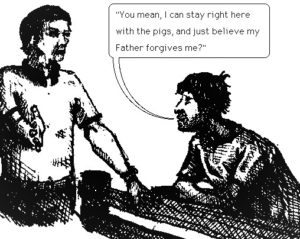
Preheim demonstrates that she has bought into this modern antinominaism when she writes, “Focusing on behaviour leads to external works and a neglect of the heart, which is where true godliness is or isn’t (p. 11).”[7] She is presuming that focusing on behaviour and focusing on the heart are mutually exclusive.  But God focuses on our behaviour all the time in His Word. Grab a concordance or do a word search on “deeds” – it’s everywhere, from Genesis to Revelation (Gen. 32:10; Rev. 19:8; “deeds” found 159 times in ESV). Preheim repeatedly downplays Christian activity. She writes, “You won’t find many activity-based commands that can be written down on a to-do list and crossed off at the end of the day (p. 19).” I beg to differ.  For example, there are 52 one-another commands in the Bible. Can a healthy Christian conscience not rejoice when, by God’s grace, he/she is faithful in obeying some of these specific commands for our church life together? (See Paul’s own detailed testimony of his obedience in Acts 20:17-35.)

Preheim criticises those who encourage the use of Scripture memory verse cards, lists of prayer requests, and rising
early in the morning (p. 17). She misinterprets Titus 2 to say it’s more about a Christian woman’s attitudes than actions (p. 25), when in fact the text plainly shows it is both.  Indeed, God does want gospel-driven deeds done in faith, not in the flesh; but that will still be manifest in many specific, practical actions. Grace is Free states, “Believing we have [God’s] favour no matter how we perform in a given day is the hardest thing for us to do.” (p. 50).  But she is failing to see the difference between justification and sanctification.  True, our deeds cannot alter our justification before God; but in sanctification, our deeds do affect God’s love for us and our assurance of salvation. Jesus made this clear when He said, “He who has my commandments and keeps them is the one who loves Me: and he who loves me will be loved by My Father and I will love him and will disclose Myself to him”(John 14:21, repeated in 14:23 and John 15:1).

This is a classic antinomian error.[8]  In 1637 in New England, faithful church elders had to refute antinomians in their midst who were troubling Christ’s flock. This Antinomian Controversy was also known as the Free Grace Controversy. One of the popular ideas that was rightly denounced as biblically “unsafe” and unorthodox went like this, “If I be holy, I am never the better accepted by God; if I be unholy, I am never the worse.”[9]  Is this not the same error that Preheim is promoting when she says there is no correlation between God’s favour and our actions as believers? God’s Word plainly states that His children are eager to please Him in every way (2 Cor. 5:9; 1 Pet. 1:17) and even to “strive together for the faith of the gospel” (Phil 1:27).  But Preheim warns against the “striving mode” in the Christian life (p. 50).  She writes: “No one (in my Christian circles anyway) would actually come out and say that people will lose their salvation if they don’t strive for excellence. But they insinuate that they will lose God’s favor—whatever that means. ‘We have to teach the young people to be pleasing to God,’ they say to me behind closed doors….”[10]

Was the apostle Paul speaking behind closed doors when he said, “Work out your salvation with fear and trembling…” (Phil. 2:2)? Or when he prayed for the Colossians to be fully pleasing to God, bearing fruit in every good work (Col. 1:10)? God makes it clear what pleases Him (e.g., Prov. 6:16-19; Col. 1:10; Heb. 13:15-16) and we should beware of those who tell us to disregard that. Another of the slogans of the Free Grace crowd in 1637 was, “tell me not of…duties, but tell me of Christ.” Sounds a lot like Preheim, “Could it be that good works do not come from striving for excellence…but rather through abiding in faith in the good work Christ has done for us?”[11]  Yet the Bible is filled with duties and striving that God requires of us (e.g., 1 Cor. 9:24-27; Php. 2:12-13; 3:12-14; Col. 1:29; 2:1; 4:12).

One consequence of this kind of antinomianism is that it redefines legalism. Christ and His Word boldly confront both salvation-legalism and sanctification-legalism – any notion of works-based salvation (Acts 15; Romans 3-4; Galatians), or any manmade applications of Scripture that are put on par with the Word of God (Matt. 15; Mark 7).  Both of these errors have done untold damage. But Preheim adds an unbiblical, third kind of so-called legalism: those who strive for holiness and eagerly apply God’s Word in specific ways, and who sincerely encourage others to do the same.  In the Christian church, the accusation of “legalist” is deserved at times; but it can also be a smokescreen for those wanting to flaunt their Christian liberties, live more worldly, and chafe at spiritual authorities in their life.

False Dichotomies

If the Deceiver can’t get us to reject the Bible, he’ll seek to make us half-Bible Christians instead of whole-Bible
Christians (Acts 20:27, we need “the whole counsel of God”).  Since the Garden, Satan has always loved to use half-truths and unbiblical dilemmas to ensnare God’s people.  That’s exactly what antinomianism does – pitting law against love, holiness against grace, effort against faith, doing against being. Preheim’s book contains dangerous false dichotomies.  For example, instead of aiming to give a clear gospel presentation to your lost friend, you should just do life together and actually love them (pp. 43,45).  But why not both, since Paul prayed for direct gospel opportunities (Col. 4:3-4; Eph. 6:19-20)?

Instead of trying to rise early to meet with God, we’re told to pursue true devotion (p. 51). Why not both (Ps. 1:2; 63:1)? Instead of warning another believer about worldly habits, we should let God change their desires (p. 53). Why not both, since God uses us as His instruments in one another’s lives (Jam. 5:19-20). Preheim writes, “The truth is that God is far more interested in our hearts and beliefs than he is in our activities (p. 19).” Why then does the Bible repeatedly tell us that God’s final judgment will be based on our deeds (Rom. 2:6; 2 Cor. 5:10; 1 Cor. 3:8; Ps. 62:12; Rev. 20:12; Prov. 24:12; Col. 3:25)?[12]

Twisting Scripture

Lastly and most seriously, I am concerned at how Preheim mishandles God’s holy Word in numerous places.  Here are a few of
the more prominent examples. Her use of John 15 is foundational to her entire book.  She writes, “All the commands in the New Testament can be reduced down to one: abide in Christ (p. 19).”  But I ask: What gives Mrs. Preheim or any one the right to cram all of God’s commands into whichever one we like the most? The only One I know who has the right to summarise all of God’s commands is our Lord Himself, who did exactly that when He summed up all the Mosaic Law in two commandments (Matt. 22:37-39).

She then defines abiding as consisting of three things:  devotion, desire and dependence.  All of those are critical, as she rightly explains. But what about the need for active obedience?  Jesus’ command to “abide” includes a very active, deliberate, decisive and ongoing effort to “remain, stay, dwell” in union with Christ. Plus, in this same chapter, Christ also shows our duty to let His Word abide in us, to keep God’s commandments,and to love one another sacrificially (Jn. 15:7,10,12,17). But instead of including this, Preheim redefines abiding with another false dichotomy: “…fruitfulness comes from believing more, not necessarily doing more. As we abide in Christ, fruit is naturally produced. In nature, branches do not strive to produce fruit…(p. 33).” Again, she takes aim against any “striving”.

Her misuse of John 15 then leads to more error.  Preheim quotes 2 Peter 1:3 about the wonderful sufficiency of Christ for the believer, followed by this, “What else could we possibly need to do but abide in him?”  She totally ignores the fact that 2 Peter 1:5-11 then proceeds to give an entire list of eight godly virtues we must actively pursue! Preheim rightly uses Matthew 7 to warn against self-deception and trusting in our deeds to save us (p. 38). Yet she omits the fact that true faith is also seen by its deeds. Jesus says the one who “enters the kingdom of heaven” is the “one who does the will of My Father” (Matt. 7:21).  We cannot escape the emphasis here on deeds and fruit – it’s the whole point of the passage.  How do you tell the difference between a true and false prophet?  By their deeds. As Jesus concludes this entire Sermon on the Mount, the contrast between the house built on rock versus sand comes down to this one difference: one hears Jesus’ words and “does them”, and one “does not do them” (Matt. 7:24-27).
True, any of these obedient deeds can be counterfeited, done legalistically, by works-righteousness and not by grace through faith.  But still, Jesus teaches that the main, outward difference between the true and false convert is their good or bad fruits.  We must beware of taking a text given to warn against false prophets and turning it into a pretext against earnest Christians striving for holiness.  That’s called twisting Scripture, not teaching it (2 Pet. 3:16). One last example:  The foreword of the book, and the book itself, shockingly states that Proverbs 31 is not a model for the godly wife in the home (p. 8).  Why else then did Solomon give this as the conclusion to an entire book on wise living for God’s people?  Have we really misread the plain meaning of that text for all these centuries, until Mrs. Preheim came along to liberate us? No wonder then that Preheim says, “the godly woman must be redefined in our generation”, since she tosses out God’s definition and the beauty of His design.

Conclusion

I fear that Preheim’s outrage against abuses of authority and legalism in the Church has blinded her to biblical basics of progressive sanctification. Beware of a theology built on reaction, still swinging on the pendulum, not yet grounded in solid, scriptural footing. We are told that those who teach God’s Word will be held to stricter judgment (Jam. 3:1; 2 Tim. 2:15). There is no excuse for false dichotomies, the twisting of Scripture and antinomianism.  The Bride of Christ has suffered long enough under such harmful teachers. It’s time to return to the “old paths” of careful theology and pastoral wisdom.

The historic Protestant confessions contain clear, biblically-balanced statements about the doctrine of sanctification.  Take for example the 1689 London Baptist Confession: “So believers grow in grace, moving towards mature holiness in the fear of God, pressing on towards the heavenly life in gospel obedience to all the commands which Christ as Head and King has prescribed for them in His Word.” No reluctance here to speak of grace and striving together, of both belief and behaviour in this Christian life of “gospel obedience”.[13] I pray that Mrs. Preheim, and all of those influenced by her book and by the prevailing antinomianism of our day, will return to a full-orbed, biblical vision of the free grace of God in all of its saving and sanctifying power – to the praise of His glorious grace.


[1] Phil Johnson gives a helpful summary of what’s wrong with Fundamentalism:  http://thegracelifepulpit.com/pdf/deadright.pdf

[2]Sinclair Ferguson’s book, The Whole Christ, uses Scripture and church history skilfully to show how both legalism and license stem from the same root of unbelief, distorting God’s character, and denial of our union with Christ.

[3]See: Mark Jones, Antinomianism: Reformed Theology’s Unwelcome Guest?; Jerry Wragg, Free To Be Holy; https://www.gty.org/library/blog/B150617/abusing-grace

[4]See helpful summary in pp. 622-23 in Macarthur & Mayhue, Biblical Doctrine.  E.g., “Antinomianism is the teaching that sanctification is not the necessary fruit of justification.”

[5]One notable and very public example of the outcome of antinomianism has been the rise and fall of TullianTchividian:  http://thecripplegate.com/ten-lessons-from-the-tullian-tchividjian-confession/

[6]https://www.thegospelcoalition.org/blogs/kevin-deyoung/make-every-effort/

[7]All quotations taken from the Kindle version.

[8]https://www.9marks.org/review/antinomianism-mark-jones/

[9]https://www.thegospelcoalition.org/blogs/kevin-deyoung/antinomianism-its-bigger-than-you-think/

[10]https://www.keylife.org/articles/sometimes-god-hates-good-deeds

[11]https://www.keylife.org/articles/sometimes-god-hates-good-deeds

[12]https://www.desiringgod.org/articles/final-judgment-according-to-works

[13] There are excellent resources available for those wanting a better, more biblical treatment of legalism, sanctification, and true godliness – for a housewife, a businessman, or any child of God.  Try the writings of the Puritans or J.C. Ryle, or modern authors like Bridges or deYoung on grace-driven holiness.


  – Dr. Tim Cantrell, President, Shepherds’ Seminary Africa

A Christian View of Environmentalism

Environmentalism has risen to the status of a religion, calling all to believe in its dogma, and obey its commands. Many professing Christians have added their voices to this number, claiming that ‘the kingdom’ includes embracing the environmental agenda.


Global warming advocates have raised the temperature of the rhetoric by referring to people who do not embrace their ideas as ‘climate-deniers’, drawing associations with as ‘Holocaust-deniers’.

Biblical References to Ecology and The Environment

1)The Creation Mandate of Genesis 1:28 is a command to rule and subdue. The Earth is a resource for man, to be used, and used up, for his benefit. The Earth was made for man, not man for the Earth (Gen 8:21-9:3). He was to cultivate it (Gen 2:15), name the animals and bring order out of chaos.

Therefore, any environmental concern that opposes growth in human population, rejects a human benefit in favour of nature, unduly restricts the cultivation of the Earth for food, or mandates a vegetarian diet is in opposition to God’s Word.

2) In the Mosaic law:

– Israel was told to care for their land (Ex 23:10-11, Lev 25:1-7). The captivity was partly a punishment for not doing so (2 Chron 36:17-21).

– The laws of harvesting called for leaving some produce left unharvested (Lev 19:9), to provide for both the poor and for wild animals (Ex 23:11)

– The sanitation laws of Israel, shows God’s concern with cleanliness and good disposal of waste.

– The laws of warfare prevented warfare against the land itself (Deut 20:19-20).


3) We must love our neighbour, which means respecting our surroundings (Phil 2:1-4), and we must obey government regulations (Rom 13:1-7).

4) The Earth was not created to be a permanent planet. When His purposes for it are complete, He will destroy it with fire (2 Pet 3:7-13).

5) We are worshippers of God, not nature (Rom 1:20-25). The secular environmentalist agenda speaks of “Mother Nature” or even “Gaia”.

6) Growth in human population is a good thing, not evil. Man was commanded to fill the Earth, and children are a blessing. (Gen 1:28, 9:7)

7) The curse has meant that death, difficulty and degradation are part of the creation mandate now. It also means that we should expect to see the Earth experience stress and age (Is 51:6, Rom 8:20- 23).

8) Revelation describes future plagues upon the Earth that will devastate it. After the Millennial reign, which will see nature again restored, the Earth is destroyed by fire and replaced with a New Heavens and a New Earth.

9) We can reject catastrophism outside of God’s future timetable because of Genesis 22.


Materialism Pantheism Christianity
The world exists by undirected forces of evolution.


Nature is a limitless resource for technology.


Humans should use nature.


The world suffers from maldistribution.


Technology will solve every problem.


The world exists by undirected forces of evolution.


Nature is a living organism/ the manifestation of “God”.


Humans are one with nature

Humans should serve nature.


The world suffers from overpopulation.

Free market business and industrialisation is the source of pollution and global warming.


The world is created by God (Gen 1:1).


God is distinct from His world, because He owns it (Ps 24:1). It reflects Him (Ps 19:1), but it is not Him. God sustains the world (Col 1:17).


Humans are the keepers of the environment, but distinct from it. (Gen 1:28-28)Humans must rule over nature (Gen 1:28).


Greed, laziness, deceit are at the heart of economic and ecological problems. Human are meant to fill the Earth.

Industrialisation does produce problems, but it also produces solutions. Technology is a tool that can do no better than the hearts that make it.


  – David De Bruyn, Professor of Church History, Shepherds’ Seminary Africa

A Christian View of Racism

In a country with such a racially-charged history, very little discussion of contentious issues can go on without someone bringing up racism as a motive. Racism is by no means something that died with apartheid, nor is it something that one ‘race’ has the monopoly on. How should Christians think of ‘racism’?

Historical Background of the Idea of Race

The current idea of races is not a biblical one. Darwinism lies behind the idea that humans developed (evolved) at different paces, some reaching a more civilised state earlier than others. This in line with Darwin’s theory, the full title of his book being “ On the Origin of Species by Means of Natural Selection, or the Preservation of Favoured Races in the Struggle for Life”. After an encounter with “savages” in Tierra del Fuego, Darwin exclaimed in his diary “one can hardly make oneself believe that they are fellow creatures”, he observed in The Descent of Man that “the civilised races of man will almost certainly exterminate, and replace, the savage races throughout the world”.

Social Darwinism, while rejected by contemporary proponents of scientific Darwinism, was nevertheless the logical application of Darwin’s theory to mankind. Certain environments had created certain biological adaptation in men (accounting for skin colour differences, difference sin stature), but also in mental and emotional development.

Eugenics was one result of this: believing that it was necessary to sterilise the ‘unfit’ and to hasten the creation of a super-race. Over 65 000 people in America were sterilised. After WW2, it waned in popularity, but modern super-hero movies, films about super-abilities appearing in people, and the possibility of DNA editing shows that this has never died.
Nazism was a logical application of Darwinism. Hitler believed that he was co-operating with nature by slaughtering Jews, Gypsies, Poles, Slavs, the disabled and other dissenters. Eleven million people were slaughtered in the pursuit of a Master Race.
Apartheid grew up in the same soil. Darwinism was accepted as fact in the 1940s. Alongside 100 years of exhausting wars between British, Afrikaner, Zulu and Sotho, the disintegration of the British Empire, a growing Afrikaner Nationalism and Protectionism, the idea of ‘separate development’ along racial lines would create a system of inequality and active discrimination.
While today the world decries racism as evil, it uses the same genetic and evolutionary thinking. Using this, it defends homosexuality as being equally biologically determined, making racism and homophobia the same form of mindless hatred for ‘differences’. Only the Bible has the true antidote for racism.

The Biblical View of Race

1. Scripture is clear that man was made in God’s image (Gen 1:26-28). All men are descended from Adam, which means that all men share equally in God’s image.
2. In Acts 17:26, Paul makes it clear that God has made every nation (‘ethnos’) from one blood. Put simply, there is only one race on Earth – the human race. We are one race, divided into different nations – ethnicities, or language groups.
3. The origin of different ‘nations’ is given in Genesis 11. There we read that man as originally one ethnicity – speaking only one language. Man’s pride led to the Tower of Babel, where God supernaturally created multiple ethnicities in one day.
4. The following ‘table of nations’ details how all mankind come from the three sons of Noah: Shem, Ham, and Japheth. Although we cannot be precise, it appears that the split may have been: Ham: African and Oriental Peoples (Including American Indians and South-Sea Islanders); Japheth: Indo-European Peoples; Shem: Semitic Peoples of North Africa, MiddleEast and Central Asia. Whether God changed people’s physical appearance at Babel, or whether physical traits developed in response to various climates is not certain.
5. What Scripture describes is a broad ‘devolution’ as most tribes deepened in their idolatry, dehumanising themselves by their idolatries (Rom 1:18-32).
6. At the root of what is now called ‘racism’ is the evil heart of pride. Man’s love of self, causes him to hate those around him, beginning at the broadest level of differing ethnicities, but circling in to others from different regions, cities, towns, families. Racism seeks the excuse of difference to war, subjugate, enslave and steal from one’s neighbour to enrich and exalt self.
7. Israel was a called-out ethnos, a nation meant to be a light to other nations. Intermarriage was not forbidden on ethnic lines, but on religious ones. Israel was not to lose its separateness from the nations. If a man or woman from another nation embraced Israel’s God, marriage was permissible. This is still the case (1 Cor 7:39).
8. At the same time, Israel was to show hospitality and kindness to people form other nations who had not converted (Lev 19:34).
9. Unfortunately, by Christ’s time, many Jews had confused ethnicity with God’s favour, and despised Gentiles for being Gentiles (Lk 4:23-29, Acts 22:1-22).
10. Christ told parables such as the Good Samaritan to confront the racial hatred that was now present in Israel.

The Cross and Race

1. The ultimate answer to hatred, jealousy and division between mankind is the Cross. The Cross removes all grounds for boasting, and humbles every ethinicity. It then creates a new ethnos – literally a new race/ humanity in Christ, so that two believers from different ethnicities now have a new one in Christ (Eph 2:11-19, Col 3:11, Gal 3:28)

2. The Great Commission is a message for every nation to reach every other nation (Mt 28:19-20).
3. Understand the great glory of God’s final plan includes a great conglomeration of ethnicities redeemed and singing the same song (Rev 5:9, 7:9-10)
4. The Church is not Israel, because the church does not call on Gentiles to become Jews. Gentiles can come to Christ as they are. This was a huge hurdle for saved Jews in the book of Acts.
5. The meaning of the gift of tongues was to both rebuke Israel for their ethno-centrism, and to show unbelieving Gentiles that the Gospel was for them too (1 Cor 14:21-22).
6. Believers now have the God-given position to embrace other ethnicities as family, and are commanded to do just that.
7. Partiality – which is preferring one believer over another – is forbidden in Scripture (James 2:1-9). Hospitality to all in Christ is what is required.
8. Understanding that certain traits are present in cultures (Tit 1:12), should give us compassion and understanding. Some traits will change with exposure to the Gospel. Some traits will add colour and pleasurable diversity to the church.
9. We must work to overcome historically imposed divisions  by going outside of our comfort zone to enter the lives of believers from different ethnicities. Show genuine interest, and it will help you understand the other. Accept that those who have experienced injustice have to embrace biblical forgiveness, even on the level of ethnic group.

10. Approach interracial dating, marriage and adoption from the biblical view of faith/ religion, not skin colour.
11. Reject the secular agenda of ‘diversity’ based upon a man-centred view of rights. A God-centred and love-based view of man can address the same problem correctly.
12. Reject the secular agenda of ‘multi-culturalism’, which equates all religions, worldviews and beliefs. While all people are equal in value before God, not all belief-systems are equally true.


  – David De Bruyn, Professor of Church History, Shepherds’ Seminary Africa

A Christian View of Just War Part II

The Idea of “Just” War

Christians have long held that most wars are immoral and unjustifiable, but that some wars are morally acceptable, legitimate or “just.” The following must be true for a war to be just:
• The cause must be just. Aggression, revenge, economic gain or the taking of territory are not legitimate causes for war.

◦ Defending your nation against a aggressor is just.
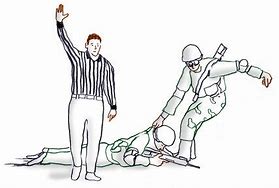

◦ Defending innocent citizens is a just cause.
◦ Defending a weaker nation assaulted unjustly by a stronger nation is a just cause.
◦ Retaliating against intermittent forms of aggression (such as terrorism) is a just cause.

• War must be the last resort. All other solutions to the hostilities must be tried first. Only when negotiations and compromise have failed is war permissible.

• War must be formally declared by legitimate governmental authority. War is not the prerogative of individuals but of governments.

• War must have limited objectives. One side should not attempt to thoroughly annihilate the other side, and even the aggressor should have his territory restored in defeat. 

• Warfare must employ only necessary force. Weapons and tactics must fit the context and use only what is needed to repel aggression and secure peace. Torture, chemical warfare, human shields, and scorched earth policies are not just forms of warfare.

• Noncombatants should normally be immune from war. Civilians, POWs, medical workers and other noncombatants should not be targeted. However, the industries that drive a country’s war-making capacity (e.g., transport, oil, communications, etc.) are legitimate targets.

• Reasonable prospect for victory (Lk 14:31-32). If one cannot win a war, undertaking it is a mass suicide. Of course, where the aggressor is evil, a fight to the death is better than torture or slavery.

• If an attack is imminent and certain, a preemptive strike may be justified as the best way to defend yourself.

Values and War

• Peace is normally preferable to war. But peace is not the highest moral value. There are times that one must sacrifice peace in order to assure higher values like freedom from oppression and defense of one’s own country.

• When nations or large groups are threatened or oppressed, war may be the means of providing relief for the suffering.

• Personal hope and inner peace should not stem from the freedom of conflict. One’s hope should be in God, not in any governmental powers.

• Except in the case of the Rapture, all people will eventually die. Only the time and manner of death are in question. The saving or extending of human life is not the ultimate value in the world. Some things are worth dying for.

Nuclear War
The world has been under the threat of nuclear war since 1945, when nuclear weapons were used in WWII to destroy Hiroshima and Nagasaki in Japan. After WWII, during the “cold” war, the number and destructive capacity of nuclear weapons increased dramatically. Today, if the nuclear arsenals of several countries was employed, it is possible that all human life on the planet would be wiped out. 
For example, a nuclear exchange between the US, China, Russia, and Europe could destroy most if not all human life.
Given these realities, some have suggested that any use of nuclear arms would be immoral because such a war would likely escalate, with the possibility of destroying all human life becoming greater and greater. To avoid such a scenario altogether, nations should agree to control, limit, and eventually destroy all nuclear weapons.
However, given the fact that “nukes” exist, it is wise for civilized governments to have them on hand in order to prevent hostile nations from attempting invasions. Mutually assured destruction, the fact that in a nuclear war both sides would be destroyed, helped keep the peace during the cold war. If responsible nations destroy their nuclear capacities, it is likely that “rogue” states will use nuclear technology to threaten or even destroy their enemies. So it’s wise for the leading nations of the world to maintain at least a minimum nuclear arsenal. If they are outlawed, then outlawed nations will be the only ones with them. If nuclear weapons are ruled unjust, then the unjust will rule.

Adapted from Brad Anderson & Norm Geisler

  – David De Bruyn, Professor of Church History, Shepherds’ Seminary Africa

A Christian View of Just War Part I

When it comes to nations waging war on one another, Christians have advocated three positions.

Activism: It is always correct to support or fight in a war waged by one’s government.

Arguments:

– Government has been ordained by God, and we are to submit to it (1 Pet 2:13-14, Rom 13:1- 4).

– Israel waged war with God’s explicit command

– Government is the parent and educator of the citizen, preserving order. Citizens have a duty to government the way children do to parents. If you do not like your government, you should leave to live under another one (but before they have drafted you for military service).

Pacifism: It is Never Right to Participate in War

Arguments:

– Killing is always wrong (Ex 20:13) 

– Resisting evil with force is wrong (Mat 5:39, Ro 12:19-21)

– War produces more war, more evil, and is rooted in greed.


Selectivism: It is Right to Participate in Some Wars (Just Wars)

While we must submit to government, and while we should seek peace instead of wars, there are certain wars which should be waged, and which Christians should support.

Biblical Truths About War in Scripture

1) Israel’s Canaanite wars:

  • Some of the nations had reached a tipping point when it came to sin, and war was God’s judgement on them.
  • War seemed to be necessary to prevent Israel from being polluted by the depraved behavior and pagan religions of the nations they overthrew. God told Israel to totally annihilate the Canaanites lest Israel follow their bad example (cf. Ex 23:31; Josh 9:24, 11:20). Israel failed to do so, and the Canaanite traditions (Baal worship, immorality, etc.) had a very negative effect on Israel (cf. Ex 23:33; Num 33:52-56).
  • The conquered nations were given time to repent.
  • God used natural means to encourage these nations to leave the area (Ex 23:28).
  • Those cities placed under a total ban were usually military fortresses or strongholds, such as Jericho. These would have had fewer civilians and existed primarily to keep Israel out.
  • Many of the bans included tribes that contained Nephilim and Rephaim, which appear to include major demonic influence.

There’s a significant difference between the OT people of God, Israel, and the NT people of God, the church. Israel was a nation, an ethnically distinct people, the physical descendants of Abraham, Isaac and Jacob. Being a Jew was both a nationality and a religion. Also, they conducted war in response to the direct revelation from God. However, in the NT, God’s people, the church, have no national or ethnic limitations. Christians come from all nationalities and backgrounds. Whereas God commanded physical war for Israel, he commands spiritual warfare for the church (Eph 6:10f). So the NT people of God cannot look back to Israel as an example of how to function politically. We do not conduct religious “crusades” (or jihad) to enforce the Christian way of life.

2) Soldiers who approached John the Baptist were not told to leave their career (Luke 3:14). Paul frequently uses military comparisons to describe the Christian life (cf. Eph 6:11f; 1 Thes 5:8; 2 Tim 2:4). The NT refers to various military officers, but never criticizes such an occupation or suggests that military service is out of bounds for Christians.

3) James 4:1-2 indicates that warfare is a direct result of man’s sin nature. Thus warfare usually comes about because of man’s failure to practice principles of righteousness declared by God.

4) Christians are responsible to submit and obey legitimate authority, such as governments (Rom 13; I Peter 2:13-15). However, when governmental authority and biblical principles conflict, one must follow the Bible (Dan 3-4, Acts 4-5,)

5) The Hebrew midwives disobeyed government when it sought to take innocent life. Ex 1:17, 20- 21). Therefore, not every war waged by a government is just.
6) While the Bible condemns murder (the planned killing of an innocent person), it does not directly forbid killing in war.

7) If God delegates the right to human government to take life through capital punishment, by implication, the same right is extended if justice demands war for a just cause. The protection of citizens from national aggressors will usually require force, or at least the threat of force.
8) Countries can become murderous and thieving, not only individual citizens. National aggressors should be resisted (Gen 14).

9) Jesus commanded his disciples to protect themselves (Lk 22:36, 38). The Sermon on the Mount forbids personal revenge, not self-protection.

10) A “warmonger” is one who profits financially from war. While war may be a necessary means of achieving righteous ends, it is possible to become a “blood thirsty” person who loves and promotes war. Jesus spoke of such in Mt 26:52. He is not condemning those who serve their country in a legitimate war, but those who promote, encourage and for the wrong reasons choose to be involved in warfare.


  – David De Bruyn, Professor of Church History, Shepherds’ Seminary Africa

A Christian View of Science and Scientism – Part II

To understand where Christianity and ‘science’ contradict, we must take the time to rightly define science…(continued)

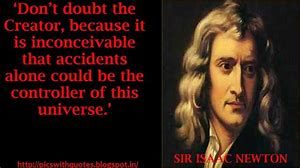
7) It was Christianity’s assumption that the world functioned according to the orderliness of a Creator’s commands that led to the science of Isaac Newton and others. The scientific method did not develop in cultures whose gods were arbitrary, unpredictable, unknowable and capricious. For many centuries scientific investigations were carried out by Christians who understood the world as an orderly and understandable place because it was made by
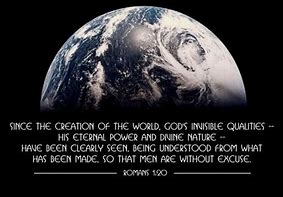
God. Studying the creation was an indirect means of studying the Creator. Many of the greatest scientists of western civilization were Christians, or at least held a Christian worldview (e.g., Copernicus, Galileo, Kepler, Boyle, Pascal, Newton, Faraday, Maxwell).


How Should Christians view science?

On the one hand, we should be thankful for everything that a true scientific method reveals. It brings glory to our Creator, for the Earth is His (Ps 24:1). We should be thankful for every innovation that enables man to live well before His Creator. 
On the other hand, we must recognise that the world is at war with God, and it will use a God-given method as an excuse to suppress the truth in unrighteousness (Rom 1:18-21). We should distinguish between true science and anti-God assumptions built into some science.
We must also challenge the idea that facts are separate from faith, or that science is objective while faith is subjective. This comes from Immanuel Kant and the Enlightenment, not from Scripture. By the 1960s, scientists like Michael Polanyi and Thomas Kuhn were recognising that science is also ‘subjective’ in the sense that scientists have a grid which they apply to whatever they study – they exclude some facts, include others, and all for reasons not related to what they are studying.


When science claims authority which only God’s Word has, Christians should challenge this. The Bible gives us the Creator’s personal statement about the created order. The Bible is not meant to be textbook on scientific phenomena, but all interpretations of created phenomena can be judged within the grid of God’s Word. The Bible will not help us discover how various diseases affect the human body, how to build a telescope, or how to fly. Neither will science tell us how to be saved or how to behave. Nature does teach us about God (Ps 19:1; Rom 1:19-20) and God teaches us about nature. However, the Bible is not a science textbook and a science textbook is not the Bible. Nature and grace are two different aspects of life, but all of life is unified under Christ. “The judicious theologian must be careful to examine knowledge that comes to us from nature as well as knowledge that comes to us from grace, lest in a misguided zeal he establishes false conflicts between the two.” (Sproul, Lifeviews, 167.)
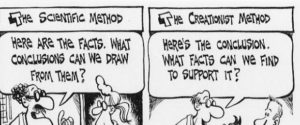
 

Christians who enter the sciences can do so for the glory of God. We need Christian botanists, paleontologists, astronomers, physicists etc. We need them to bring the Christian alternative to their investigations, and present these, both to challenge the existing order, and to strengthen the faith of Christians. A scientist’s view of the Bible will have an enormous impact on how he functions as a scientist. Christians believe that the Bible is the ultimate source of authority and will be looking for consistencies between the book of God and the book of nature. Thus, when a division arises between Scripture and science, the data of science must be reinterpreted to correspond with the Bible or discarded as false if such is not possible. Scripture stands in judgment of all other truth claims. The Christian scientist sees the universe as the handiwork of a sovereign God, and scientific data found in God’s universe will be consistent with the data found in God’s Word. Any observation that appears to be at odds with the Creator or his revelation must be reassessed in a way that does not deny the truth of what God has said. The Christian must never distort the truth of the Bible to make it conform to some current theory in science. Nature and grace are harmonious and compatible because the same God is author of them both.
We must teach our children the very clear distinction between the scientific method, and the anti-god philosophy posturing as science. It is crucial they receive this understanding before they enter their university years, particularly if their vocational training will be in the sciences or the humanities.


  – David De Bruyn, Professor of Church History, Shepherds’ Seminary Africa

A Christian View of Science and Scientism – Part I

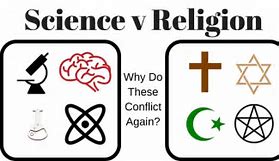
It’s common to hear people accuse Christianity of being ‘anti-science’, or to hear about the war between ‘religion and science’. In recent years, certain prominent atheists have claimed that reason and science are at odds with religion, which they class as superstition. Is there a genuine conflict between science and religion?
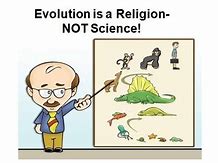
The most common areas of conflict between Christianity and science are over the matters of origins, and over the makeup of man. Evolution versus creation, and the nature of the human being (when life begins and ends, whether sexuality is genetic, whether depression is organic, whether we have a soul), are the most frequent battlefields.
In reality, science is too large a generalisation to be helpful. To understand where Christianity and ‘science’ contradict, we must take the time to rightly define science.

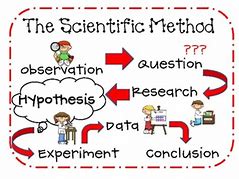
1. Rightly defined, science is actually a method of investigating the world. It is a procedure, not a philosophy. The procedure is made up of three parts: 
a) Observing phenomena
b) Developing explanatory hypotheses that are predictive in nature
c) Testing the hypotheses by repeatable experimentation

2. Anything which claims to be scientific should be able to show that it is operating according to those three stages of the scientific theory. If the claims that a particular ‘science’ makes cannot be tested or verified by those, then it is not science. It may be philosophy, history, spirituality, or religion, but it is not science.

3. By that definition, any theory of origins is not science. We cannot observe the phenomena, and we certainly cannot repeat what happened at the beginning by experimentation. Evolution or creation are both theories of history. They both offer an explanation of the past. Evolution falsely claims to have the laboratory verifying its claims. But it is ultimately a form of history of biology, posturing as science. Genuine micro-evolution – adaptations within species, and certain species succeeding where others fail, is an observable, testable phenomenon, and qualifies as science.

4. By the same token, turning the Creation account into “creation science” falls into the same error. It pretends we can “prove” what happened at the beginning, by using the test-tube and the laboratory. But if evolution cannot do so, neither can creation! This is when Christians fall prey to man-pleasing, seeking to give their faith respectability in the eyes of the world. But the capital error here is not the Bible vs science, it is science vs history. You cannot prove through repeatable experiments what happened once in the past.
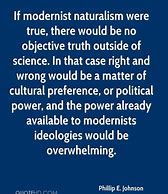
 

5. The bigger issue in science and the Bible is the controlling presupposition. This is the worldview, the assumptions that the scientist has before he even begins studying phenomena. Two presuppositions that are particularly hostile to Christianity are:

a) Naturalism/ materialism. This is the view that reality is essentially made of matter (no soul, spirits, etc.) On this view, we explain the “natural” world only by what we find within the natural world. If the universe is pictured as a box, you can only explain what is inside the box by what is also inside the box. We cannot assume or even allow explanations from beyond or outside of nature – “super-nature/ supernatural”. Therefore, if a scientist is a materialist/ naturalist, though the evidence may point to supernaturalism, he will be forced to find a natural explanation for the same event. His interpretation will always be controlled by ruling out supernaturalism. In other words, this kind of scientist rejects special creation, miracles, resurrection before he has begun to study the evidence. Empty tombs, fossils, will be re-interpreted along naturalistic lines. Darwinism was an attempt at explaining the origin of species through entirely natural phenomena.

“We take the side of science in spite of the patent absurdity of some of its constructs, in spite of its failure to fulfill many of its extravagant promises of health and life, in spite of the tolerance of the scientific community for unsubstantiated just-so stories, because we have a prior commitment, a commitment to materialism. It is not that the methods and institutions of science somehow compel us to accept a material explanation of the phenomenal world, but, on the contrary, that we are forced by our a priori adherence to material causes to create an apparatus of investigation and a set of concepts that produce material explanations, no matter how counterintuitive, no matter how mystifying to the uninitiated. Moreover, that materialism is absolute, for we cannot allow a Divine Foot in the door…. To appeal to an omnipotent deity is to allow that at any moment the regularities of nature may be ruptured, than miracles may happen.” Richard Lewontin, “Billions and Billions of Demons,” in the New York Review of Books, January 9, 1997.]

b) Scientism. Scientism is different from science in that it scientism is an attitude towards knowledge and ultimate questions. Scientism claims that the scientific method is the only safe and sure way of knowing reality, and all other ways are childish, foolish, dangerous superstitions. Of course, it cannot even use its own method to prove itself, it
simply makes that claim based upon discoveries about the world, improvement in living conditions, and technological innovations. Scientism is a profound arrogance: believing it can answer questions which the scientific method could never come close to explaining: God’s existence, the nature of good and evil, the nature of beauty, the origin of the universe, life after death. It believes that it can collect enough facts to ultimately answer all the great questions. But the more science discovers, the more complex the universe becomes, and the questions multiply faster than the answers. Man will never collect even a fraction of the facts needed to understand the web of facts that makes up the universe.

6. Actually, one of science’s presuppositions gives much glory to God, though not all intend it. The fact that scientists expect their experiments to be repeatable assumes that the universe is orderly. Why should the universe be orderly if it came to exist by chance? Why should there be ‘laws’ if everything is random? A predictable universe suggests order, and order suggests a Designer.


  – David De Bruyn, Professor of Church History, Shepherds’ Seminary Africa

A Christian View of Government – Part II

Factors that deliver a nation from tyranny or anarchy: … (continued)

4. Adequate power of government

a) Governments must have enough power to maintain their own stability.

=a “lack of centralization” in a government leads to disorder and poverty. The Bible recognizes the evil that results when there is no effective government and anarchy prevails. Judges 17-21 shows what happens when there is no effective government at all (Judg 17:6; 18:1; 19:1; 21:25).

5. Limited power of government

a) The power of a government must be limited enough so that it does not take too much freedom from the people.

i. Tradeoff between government power and individual freedom. (greater power = greater potential of corruption)

b) In the United States there are many provisions in the Constitution designed to limit the power of government:

i. I) Freedom of speech, freedom of the press, freedom of religion, and freedom of assembly, II) Freedom to petition the

government for redress of grievances, III) Right to bear arms, IV) Term limits for the office of president, and V) Regular

election of members of Congress.

6. Separation of powers in Government

a) In the Bible several passages support the ideas of limited governmental power and separation of powers.

i. The OT gives many examples of kings who had unchecked power and abused it: Saul, David (2 Sam 11), Solomon (1 Kings 11:3-4; 10:14-20 cf. Deut 17:17), the divided monarchy (1-2 Kings; 1-2 Chronicles).

ii. The Bible also contains a number of positive examples of divided power: Tribes, clans and families in the OT, the calling of 12 apostles (Matt 10:1-4; Acts 1:15-26), shared roles as seen with Peter and James as the spokesman for the apostles (Acts 2:14; 3:12; 15:7; 15:13; 21:18; Gal 1:19; 2:9, 12), the Jerusalem Council (Acts 15:22), and government of local churches by elders (Titus 1:5; James 5:14).

7. Government accountability to the people

a) Regular, fair elections, free access to information about government actions and spending, and term limits for the most powerful offices all help to insure such accountability.

b) Examples in scripture indicate that government works best with the consent of those who are governed.i. Ex 4:29-31; 1 Sam 7:5-6; 1 Sam 10:24; 2 Sam 2:4; Acts 6:3.

c) There are negative examples in scripture of tyrants who did not gain the consent of the people but ruled harshly. i. Rehoboam (1 Kings 12:15), Pharaoh (Ex 3:9-10), Philistines (Judg 14:4), Nebuchadnezzar (2 Kgs 25:1-21).

Should a Christian Vote?

A Christian in a democracy has, by birthright, been given responsibility to govern the nation, through an elected representative. The problem with representative democracy is that unless you run for office yourself, you will seldom find a representative who represents you exactly. We are forced to choose between principled voting or pragmatic voting.


If we vote on principle, we vote for the representative who most closely represents our vision of society and government, regardless of his or her chances at overall success.

If we vote pragmatically, we vote for the least evil representative, or for the most likely contender to the party we do not wish to see in government.

Ethics sometimes requires a ‘greater-good’ choice, or a limiting ‘evil’ choice. However, there are certain matters where the pragmatism in question could become evil:

Right to life: no one we vote for should be in favour of murdering the unborn.

Justice: no one we vote for should be in favour of rehabilitating convicted murderers.

Theft: no one we vote for should be in favour of taking another’s private property. To abstain from voting altogether should usually be because you see no viable representative. This is then an abstention out of conscience. We should not refuse to vote out of apathy, disdain or cynicism.

Civil Disobedience

We know from the example of Daniel, the apostles, and the Hebrew midwives, that we do not have to obey

government at all times. When then are we permitted to disobey? Two positions have emerged:

Antipromulgation Anticompulsion
When it permits evil When it commands evil
When it promulgates evil laws When it compels evil actions
When it limits freedom When it negates freedom
When it is politically oppressive When it is religiously oppressive

Biblically, we see the anti-compulsion position:

  1. Refusal to kill babies (Ex 1:15-21)
  2. Refusal to worship an idol (Dan 3)
  3. Refusal to pray to the king and not to God (Dan 6)
  4. Refusal to stop preaching (Acts 4:18)
  5. Refusal to worship the anti-Christ (Rev 13)

Civil Disobedience should be non-violent resistance, not violent rebellion.

How to Respond to Oppressive Governments

  1. Pray for them (1 Tim 2:1-2)
  2. Work peacefully and legally to change government.
  3. Disobey oppressive commands. (Dan 3, 6)
  4. Flee Oppressive Governments (1 Kings 18)
  5. Patiently Endure Suffering (1 pet 4:12-13)
  6. Trust the Providence of God (Rom 12:19)

What about revolution?

Revolution = violent fight against existing government. 

  1. God exhorts against joining revolutionaries (Prov 24:21) b.
  2. Revolutions are condemned (Korah, Absalom, Jereboam). The God-ordained revolution against Athalia was necessary to preserve the bloodline of Messiah.
  3. Israel didn’t fight Pharaoh, it fled.
  4. Jesus exhorted against using the sword for that reason (Mat 26:52), or retaliating against others, including government (Matt 5:38-39).

Adapted from Wayne Grudem & Norm Geisler

  – David De Bruyn, Professor of Church History, Shepherds’ Seminary Africa

A Christian View of Government – Part I

The Reason for Government
The civil authority “is God’s servant for your good” (Rom 13:4). Government is meant to protect its citizens from certain evils. In the NT believers are invited to pray for their government officials so that they will be protected (1 Tim 2:2).

1. Protection against crime
a. The Bible teaches that prevention of crime is a primary responsibility of civil governments (1 Pet 2:14; Rom 13:4, Eccl 8:11; Prov 17:15; Isa 5:22-23).

2. Protection against disease
Epidemics of disease have economic implications in reducing productive work, hindering economic  growth.

3. Protection against the violations of contracts 
Violation of contracts creates a hostile environment for businesses and business transactions (Ex 20:15-16).

4. Protection against violations of patents and copyrights
If a nation decides not to protect patents and copyrights (i.e. China), it encourages people to steal (Ex 20:15).

5. Protection against foreign invasion
When Israel did evil, God allowed them to be conquered (Judg 6:3-6), but when they repented and prayed and obeyed God, he brought the blessing of deliverance (several times in Judges; see also 1 Sam 17). The result of the Lord’s blessing was safety (1 Kgs 4:25), giving skill to soldiers to defend (Ps 18:34).

6. Avoidance of wars of conquest and civil wars

7. Protection against destruction of the environment
a. Economically productive nations must protect natural resources from careless human destruction.
b. The Bible teaches that God has given mankind responsibility for stewardship of the environment (Gen 1:28; Ps 8).

Things government should promote. The Bible does not mandate these things, but pursuing these things will create a stable order.

1. Universal education
The Bible emphasizes the responsibility of parents to train their children (Deut 6:5-7; Ps 1:2). While public schools and public education are seldom a good thing, access to literacy programmes, training centres, and means for citizens to become more skilled is a good thing.

2. Stable family structures
a. A child growing up in a family with both father and mother present is far less likely to end up in poverty.
b. Governments should adopt laws that provide incentives to getting/staying married and for raising children.

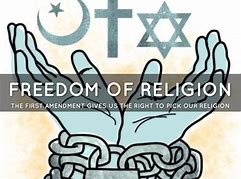
3. Laws that protect freedom of religion for all religious groups and give some benefits to religions generally. 
a. Religions generally teach good moral values to citizens, and bring good to society, including economic benefits.
b. Denial of freedom of religion means that many economically productive people are kept out of a country.


Forms of Government:
Monarchy – Absolute (e.g. Swaziland), Constitutional (United Kingdom)
Oligarchy – power resides in a few people or a class of people, e.g. North Korea, Russia
Democracy – direct democracy (representative democracy)
Autocracy – power resides in one.

The Bible does not call for one system over another, and God’s people have lived under each of these forms. What the Bible has done is shape the thinking about humanity, civilisation, power for 3500 years, which has affected political experiments through the centuries. Only one form of government will ever be perfect: a Theocracy under Christ. Until then, we must seek the best kind of government that factors in the fallenness and sinfulness of man.

Factors that deliver a nation from tyranny or anarchy:
1. Rule of law: all people are equally accountable to the laws
a. This is the most basic guarantee that leaders will use their power for the benefit of the people as a whole. (2 Samuel 11-12);

2. Fair court system: courts show no favoritism or bias, but enforce justice impartially
a. The courts are the primary means for guaranteeing that everyone in a nation is subject to the rule of law.
b. The Bible strongly emphasizes that judges must be fair and not pervert justice (Deut 16:18-20; Ex 23:3).

3. Absence of bribery and corruption in government offices
a. Again and again in the Bible officials are warned against taking bribes.
i. Ex 23:8; Pss 26:10; 82:2; Prov 15:27; 17:23; 24:23; Isa 33:15; Ezek 22:12.
b. Government officials should be reasonably compensated for their service, but laws should prevent them from becoming wealthy through ‘gifts’ or promises received while they are in office. Bribery and thus corruption have enormously hindered economic development in Eastern Europe, preBritish India, and in many African societies. Similar corruption is common in communist countrie generally and in many Islamic countries.
The OT wisely warned against a powerful official such as a king becoming wealthy while in office (Deut 17:17).
i. Positive examples: Samuel (1 Sam 12:3-4); Paul to Timothy (1 Tim 5:21).


  – David De Bruyn, Professor of Church History, Shepherds’ Seminary Africa