
“But, beloved, we are confident of better things concerning you, yes, things that accompany salvation, though we speak in this manner. For God is not unjust to forget your work and labor of love which you have shown toward His name, in that you have ministered to the saints, and do minister. And we desire that each one of you show the same diligence to the full assurance of hope until the end, that you do no become sluggish, but imitate those who through faith and patience inherit the promises.” – Hebrews 6:9-12.
I came to faith when I was nine years old, after hearing the Gospel in a Bible program. From that time, I was in Sunday School, and then a youth group in my teens. I was part of a young adult group out of school. Now in those years, there were a lot of invitations to accept Christ. And I can tell you that in my Sunday School class, in an Awana group of over 100, a youth group of over 50, and a young adult group of at least twenty, everyone had prayed to accept Christ.
But as we went through the various grades at school, different ones dropped off. Others would come, and then they would drop off. And by drop off, I don’t mean they began attending another church. I mean they simply stopped going to any church. Today, out of what in the end must have been a few hundred people, probably five people are still serving the Lord. Virtually no one out of that group has persevered in the faith. Now there are three possible explanations for that.
 The first is that they were mostly all saved, but at some point, lost their salvation. The second is that they were mostly all saved, and are still saved, but there is simply zero fruit, and hasn’t been any fruit for years. The third is that the faith they had was a man-made, earthly faith, that could only last a few winters before it shrivelled up.
Which of those explanations sounds most likely to you? The first is the most unlikely. Scripture never describes eternal life dying in a person. And as we found out in Hebrews 6, if that were hypothetically possible, then according to Hebrews 6 all those few hundred can never be saved again, and their doom is certain irremediable.
The second explanation is almost equally unlikely. A Christian may have seasons of unfruitfulness, periods of stunted growth, before God’s chastening and conviction brings him out of it. But if you have a tree in your garden that has been dull brown and leafless for ten years, you should probably stop watering it and just admit that it is as dead as the wooden door to your home.
The third explanation finds biblical support. Man-made, earthly, selfish faith does not last because its object is not the life-giving Christ, but something else, like their own safety, their own comfort, their own desires. Earthly faith eventually drifts, doubts, and becomes dull to the things of God. But true faith perseveres. That’s the major theme of the whole book of Hebrews: remaining faithful to the Finisher of the faith. And one of the threats to that faithfulness is a kind of sluggish laziness.
You remember that the writer has been talking to his readers about a kind of dullness and sluggishness that some of them had. That dullness may be benign, and it may be malignant. The benign form is laziness in a true believer that needs to be repented of. The malignant form is laziness in a false believer, that eventually leads to denying the  Gospel. One is a true believer who is in a bad patch and now needs to shake off sloth. The other is an almost Christian, whose prolonged spiritual apathy eventually leads to full apostasy: denying the Lord after once having claimed him.
Remember, in Scripture apostates are simply unbelievers claiming to be one of God’s people while denying the Gospel. Unbelievers, apostates, still need to be saved. And saved people, according to this very book, do not deny the faith.
But having taught us both truths that apostates are not saved, and the saved do not apostatise, he now brought them together and said, “And if you still entertaining the idea of dabbling in both faith and unbelief, and want to imagine what would happen if we could mix the two, the answer is you’d need a second crucifixion.” Since that’s impossible, he says, let no man turn back. Let no one who has come to some understanding of Christ now take that knowledge lightly and turn to the world. Wherever you are: true believer, or not, it is a fearful thing to treat the truths of the Gospel lightly. Truth responded to rightly, with diligence endurance will melt and soften your heart. Truth responded to wrongly, with dull sluggishness will harden your heart.
And the remedy for this slothfulness, this spiritual sluggishness is the idea of Christian perseverance. Many Christians from Cassian in the 4th century, through to the Puritans and Jonathan Edwards have recognised something that is called “healing by contraries”. When you have a sinful inclination one way, you oppose that thing with a godly inclination in the opposite way. The thief is cured not simply by stopping his stealing, but by cultivating giving. The angry man is changed not simply by stopping anger, but by practising gratitude. And this is what we see in Hebrews. We deal with drawing back by drawing near. We deal with casting away our confidence by holding fast. We deal with this slothful fading out with diligently persevering in our faith.
 This passage is about persevering, enduring, continuing on. Homing in on just the four verses 9-12, we can understand why perseverance is crucial, what it is, how to obtain it. As I think back on those people, I think about perseverance. As you sit here today, I feel what the writer says, desiring that each one of you would show the same diligence to remain faithful to the end. This passage will show us why that matters, what it means, and how to do it.
I. The Momentousness of Christian Perseverance
But, beloved, we are confident of better things concerning you, yes, things that accompany salvation, though we speak in this manner.
From a terrifying warning, the writer moves to a warm and gentle encouragement. In fact, this is the only time in the book he uses the word beloved. He has now turned from the hypothetical to the actual. And to his actual readers, he assures them: I don’t think verses 4 through 8 are true of you. I am persuaded, convinced of better things concerning you. You are not those that fall away. You are not those whose dullness eventually causes them to disown the faith. You are neither the unsaved, nor are you part of that hypothetical group of saved apostates. Later, he will say this, Hebrews 10:39 – “But we are not of those who draw back to perdition, but of those who believe to
the saving of the soul.”
In fact, he tells us he is convinced that better things accompany salvation in general. In other words, falling away does not accompany true salvation. The fruits that accompany salvation are not the thistles, thorns and briars of unbelief and falling away. No, it is the good fruit of perseverance.
That’s what makes it so important. Perseverance is the mark of true faith. See, don’t get this backwards. It is not that there is this vague generic stuff called faith, and in some people it lasts, and in other people it dies. No. What Scripture teaches is that when you truly close with the living Christ in saving faith, that faith is Spirit-generated. The bond that is made between Christ and believer is a bond of life. We are His body, and He is our head. That is a bond where the each needs the other. Now I understand God does not need us. But the biblical metaphor of head and body is showing us that our union with Christ is an immersive, indissoluble union of joined lives.
The faith that accompanies salvation is permanent because it is God’s investment in His own body. Remember that Paul tells us this in Ephesians 5:
“Husbands, love your wives, just as Christ also loved the church and gave Himself for her, that He might sanctify and cleanse her with the washing of water by the word, that He might present her to Himself a glorious church, not having spot or wrinkle or any such thing, but that she should be holy and without blemish.” (vv 25-27)
Because false faith does not unite with Christ, it has no work of God to sustain it. It is self-generated, and will finally drift away. And the writer says, beloved, I know this is not the case with you, because I think you are truly saved, and the fruit that accompanies true salvation will be seen in you. So “even though we speak this way”, it is to lovingly caution the converted, and to firmly warn the complacent. Chrysostom said “It is better that I should scare you with words, than that you should sorrow in deeds.” But it is a momentous thing to have faith that endures. It means there is a supernatural bond between you and your Creator.
What is that going to look like? Is Christian perseverance that you claim you’re a Christian all your life? Is it that you keep going to church all your life?
 – David De Bruyn, Professor of Church History, Shepherds’ Seminary Africa
 One of the reasons for so little correlation between the amount of decisions claimed every year for Christ and the amount of changed lives is that people have not looked upon this Christian life as Christ described it. It is a life of loving Christ supremely. It is also a life of following Christ single-mindedly, to the death of my flesh. And it’s a
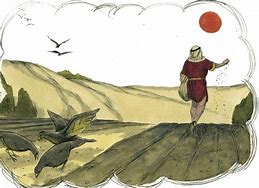 following Jesus Christ lightly. He wants to weed out the superficial, light-hearted people who have no real interest in following Christ to the end. He wants to prevent people from coming, who are like that second soil in the Parable of the Sower – who have no root in themselves, and when persecution or trials come, they are offended and wither away. Now you may say, ‘But who on earth is this way? Who loves Christ supremely? Who follows Him single-mindedly? Who holds the world so loosely? Who can possibly keep this standard?’ Though a true believer will have these attitudes at conversion, they will not become perfect actions but by a process of instruction and growth. For this they need discipleship. Being a disciple requires discipleship.
 take up his cross daily, and follow Me. For whoever desires to save his life will lose it, but whoever loses his life for My sake will save it. For what profit is it to a man if he gains the whole world, and is himself destroyed or lost?”
 Jesus illustrated it this way: “Verily, verily, I say unto you, Except a corn of wheat fall into the ground and die, it abideth alone: but if it die, it bringeth forth much fruit” – John 12:24. A disciple does not simply use Jesus as Saviour; a disciple follows Jesus as Lord. A disciple follows because he or she wants to imitate their master. We want to imbibe His Spirit and imitate His example.
 down – ‘You want to follow Me, do you?’ Is it just the buzz of the crowd? Is it just the excitement of a new thing, a fad? Is it for what you can get out of Me? This is what it means to really follow Me – to love me Supremely, to follow Me Single-mindedly, and to forsake all you have. I can picture the crowd thinning out. Now again, does Jesus mean that in order to follow Him, you must sell or give away everything you own? It does not normally mean that, though God does call some to do that.
 better – it is Him. A disciple of Jesus Christ does not love anything or anyone more than Jesus Christ. Not other people. Not popularity. Not pleasure. Not money. Not success. Not good looks. Not material possessions. A disciple loves Christ supremely.
 Psalm 73:25 – Whom have I in heaven but thee? and there is none upon earth that I desire beside thee.
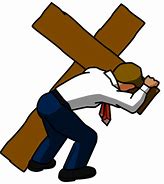 himself’, added in. What does this mean? Some have taken this to mean Jesus wants us to carry a wooden beam around, and you have had people literally walking around with crosses. But that is not what Jesus meant here.
 The word ‘Christian’ (in the singular or plural form) appears only three times. The word ‘believers’ appears twice. The word ‘brethren’ appears numerous times as the way believers talk about themselves, and to each other – brothers and sisters. But probably the most oft-used term to describe believers is the word ‘disciples.’ ‘Disciples of the Lord Jesus Christ’ is how the Bible describes us. Indeed, the Great Commission in Matthew 28 is not ‘Go and get professions of faith.’ It is ‘Go and make disciples.’
 The Lord teaches us this with a striking sentence. He says, ‘You cannot be my disciple unless you hate your parents, children, brothers and sisters and yourself.’ Now what does Jesus mean by this? Is He commanding malice? Is He telling us the condition of following Him is to despise others and ourselves? No, because this would contradict his own teaching. He told us to love our neighbours as ourselves. He told us in the Sermon on the Mount that as we would want others to treat us, so we ought to treat them. He even commanded us to love our enemies – which would make us like the Father. John tells us in 1 John 2:11 – “he that hateth his brother is in darkness, and walketh in darkness”.
 And perhaps, if we took it to a judge, you would be right. But you are missing the heart of being a follower of Christ. A follower of Christ is not trying to defend apathy and indifference and laziness. A follower of Christ is not trying to only get by with what is clearly mandated. A follower of Christ does not try to see how close to the world he or she can get without crossing the line.
 In 1835, George Mueller had a burning desire to take care of the orphans of England. He wrote: “I was struck in reading the Scriptures with these words, ‘Open thy mouth wide, and I will fill it.’ I was led to apply this scripture to the orphan house, and ask the Lord for premises, one thousand pounds and suitable individuals to take care of the children”. Mueller never made any public appeals for money, and never went into debt. In reviewing that year’s work, he found that God had given him his first orphanage house on Wilson Street, and seven months after the opening of the first house, he obtained another one located at No. 1 Wilson Street. A review of his financial returns showed gifts for the orphanages of seven hundred and seventy pounds, and he himself had received for his personal needs two hundred and thirty two pounds – coming to one thousand and two pounds.
 When you go beyond obligation, you will find it. You will see God calling you to do more than greet your neighbour, but witness to them. You will see God calling you to do more than attend a church, but to serve in it. You will see God
 their walk with God. This is how minimal obedience thinks: ‘What is the least amount of effort I can put into my Christian life and still be OK? How can I do as much as I want to do, and as little as God wants me to do without God getting upset with me and making things go bad for me?’
 about to be betrayed into the hands of men, 23 and they will kill Him, and the third day He will be raised up.” And they were exceedingly sorrowful. 24 When they had come to Capernaum those who received the temple tax came to Peter and said, “Does your Teacher not pay the temple tax?”25 He said, “Yes.”And when he had come into the house, Jesus anticipated him, saying, “What do you think, Simon? From whom do the kings of the earth take customs or taxes, from their sons or from strangers?” 26 Peter said to Him, “From strangers.”Jesus said to him, “Then the sons are free. 27 Nevertheless, lest we offend them, go to the sea, cast in a hook, and take the fish that comes up first. And when you have opened its mouth, you will find a piece of money, take that and give it to them for Me and you.” – Matthew 17:14-27
 those days, the royal families were tax exempt. And Peter says, ‘From strangers.’ Jesus says, ‘Well then, the children are free – the children are exempt from the tax. They do not have to pay it. They are not under obligation.’ Who does the Temple belong to? As it were, who is the King of the Temple? God is. Would you tax God to maintain His temple? No. Who is God’s Son? Jesus. Do you tax the Prince to maintain His temple? No. Jesus is exempt. Jesus does not have to pay the Temple tax, because of His identity. His status as God’s Son means He does not have to obey the Law in Exodus 30. So Jesus is also gently correcting Peter’s impulsive answer. Peter isn’t completely wrong – for Jesus does pay, but not for the reasons others pay. But, says Jesus, ‘Lest we should offend them – go and fish, and the first fish you catch will have money for your tax and mine, and go and pay them.’ So here you see the first principle of truly obeying God.
 Christians. If that is you, then you must structure things so as to interact with unbelievers. I would firstly say, make sure you pray for opportunities to witness.
 Try to be consistent – after supper on as many days as you can, or just after breakfast on as many days as you can. Just like your own times of devotion – you can vary the elements, but the point is to have a heart for God together. The point is to have a love for God as a family – not as individuals going their own way.
 for thirty minutes. Do not think that eating anything is a sign of spirituality. Just because you are a Baptist, does not mean that gluttony is allowed. Food is one area where we sometimes have to deny ourselves something quite lawful to maintain the atmosphere of self-discipline. Continual indulgence in one area, makes it more likely in all other areas.
 pastors, and for revival. On day three you might pray for pressing church needs, personal growth, and current problems. On day four, you might pray for church leadership, upcoming events, the corporate services. Each day you might be praying for your family, for church leaders, for the spiritual growth and protection of your church. If your church is larger, it’s not a bad idea to split the names up alphabetically.
 of sermon preparation except to say, keep yourself glued to that chair or on your knees until you have understood the text grammatically, contextually, historically and doctrinally . Keep yourself glued to that chair until you have considered and worked out the principles applicable to your congregation. Keep yourself glued to that chair until you have worked out helpful illustrations, clear applications, and a gripping introduction.
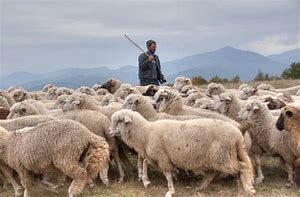 If you are the studious type, the temptation is going to be to be in your study all day and never be out there as a shepherd. Certainly shepherds feed, but shepherds also tend. They inspect the sheep individually. They clean them, bind up wounds, discipline. Pastors must apply the Word of God to the people of God, not only teach it. Making the phone calls, visiting the sick, getting into hospitals, having coffee with the men one on one, having Bible studies in your home, having one-on-one discipleship, having people over for lunch or dinner, spending much time after the services speaking to people and talking with them. If you are not this way, you must set up plans and structures to make this happen more often. Make sure you nurture the strong ones. How often we spend our time chasing down the unfaithful, the struggling the weak, assuming the so-and-so who comes to every service is just fine. Meanwhile, they may be wasting away spiritually. Jesus spent his time with twelve, not chasing down everyone on the periphery. Spend most of your time strengthening those who are committed. They will start shepherding others. Spend some time going after the weak and apathetic.
 become more than a means, we have crossed over a line. We have made these things the means of our sanctification instead of the power of the Holy Spirit. Paul says they have the appearance of wisdom, but are of no value in stopping the indulgence of the flesh.
 What you do with those hours, how you divide them up, plan them, organise them, supervise them and are held accountable for them, amounts to how disciplined you are. When it comes down to these practical matters, discipline is going to be in how you plan, monitor, and correct .
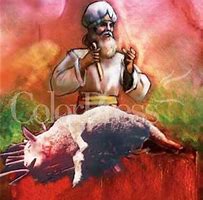 Exodus 29:38-39: Now this is what you shall offer on the altar: two lambs of the first year, day by day continually. One lamb you shall offer in the morning, and the other lamb you shall offer at twilight.