A Christian View of Education – Part 2

Modern Secular Educational Philosophy

The great myth of education in the Western world is that it is possible to have a purely ‘secular’ education. Christians have typically bought this lie, thinking that secular education will give their children value-free, neutral ‘facts’ about the world, to which the parents can season and mix in some Bible facts every Sunday. They think schools are simply information mills, cranking out facts that will equip the child to one day ‘get a job’. Interestingly, very few other religions agree. Orthodox Jews educate their children in their own schools . Devout Muslims begin their own schools. Hindus, Buddhists, and others who take their faith seriously see to it that their young are educated in schools of their own making. They do so because they do not believe that secular schools are amoral information factories. Secular schools are also religious schools.

The goal of education today is to understand the universe and man’s place in it from a completely rationalistic, naturalistic point of view. God is excluded from the universe and the university. A foundational assumption of education is that man is a natural result of random evolutionary forces. A child’s mind is a blank slate that must be filled with the kind of information that will make him a productive citizen and a good employee. Education is simply a mechanism for equipping individuals with the skills to stay out of trouble and to achieve their own personal goals.

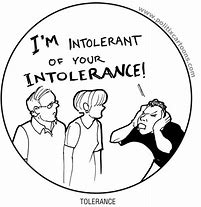
Tolerance  is the byword in education today. Students must learn to accept other people and their viewpoints without judgment or criticism. Tolerance demands that students abandon their beliefs that their own understanding of truth has any more validity or value than any other person’s point of view. Any claims to absolute truth will not be tolerated.
Values are simply opinions. There is no objective basis for judging right or wrong. All historical events, created works and individual actions may or may not have value depending upon a person’s opinion. The ethics of secularism are situational. All must do what they believe is right, and be true to themselves without harming others. And no one’s morality must be forced on anyone else, because what’s right for you isn’t necessarily right for someone else. Moral education is impossible in such an environment. Students are free to form their own values on whatever basis they choose.

Education should be designed to insure a student’s economic success (a good job), personal fulfillment (happiness), and social stability (fit in with the group). Curriculum must represent a wide variety of viewpoints and cultures. A left-of-center political viewpoint is commonly reflected in textbooks.

Other alarming trends in public school education:

  1. “student-directed learning” – children, not teachers, decide what to learn 
  2. focus on “how to learn” rather than on acquisition of specific information and skills
  3. no objective standards to judge achievement
  4. low expectations for student achievement; lack of academic rigor 
  5. lack of discipline, an immoral environment 
  6. sex education; homosexual rights indoctrination

Results? Colleges typically have to re-teach half of the entering freshmen in basic math and English, and businesses that have to spend money to teach entry-level employees how to read, write and compute enough to function on the job.

Our children are not only confronted with this religion in the ‘Life-Skills’ class. They hear it when the biology teacher pontificates on the millions of years it took for certain things to evolve. They hear it when the science teacher speaks about ‘Nature’ and ‘the Laws’ as if blind chance rules the universe with such elegance. They hear it when the English teacher tells them that all interpretations of a poem are valid in their own way. They see it when Music class is dispensable, and attendance at sports is compulsory. They hear it when their preachers continually tout the importance of having  “marketable skills”. And of course, they hear it in prejudices and opinions of their peers. For seven hours a day, our children are discipled into secularism. Their cultural mentors are their peers and teachers, who teach them how to construe reality, what to love, and how to love it.

Many Christian parents have withdrawn their children from government schools and have enrolled them in Christian schools,  or pursued home education. Some Christian schools do better than the public schools. Too often , in the South African context, a Christian school is fundamentally secular (the curriculum is the national curriculum, or IEB, or Cambridge) and the teachers are not themselves mature Christians, so it is really Christian in name and vision-statement only. Sometimes a ‘Christian’ curriculum of inferior quality is taught.  Often these schools either represent some brand of charismatic Christianity, or some form of Protestantism without a clear Gospel (the form of godliness, lacking the power thereof). Furthermore, the children attending these schools are not often from strong Christian families or from healthy churches, so the social problems or negative influence found in public schools will be only slightly less than those found in public school.

This movement away from public schools has drained them of the “salt and light” that accompany believers. Christian kids left in public schools face extreme pressures to conform. All parents must determine what educational avenue would be best for their own families. They should consider the pros and cons of their options carefully and realistically.




  – David De Bruyn, Professor of Church History, Shepherds’ Seminary Africa
A Christian View of Education – Part 1

Education Defined

The essence of education is dispelling ignorance, acquainting a learner with reality. However, because the nature of reality is a religious question, education can not help being driven by a particular worldview. Education (distinguished from training) is discipleship in a view of God, the world, and one self.

God has established the educational process as the human mechanism for perpetuating and advancing life on earth. Each generation stands on the shoulders of the previous generations in developing an understanding of reality and of the universe in which they live. Few educations will get everything wrong about the world -if it were so, it would prove faulty in one generation and be abandoned. However, the system can be more or less erroneous, and its errors can be more or less severe.

 

Historical Influences that Shape Education

Humans have participated in education from the very beginnings of human life. Moses told the Israelites to “teach [the Word of God] diligently unto thy children, and shalt talk of them when thou sittest in thine house, and when thou walkest by the way, and when thou liest down, and when thou risest up” (Deuteronomy 6:7). The Jews have always valued education.

The Greeks and the Romans had highly developed educational systems that focused on language, arithmetic, geometry, astronomy and music. The Greek child went to school at the age of seven if his parents could afford to pay the fees. He studied basic skills (reading, writing, counting), music (poetry, dance, musical instrument), and physical skills (wrestling, boxing, running, throwing the javelin and discus; see 1 Corinthians 9:24–27). At sixteen, he went on to the gymnasium to study literature, philosophy, and politics. The Romans employed a similar system for the education of their youth.

For centuries after Christianity became dominant in the West, education was centered around churches and monasteries. Most Westerners—common folk and scholars alike—thought within the framework of a biblical worldview. They assumed that God had created the world, that humans were created in God’s image, that human reason could apprehend truth because God had given them this capacity, that biblical morality was universally true and unchanging, and that the Bible accurately described human nature and the solutions to human problems.

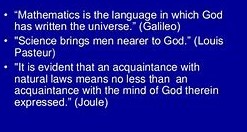
The founding of the University of Bologna in AD 1158 is generally recognized as the beginning of modern university-level education. Until the Enlightenment of the eighteenth-century, virtually all education in the west reflected a Christian worldview. The achievements of the Reformation, Renaissance and Enlightenment all germinated within the soil of a broad Christian consensus. The entire scientific endeavor is rooted in the idea that the universe is understandable because God is the Creator.
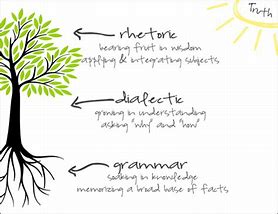
Classical education as understood and taught in the middle ages of Western culture is roughly based on the ancient Greek concept of Paideia (child training). The classical model is a time-proven method employing a three-phase model (called the Trivium) that corresponds to the natural stages in child development. This model for centuries has produced extraordinary men and women of achievement and thought.

  1. In the early years (5-11), the child enjoys learning knowledge – the grammar stage. Memory work and repetition are what the children enjoy doing at this stage.  Contrary to accepted wisdom in secular education, there is nothing useless or inferior about ‘rote learning’. Children of this age thrive on that. Here children are grounded in the basic components of the whatever field of knowledge they are learning.

  2. In the middle years (12-14), the child enjoys pursuing understanding – the logic stage. The process of trying to order, arrange, weigh, judge, compare, contrast is growing.
  3. In the later years (15-18), the child is very conscious of appearance, and wants to be able to present himself to the world winsomely.  Here the wisdom stage (the rhetoric stage) takes over, where the knowledge and understanding is to be presented and used well.

Higher education was universally classical and Christian prior to the late 19th century.  Classical Christian higher education tutored men and women in the Christian worldview and immersed them thoroughly in the Scriptures and the great works of Western civilization, which had been radically transformed by the Gospel. After completing their undergraduate studies, generations of classically educated Christian graduates went on to teach or labor in various callings, to “master” various professions or disciplines with further study (hence a Master’s degree), or to pursue vocational training through apprenticeships with reputable Christian craftsmen, businessmen, and professionals. This classical Christian academic tradition nurtured virtually every great Christian scholar, civic leader, and pastor from Augustine to thinkers of the late 19th and early 20th century.

America began to abandon the classical Christian approach to higher education and vocation in 1862 with passage of the Morrill Act, which established federally funded land-grant universities. These novel secular institutions replaced Christian education with supposedly religiously neutral vocational-technical training at the undergraduate level. John Dewey introduced a pragmatically-based approach to education. The “modern” secular university was born and has continued on a secular, anti-Christian path ever since.

In the modern era (since the Enlightenment), Christianity has played a decreasingly significant role in influencing education. Discovered truth (science) supplanted revealed truth (the Bible) . The authoritative role of the Bible was lost, even among Christians. Institutions originally founded to glorify Christ through Christian education (e.g., Harvard, Princeton, Brown) shed such commitments and have embraced a secularized definition of mission and identity. Beginning in the early 20th century, educational institutions demanded that religious views be excluded from the classroom. As a result, religious speech was relegated to private life and religious institutions.
Today, the mainstream educational establishment is actively anti-Bible and anti-Christian. Many Christian scholars seek to reinterpret the Bible to fit current-day scientific theories in hope of retaining respectability in the education community.


  – David De Bruyn, Professor of Church History, Shepherds’ Seminary Africa

A Christian View of Technology – Part 3


Six Dangers of Technology … (continued)


6.  Reduced Relationships. Observation: Technology tends to draw you closer to those you are far away from and farther away from those you are close to. Illustration: A married couple might spend many evenings in the same room—she checking the Facebook pages of people who live on other continents, and he in a theological chat room debating with opinionated people from around the world. That husband and wife are physically close to each other, but their technology is drawing them dangerously far apart, offering superficial electronic relationships in the place of their meaningful face-to-face marriage relationship. Technology’s threat to face-to-face relationships:

Challies: A study from the University of Stanford found that for every hour we spend on our computers, traditional face-to-face interaction falls by nearly thirty minutes. (76)

Studies now show that many young people are actually losing their ability to relate to one another in an offline context …. It is not unusual to observe two girls sitting in the same room, mere feet from one another, texting back and forth. …. In a strange way, we now find that more communication actually leads to less communication …. Many of our new media technologies are designed for speed and urgency …. They are designed, not to encourage depth in existing relationships, but to widen our network and our ability to say less that is of real substance. (77)

Mediated communication gives us the ability to dedicate less of ourselves to more people. (112)

The cell phone . . . can increase my ability to communicate with those who are far from me, often at the cost of communication with my own wife and children—those who are closest to me. (116)   Point: Beware of the way your time-saving communication devices intrude on your family time and reduce your face-to-face relationships.


Taking the Initiative to Manage Your Technology 

Technology is here to stay; we need to take control of it, using it, but wisely curbing its negative influences. Eight suggestions to master your technology (mostly taken from Challies, The Next Story)

  1. Ask questions before you purchase the newest iGadget:

a)  What problem does this technology solve? Challies: It may be that a great new device does not solve any problem in my life, but my purchase does solve the manufacturer’s falling annual profit. (The Next Story, 63).

b)  What problems will this new technology create? Example: Cell phones and their constant interruptions.

c)  Why do I really want this device? There are sinful reasons to invest in the newest technological widget: love of the new, the pride of being the first person in your circles to own it, buying it simply because it exists.

d)  What idols of my heart is my technology enabling? Think twice before bringing into your life something that will encourage an entangling sin.

e)  How soon will this device be obsolete?

2.  Use email and texting to supplement personal communication, not to replace it. Challies: E-mail and text messaging are inevitable aspects of life, and there is no reason to forsake them altogether. But let’s keep them in their proper context as supplemental and lesser forms of communication. (110) Point: Don’t be afraid to pick up the phone and call someone or to meet him or her face to face.

3. Eliminate the beeps. Click the Disable button to cut down on the unnecessary interruptions forced upon you by your digital gadgets. A robot that is programmed to interrupt you can be reprogrammed not to interrupt you.

4. Delete and unsubscribe. You’ll soon learn how much information you can live just fine without. 

5. Focus on substance. Use your reading time to read things of significance.

6. Cultivate concentration. Yes, you practiced being distracted, and you managed to get better and better at it (congratulations!). Eventually you rewired your brain in such a way that it craves distraction and fights against concentration. (133).

7. Exercise self-control and legitimate self-denial. Do not be in a hurry to begin your day with the digital …. determine that you will not turn on your computer or look at your cell phone until you have read the Bible and spent time in prayer. When you have completed your work for the day, stay away from your computer. (134)
8. Dedicate more time to fewer things. Technology allows you to do more things, less well. Consciously resist spreading yourself too thin, even though your technology both allows you and encourages you to do so.


Adapted from Joel James The Preacher and His Technology, Tim Challies, The Next Story


  – David De Bruyn, Professor of Church History, Shepherds’ Seminary Africa

A Christian View of Technology – Part 2

Six Dangers of Technology … (continued)


2.  Skimming vs. Reading. At best, Internet users skim text rather than read it. In fact, “skimming” is now the dominant metaphor for reading. Though words are a crucial part of the online experience, they bow before the gods of visual and audio media (Challies, The Next Story, 59). 

a)  Email: How do you read an email? You glance quickly through it to find the main point. If it is more than a few paragraphs, you quickly scroll down, skimming to find the main points. Men who receive a lot of emails oftentimes simply ignore any email that is longer than three paragraphs.

b)  Kindle: In my experience, I read much faster on a screen than in a normal book. The screen lets me adjust the page width to what my eyes can capture in a glance, tempting me to speed read at a furious rate. That’s good for devouring a book rapidly, bad for thoughtful digestion of its content.

Spurgeon: Little learning and much pride comes of hasty reading (Lectures to My Students, 177).

My suspicion is that people who do their quiet times on their cell phones don’t read their cell phone screens the same way they read a printed Bible. Reading on a screen is almost invariably done by means of skimming.  

3.  Inability to Focus. An unguarded use of technology creates an inability to focus. Challies: Our brains actually change in response to new technologies. The brain of a person raised in the age of print, a person who learned from books and who read books in time of leisure or study, has a brain that is markedly different from a person who has learned primarily from images or who has watched videos in times of leisure or study (44).

There are two changes:

a)  Memory. We can now know less than ever before. We don’t have to know everything; we just need to know where and how to find it (150). It is no longer necessary to remember where key passages are. Our search program will find it in a 6 second. But one wonders if this is sometimes a detriment to our overall Bible knowledge, not just an aid.

b)  Focus. The digital explosion has even changed the way the adult brain functions. It has placed many of us into what has been described as a state of continuous partial attention …. While we sit at our desks working on a report [or sermon] we are also monitoring our mobile phones and our instant messaging accounts, giving partial attention to a host of different media. As we do so, we keep our brains in a constant state of heightened stress, damaging  our ability to devote ourselves to extended periods of thoughtful reflection and contemplation. After some time, our brains begin to crave this constant communication, finding peace in little else (45, Point: Uncontrolled technology allows you to do more things, less well).

 

4.  Interruption

a)  Beeps: Beeps tell me that I am needed elsewhere. And far too often, I obey and answer the call …. I had to silence the torrent of beeps in my life so I could focus, at least for a time, and work undistracted from interruptions. …. Immediately, I notice that the loss of my digital technologies had slowed the pace of my life (Challies, 115).

b) Cell phones: When we understand that cellular phones were introduced to keep businessmen in touch with the office while they were away from it … we will not marvel that our mobile phones tend to do just that—to keep us in touch when we would rather escape. The phone is simply doing what it was created to do (62). 

Many of us no longer have a personal home phone and a work cell phone—we have a single device that does it all. When this is the case, we cannot be surprised when we receive work calls at home and personal calls at work …. The purpose of a multifunction device like the iPhone … is to stop its owner whenever and wherever he is in order to pull him from one thing to the next. As soon as he takes a call, it provides him with a reminder from his calendar; and when he responds to that reminder, he receives an e-mail; and when he replies to the e-mail, he receives a text message. And so it goes, from one distraction to the next. This is exactly what the iPhone is meant to do. And it does it well. (120)

Amidst all of the chatter we have forgotten that we do not need to communicate all the time. Is it possible that constantly communicating with others is not always good …? Remember one of our key insights into technology: a technology wears its benefits on its sleeve—but the drawbacks are buried deep within. …. for a growing number of people, the need to be in constant communication is so powerful that they cannot even turn off their cell phones in order to sit through a movie [or a church service!]. (74)

5.  Distraction. The myth of multitasking: Multitasking is actually a misnomer. While we think we are multitasking, we are actually task switching, doing a little bit of one thing and then doing a little bit of another …. [One study has found that] “people who switch back and forth between two tasks, like exchanging e-mail and writing a report, may spend 50 percent more time on those tasks than if they work on them separately, completing one before starting the other.”

Meanwhile, if we surround ourselves by too many stimuli, we force our brains into a state of continuous partial attention, a state in which we keep tabs on everything without giving focused attention to anything …. “people may place their brains in a heightened state of stress …. they exist in a sense of constant crisis …. Once people get used to this state, they tend to thrive on the perpetual connectivity. It feeds their egos and sense of self-worth, and it becomes irresistible.” (Challies, 125)

Point: The task switching encouraged by digital technology often causes us to work less effectively, the exact opposite of what we expect.

Observation: Do you work shorter hours than you did before computers and smart phones? Not likely. Where has all the time you saved gone? In most cases, right back to your gadgets. Take control of your technology, employing its benefits, but refusing to be dominated by it.


  – David De Bruyn, Professor of Church History, Shepherds’ Seminary Africa

A Christian View of Technology – Part 1

How should Christians respond to the technological revolution occurring around us? How should a Christian view this?

Technology is the study of the use of tools. Man has always used tools, as Genesis 4 describes. Neil Postman, in his book Technopoly describes three stages a society may go though:

  1. A tool-using society. Here the society is still governed by religion, art, politics or culture, but it uses tools to meet the ends. The development of the wheel, mills, weaving, tools to manufacture.
  2. Technocracy. Here the tools become central to the society, and the culture is now driven by an impulse to invent. Other concerns become subordinated to the idea of progress for its own sake. If something can be invented, it should be invented.
  3. Technopoly. A “Technopoly” is a society that believes that “the primary, if not the only, goal of human labor and thought is efficiency”. The devices shape what human life is to be and so. If something can be invented, it must be invented. All life is submitted to the tools and the spread of information. Information is valued for its own sake, and is not filtered, weighed and judged.

Christians can only view technology rightly when they recognise the great end of life is not efficiency or entertainment, but love for God and neighbour. If a tool enables us to each these ends, then it can be a great good. If the technology only draws us deeper into mindless dependence on it, it becomes a great evil. In short, do we own our technologies, or do they own us? Do we use technology or does it use us? We must be aware of six dangers.

Six Dangers of Technology

  1. It enables idolatry. Idols that technology enables:

a)  The idol of sexual lust. Unfortunately, the Internet all too easily services men’s (and occasionally women’s) temptation to look at pornography, offering them the opportunity to do so in anonymity and with a relatively small chance of being caught.

b)  The idol of neophilia—the love of the new. Technology fuels some men’s relentless urge to own the newest gadget, whether they really need it or not.

c)  The idols of entertainment and procrastination. [By 2009] the average adult was found to be spending nearly nine hours per day in front of some type of screen (or, more accurately, a near-endless succession of screens). About a quarter of his time was spent in the presence of at least two screens, and sometimes three or more. After all, why waste time watching television when you can waste time watching television, surfing the web, and sending text messages—all at once! (Challies, 53).

d)  The idol of ungodly curiosity and gossip. Challies observation: Most of our digital technologies are created to enhance our ability to communicate (41). Much of this communication, however, is little more than gossip or is motivated by an idolatrous lust for more and more information about people, however trivial that information might be. Gossip: Social media appears to sanitise the sin of gossip by digitalising it, but gossip is still gossip even if it is done on Facebook. Proverbs 18:8 – “The words of a whisperer are like dainty morsels, and they go down into the innermost parts of the body”. More information: Os Guinness: The outcome of instant, total information is inflation—when more and more of anything is available, less and less is valuable (Prophetic Untimeliness, 17). Illustration: With a few notable exceptions, most Christian blogs are not worth the time taken to write them nor the time taken to read them. Shallow, trivial, unmeditated, unresearched, and unedited thoughts are of little help to Christians—especially when they could be reading significant books instead.

e)  The idol of productivity. Technology helps us do more things, more quickly. However, those who idolise the sense of accomplishment and productivity this brings often find that the electronic tools that are supposed to save time and effort actually tempt them to work longer hours. Perhaps they are bowing to the god of Productivity.

f)  The idol of significance.  I must be somebody because I have 1,000 Facebook friends and receive 800 emails a day.  An event hasn’t happened unless I’ve tweeted, posted, or uploaded the video. Point: Posting the trivial might simply be feeding your vanity and sense of self-importance.

Summary: Technology doesn’t have to feed the idols of our hearts, but it often does. We like the sins it allows us to do: lust, neophilia, endless entertainment, ungodly curiosity, and the idolatrous pursuit of productivity and feelings of significance.


  – David De Bruyn, Professor of Church History, Shepherds’ Seminary Africa

A Christian View of Bearing Arms

Mass shootings are tragically becoming common, and the usual outcry is to place strict limits on who may own a gun. Does the Bible speak to the topic of self-defence, and owning or using weapons for self-defence?

What is the Biblical Position on Self-Defence?

Pacifism Suggests:

  • Killing is always wrong (Ex 20:13)
  • Resisting evil with force is wrong (Mat 5:39, Ro 12:19-21)

The Bible teaches:

  1. The Sermon on the Mount teaches non-retaliation out of personal vengeance. It does not forbid self-defence.
  2. The Law exonerated the man who defended his home, and slain a thief in the process (Ex 22:2-3).
  3. Jesus told his disciples to get a sword for self-defence (Lk 22:36). 
  4. The capture and punishment of evildoers is given to human government (Rom 13:1-4). Weapons are not to be used on the government or duly-appointed authorities.
  5. Paul sought governmental protection of his person when it was available (Acts 23:16-23).
  6. Individual governments get to determine the line between vigilantism and citizen-arrests. As Christians, we must submit to government regulations regarding self-defence, and use of weapons. This may include embracing some hardship (1 Pet 2)
  7. Having said that, no government is able to provide protection for all its citizens at all times. To place the entire weight of trust of protection of family to the government is unwise at best.
  8. The Bible also condemns cowardice in the face of others being harmed (Prov 24:11-12). 

Must a Christian Own a Gun?

  1. A Christian is not obligated to have a weapon. A Christian is obligated to seek the safety of himself and his loved ones.
  2. A warning exists about loving violence, where weapons become a way of life (Mt 26:52).
  3. Meeting this obligation is a matter of conscience. Some protection can be delegated to police, to private security companies, to security systems . However, if or when all of these fail, or are not available, the last line of defence may be a weapon. Owning or carrying one includes the considerations:

    • The awareness of legal repercussions for misuse (or suspected misuse).
    • The possibility of theft or accident at home.


Won’t Limiting Access to Guns Bring Down Crime?

Ranking  

Country


Gun deaths per 100,000 population Guns per 100 population
1 United States 10.20 88.8
2 South Africa 9.41 12.7
3 Switzerland 3.84 45.7
4 Finland 3.64 45.3
5 France 3.00 31.2
6 Austria 2.94 30.4
7 New Zealand 2.66 22.6
8 Canada 2.44 30.8
9 Belgium 2.43 17.2
10 Malta 2.16 11.9


The problem with laws restricting gun-ownership is that it will disarm everyone except lawbreakers. Criminals, by definition, do not respect the law, least of all laws restricting legal gun ownership. When a government makes owning a gun very difficult, it means less and less of the law-abiding citizenry are armed. It also means that the criminals know that they are less likely to encounter guns in the homes or business they invade, the cars they hijack or the pedestrians they accost. The power of the criminal with an illegal weapon has been multiplied because of the scarcity of weapons among  the law-abiding.

The only deterrent for a criminal with a gun is another person with a gun (Eccl 8:11). The gun confers an advantage, and the presence of another gun removes that advantage. 

Consider where criminals strike. Are they known to rob police stations, shooting ranges, hunting lodges, or security companies? Rarely, precisely because they suspect other guns may be present. Mass shootings almost always take place where everyone else has been disarmed, or is armed to be: schools, universities, malls, theatres, or even churches.

Laws should encourage ownership by those mature and responsible enough to store and use them safely. Beyond that, removing guns from citizenry only arms criminals.


  – David De Bruyn, Professor of Church History, Shepherds’ Seminary Africa

A Christian View of Literature

Christians today are not simply needing  guidance as to what to read, they need to be encouraged to read at all. What used to be regarded as a pleasure for times of leisure has now become regarded as a hard discipline to be undertaken when there is nothing good on TV.

Why should Christians concern themselves with literature?

  1. Christians are a people of the Word. God has chosen to reveal Himself to us primarily through a book. God’s chosen form of revelation is literary. To the degree we diminish in our ability to be a literary people, we diminish in our ability to know and love God as He has revealed Himself.
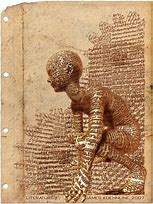
  2. Literature shapes a worldview. Every book we read is a mini-cosmos, which we enter as we read. Within that universe, certain views of truth, error, goodness, evil, beauty and ugliness are present. As we live in that world, we either reject that world as hostile to God, or we embrace it in some way or another. Whatever we choose, it is certain that when we emerge from a book, we are changed.
  3. Literature is a means of knowing invisible realities. It can allegorize real aspect of our world using characters, objects and plot twists. Other times they operate as symbols for material or moral entities. We should notice how The Scarlet Letter provides images of integrity and hypocrisy; how Moby Dick casts light upon the deceitfulness of revenge; how Dickens’ Christmas Carol shapes Scrooge as a paradigm for reform; how Les Miserables pictures redemption.  The “fairy stories” gathered by The Brothers Grimm, or Hans Christian Andersen are the best examples of these elements. As are folk tales, Aesops Fables and Mythologies.
  4. Literature shapes our judgement, as we evaluate whether a work is true, false, or distorted. Tozer: “I therefore recommend reading, not for diversion, nor for information alone, but for communion with great minds. The book that leads the soul out into the sunlight, points upward and bows out is always the best book.”

  5. Literature shapes our thoughts, since our thoughts are formed with words. Literature can either expand our ability to think concisely, or it can debase and deform it.

How should we evaluate literature?

  1. Does the work create a world similar or emerging from a Christian worldview? Are there signs of truth, goodness, and beauty? Ask who the protagonist (hero) is, and what attributes/ pursuits are glorified by the work? Whom does the author seem to praise, admire, excuse? 
  2. Even if not, does the work speak clearly and truly about the human condition, without glorifying evil or delighting in obscenity? Does it display man as fallen, with glimpses of common grace, needing redemption? Or does it show reality in a way that suggests meaninglessness or suffering without purpose?
  3. Are the characters and plot sophisticated and real enough to transport us into their world?  Is it a coherent and consistent mini-cosmos? Or are they hollow, flat, and nothing like the reality in which we live?
  4. Is it written so as to demand we “receive it” (enter its world), or is it written with so many cliches that we simply use it to find what we were already looking for?


  – David De Bruyn, Professor of Church History, Shepherds’ Seminary Africa

A Christian View on Animal Treatment


Parallel to environmentalism, animal rights groups have called for animals to be afforded human rights, or called for vegetarianism for all.

Darwinism/ Materialism Pantheism /Buddhism/ Hinduism/ Wicca/ Animism
  • Though humans are different to animals by degrees, which can become a difference in kind. Evolution explains how small differences eventually became different species.
  • Humans and animals can both solve problems, human rationality is not unique.
  • Humans and animals exhibit social behaviour.
  • There is no such thing as the soul, therefore humans and animals differ only be degrees.
  • Nature is a living organism. All life contributes to the ‘Life-force’ of the universe. An attack on animals is an attack upon the spirit that binds us together.
  • All living creatures are manifestations of the divine and of God.
  • Humans should live in harmony with nature and not attack nature, because humans are part of nature and one with it.
  • The soul of living things either joins the energy of the universe, or it is reincarnated.


A Biblical Understanding of the Treatment of Animals

  1. Humankind was made in the image of God (Gen 1:26-27). No other animal is said to be in God’s image. What this refers to is disputed by theologians: rationality, personhood, will and emotion, conscience, creativity, or the combination of them all. Whatever it is, animals do not share it.
  2. Humankind was made with a living soul (Gen 2:7). Scripture describes how this differentiates man from animals (Ps 49:12-15, Eccl 3:19-21). Man clearly lives after the death of the body ( 2 Cor 5:8, Phil 1:23).
  3. Humans are distinct in their ability to conduct abstract thought, to think logically, to use propositional language, to form non-instinctive social units, to obey moral laws. Only humans are moral creatures.
  4. Animals then, cannot be accorded ‘rights’ that belong to moral creatures. Animals, however, can be wronged through cruelty or starvation. 
  5. Humankind have a unique place in creation. We are said to be lower than angels, but higher than the other creatures (Ps 8:5, Mat 6:26). Man was given authority over the animals, to name them, tame them, and use them for food and clothing.
  6. Animals can be lawfully tamed for a variety of uses, hunted and farmed (Lev 25:7, Jas 3:9). 
  7. Cruelty to animals is considered wicked (Prov 12:10).
  8. Humans are to take care of animals (Lev 25:7, Deut 25:4). Some animals are recognised as domestic (Gen 36:6) while others are recognised as noisome and destructive (Lev 26:6).
  9. Meat is not unclean (Mk 7:19, 1 Tim 4:3-5). 
  10. Animals can and must be used by humans. They are not to be misused or abused. However, our moral obligations are not to animals, but to God Himself.


What about hunting for sport?

Animals can be used for man’s good and enjoyment. Whether this be training them to do tricks, using them as security, or killing them for raw materials, this is part of dominion. One of these forms is fishing or hunting.

Having said that, there is a kind of hunting which kills wantonly and gratuitously. Scripture seems to frown upon any unnecessary killing (Deut 22:6-7, Ex 23:19).

What about animals in Heaven?

Scripture describes animals in the Millennial kingdom (Is 65;25). It does not describe animals in the new heavens and the new earth, though it does describe rivers, trees. If the Millennial kingdom is the pre-cursor to a re-formed Earth, it is possible that there will be some kind of animal life. What form they would take, their intelligence, or their connection to earthly animals or pets is pure speculation.

 

What about misanthropes?

Some people boast that they love their pets or some other animal more than humans. They protest loudly at the cruel treatment of animals, but are silent about abortion or the abuse of human beings.

This is a sign of inordinate affection – loving one thing too sweetly and not loving another enough.  Humans are loved by God more than animals; therefore to love animals more than humans is to love differently to God. Certainly, it is easier to love animals than human: they don’t answer back, criticise you, compete for what you value, or talk behind your back. But, to love our animals more than people around us is to actually shrivel in our affections. It is a form of affective laziness and selfishness. Loving people is harder, but it is because they are more complex, and closer in resemblance to God – both in imitation and deviation.



  – David De Bruyn, Professor of Church History, Shepherds’ Seminary Africa

A Christian View on Birth Control

The last 60 years have seen a revolution in man’s ability to control conception: to prevent it where it is not desired, or to produce it where it is.

Preventing Conception Producing Conception
Natural Methods

Barrier Methods

Hormonal Pills / IUDs

Emergency Contraception

Sterilisation

Fertility treatments

Intra-Uterine Fertilisation (Artificial Insemination)

In vitro-fertilisation

Surrogate Motherhood

Biblical Principles Regarding Birth

  1. God’s first command to man was to be fruitful and multiply (Gen 1:28). Children are celebrated as a gift from God (Ps 127:4-5). Question: Does this mean that Christian married couples should have as many children as their bodies allow?  
  2. God is sovereign over conception (Gen 20:18). Question: Should we not then avoid interfering in any way, and leave the results up to God?
  3. Doesn’t the Bible condemn birth control in the case of Onan?
  4. Marital sexuality without procreation is not condemned in Scripture (Prov 5:18-19).

When Birth Control Would Be Wrong

  1. It is wrong to use it outside of marriage for illicit sexual activity.
  2. It is wrong to use it if a married couple simply wish to indefinitely reject the responsibility of parenting.
  3. It is wrong to use it if it produces abortions.

When Birth Control Could Be Right

  1. If a married couple are not yet in a place to care for a child (Prov 24:27)
  2. If a couple cannot afford to properly care for more children than they have (1 Tim 5:8, Lk 14:28).
  3. To put space between children.
  4. Very fertile people can have children in rapid succession, which can place great strain on the family.

  5. To protect the health of the parents – in some cases, more children could harm the physical (or mental) health of the parents.
  6. To limit and complete the number of children. No Scripture forbids parents from doing so.
  7. Some couples may choose childlessness for very specific ministry purposes. Some rare vocations almost require childlessness (Mt 19:12).

The Ethics of Birth Control and Fertilisation Technologies

  1. Natural methods. Following a woman’s natural cycle has no moral issues. It requires rather unusual discipline, and would not be considered reliable.
  2. Barrier methods. Again, no moral issue is here.
  3. Sterilization. Jesus speaks of ‘eunuchs’ (Mt 19:12).
  4. Hormonal methods. Whether taken as a pill, or supplied through an intrauterine device, these methods seek to prevent conception.

The moral issue with these is a third possibility: some claim that a breakthrough fertilised egg is possible, and the uterus will be thinned, causing the fertilised egg to not implant. If this third case occurs, you have the equivalent of an abortion. The majority consensus seems to be that hormonal pills or devices that prevent conception do not have abortifacient results; however, each Christian couple would have to prayerfully make a decision of conscience based on what evidence exists.

  1. Emergency Contraception. The drug RU-486, is clearly a drug that kills a fertilised zygote, and this is murder. So called ‘morning-after pills’ vary in their make-up. However, there is a higher chance of preventing a fertilised zygote from implanting, and Christians should be advised of the higher danger here.
  2. Intra-uterine fertilisation, or artificial insemination, is using technology to overcome impediments to birth. This is usually provided by the husband (AIH). If the husband is infertile, a couple may elect to use donor sperm (AID). Question: is this adultery by proxy? Is it only the wife’s child? Is donor sperm immoral in itself?
  3. In-vitro fertilisation. As the technology currently exists, multiple ovum and sperm are united in a Petri dish, and later transplanted. The problem here is that for the sake of obtaining one fertilised zygote, many are sacrificed.
  4. Surrogate Motherhood. This is essentially the reverse of IUF, and uses the womb of another woman for AID. However, it carries much more baggage. There is the potential of the exploitation of womanhood. The maternal instinct is strong, and more than one biological surrogate had had a very hard time giving up her child. Wisdom would suggest that adoption is a better course.


Material adapted from Norm Geisler


  – David De Bruyn, Professor of Church History, Shepherds’ Seminary Africa

A Christian View of Music (Part 3)

Music and Worship 

Worship music is not primarily offered to man for his enjoyment, though he is invited to worship the Lord with gladness. Thus, the One who hears all and understands all music, deserves our most skillful and excellent musical offerings.

God is a unique Being, and there is a kind of love that corresponds to knowing His being, and a kind that does not. The music used in worship, and the poetry used should, through the meaning of their form, evoke appropriate joy, fear, contrition, thanksgiving and delight. Church leaders must discern between kinds of joy or kinds of fear, and know when particular music evokes those affections. When worship music is merely an exercise in self-gratification or entertainment, the emphasis is no longer one of responding to the Being of God. Who God is determines how we feel. We do not aim for a certain feeling and then pin it on God. Ordinate affection arises from the commitment to know God as He is, to submit to Him entirely, to grant Him appropriate responses, be they foreign or uncomfortable to us. This is the fear of the Lord, which is the beginning of wisdom.
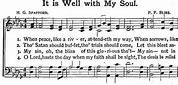
In any given bit of hymnody, the text will communicate less than the music. Good music may redeem mediocre lyrics, but the reverse is rarely or never true. The music of worship is not merely decorative or pleasantly distracting. It is not merely to provide ‘ atmosphere’ , or to ‘ warm people up’ for the sermon. Nor is the music of worship merely a vehicle to support orthodox lyrics with catchy, familiar tunes. Music in worship teaches, forms and affects. It teaches, in concert with the lyrics, truth about God, man and the world. It forms in that it shapes the hearers’ sentiments about God. The music becomes a kind of catechism of the affections, teaching worshippers what to feel in the presence of God. If the communicated meaning is not consonant with a right view of God, or with ordinate affection, the music becomes a form of distortion, and even deceit.  Any form that trivializes holy things is properly profane. It does not have to blaspheme. It merely has to belittle, even unintentionally.

 

Music and Sanctification

Music has a formative effect on our loves, which are at the heart of sanctification. We can no more grow in holiness alongside trivial, sensual or worldly music, than we could grow in holiness while digesting pornography or gossip magazines. Once again, the church cannot bind the conscience of the believers regarding their musical choices, but it is responsible to teach its members that music is not amoral, and that musical choices outside of corporate worship continue to shape our imaginations, and form our affections. The music we identify with affects our characters, and moulds us.


Technology and Use of Music

Technology has fundamentally altered the way most people experience music.  Music was at one time entirely participative: you either played it, sang it, or were in the presence of those who did. The music itself was the goal of the activity. You made or received the music for its beauty.

With the advent of recording devices in the early 20th century, followed by radio, TV, vinyl, cassette, CD, mp3, and audio streaming, music has become a disembodied experience, used as background for something else. Music is now mood-music for our eating, shopping, travelling, or working. It is not an end in itself; it is a means to some other end: exercise, distraction, mood-lifting, nostalgia, or to just drown out silence.

Not only has this destroyed musical literacy and judgement, it has shaped us to think about music not as a creation of God to be loved for itself and wisely used in life, but as a feel-good companion for when we want to do something else altogether. This makes us less attentive towards the meaning of music, and more attentive to ourselves.


Growing in Music Judgement

  1. Listen to art music. Listen to music for its own sake, particularly composers such as Bach, Handel, Mendelssohn, Mozart, or more recently Rachmaninoff, Hindemith, Britten, , Bernstein,
  2. Listen to sacred music. Find compilations of some of the greatest sacred works to become acquainted with them. Listen to the works of Eric Whitacre, John Rutter, Phil Stopford, Arvo Part, John Tavener, Henri Goreki, Morton Laurisden, Ralph Vaughn-Williams.
  3. For easier, background listening, consider some of the film music of Ennio Moricone, John Williams, Hans Zimmer, John Horner, Howard Shore.
  4. Try to learn an instrument. If nothing else, take voice lessons, and learn to read music so you can understand the hymnal better.


  – David De Bruyn, Professor of Church History, Shepherds’ Seminary Africa