Understanding & Counselling Youth: A Biblical Cardiology (Part 2)

1. Introduction – Facing the Issues (continued)

1.3       Questionable Sources

It is my contention that much of the confusion about causes of youth problems stems from the use of doubtful methods.  Many today who sincerely long to see youth helped often draw water from polluted wells.  Rather than appealing to an authoritative, objective standard and to an absolutely dependable source of truth, most employ the uncertain and inconsistent interpretations of modern psychotherapy.  A growing number from within the psychology and psychiatry establishment have been questioning the validity of these pseudosciences (e.g., Vitz, 1994; Szaz, 1997; Ganz, 1993; Bulkley, 1993)  Dr. Gary Almy, professor of clinical psychiatry and associate chief of medical staff at a large hospital, writes: “Psychiatry is riddled with defective communication, sloppy definition, inadequate criteria for labelling symptoms and signs, sub-rational treatment, and an inability to predictably cure or even lessen symptoms….  The diagnoses left to psychiatry (once any definite neurological or medical conditions are identified) such as depression, schizophrenia, passive-aggressive personality, and narcissism fail to fit the definition of true diseases….  Instead of discovering true disease, modern psychiatry continues to invent ever more elaborate lists.  The lists are useful in giving names to the customers of psychiatry, but in terms of actual diagnosis and treatment, confusion reigns.” (Almy, 2000: 291-293)

Another critic, Dr. Paul Vitz, in his newly updated book, Psychology as Religion: The Cult of Self-Worship, describes modern psychology’s dangerous devotion to self-worship, or “selfism.”.  He essentially says, “All the major theories of motivation and personality assume that reward for the self is the only functional ethical principle” (Colson, 2002).  Despite major cracks in psychotherapy’s foundation, most youth counselling today, both in the church and outside, continues building upon (or unknowingly adopting) such faulty presuppositions.  And such assumptions permeate not only the counsel given to the ‘difficult’ youth, but also the guidance given to the rest.  If today’s youth counsellors were asked for a consensus on top causes behind major youth troubles, most of their interpretations would stem from the psychological paradigm.  Such a list would usually include:  low self-esteem; unmet emotional needs; peer pressure; bad upbringing; lack of education; other environmental factors and external stressors; other biological factors, such as supposed disorders, chemical imbalances, or hereditary problems (van Greunen, 1994:81; Hine, 1999:271; Gillis, 1994:67-179; Collins, 1988:147-196; Meier, et.al., 2000:39-56, 73-146, 163-242, 265-296) .

Notice a common thread woven through each of these supposed causes:  the ‘you are a victim’ motif.  Though such diagnoses seem caring at first, they actually kill hope by removing responsibility from the counselee.  This often leaves them blaming their environment and circumstances for yanking them around like a helpless marionette on a string.  Unless certain pressures and people in their life are removed, they are stuck with whatever syndrome, disorder, or phobia label has been tacked on to them.  I recall a recent counselling session with a young man who had barely sat down before announcing to me that his psychiatrist says he has a chemical imbalance and his psychologist says he has a low self-esteem.  So he said he must either “keep taking these pills” or must find a way to get ‘self-actualized’.  Despair was written all over his face, voice, and posture. Many will still remark that there are good reasons to hold on to these common diagnoses:  “Hasn’t research shown that these are major determiners in young people’s behaviour?” “Has it not been proven that behaviour can change when these are addressed?” “Just listen to the youth themselves and they will point to these same causes.”

But we must beware of the logical fallacy of false cause (e.g., ‘All who ate carrots before 1870 are dead today, so don’t eat carrots.’).  Prozac may help a teen emotionally, but it does not prove whether the serotonin deficiency was a cause or a result of other problems or attitudes (Smith, 2000:63-76, 95-96, 196).  We must also refuse to bow to the contemporary god of pragmatism, especially in light of the dangers of taking that to its logical end (some remote tribes might assure you that cannibalism ‘works’ for them).  Nor can our diagnosis be based primarily upon the young person’s own self-interpretation, since they too breathe the same ‘psychologized’ air as the rest of us. What then is our ultimate guide in these crucial matters of helping our hurting youth?  To what final standard do we appeal for both an interpretation and a solution that is authoritative and certain, so that the hearts and lives of our youth are truly transformed?  How can we give them the keys of hope and wisdom that will open the door into successful living?

2. A Biblical Understanding of the Heart

All of the disappointment and the disagreement over current solutions should drive the youth counsellor back to the critical need for first making a sound interpretation.  Until youth workers learn to probe the heart of the matter, the best and most lasting solutions will continue to elude them. Therefore, for the remainder of this article I will argue that only an accurate cardiology will take the counsellor deep enough to offer true help.

2.1       Our Foundation

Our Creator has not left us hopelessly adrift in a sea of relativism and subjectivism, with no raft to rescue drowning youth.  The King of the Universe condescended to form us from the dust and make us in His image that we might enjoy a relationship with him (Genesis 1-2).  Would he then remain silent and leave us groping in the dark?  Never!  He has unmistakably spoken to us in the Scriptures.  In the Bible we hear His voice and we find His answers for us and for our troubled youth.  From the prophets of the Old Testament to Christ and His apostles, the Scriptures are shown to be nothing less than the infallible and authoritative Word of God (Deut. 4:4; Ps. 19:7-11; Matt. 5:18; 2 Pet. 1:20-21).  When the Bible speaks, God speaks! As a result, all who rely upon His Word have the insight necessary to truly help today’s youth.  The Apostle Paul summarized it best:  “All Scripture is God-breathed and useful for teaching, reproof, correction, and training in righteousness; so that the man of God may be adequate, equipped for every good work”(2 Tim. 3:16-17).  Here we have an authoritative guidebook that fully equips us for understanding and training youth for right living (Adams, 1979:16-37; Bulkley, 1993:276-278).

How could we ever begin on our own to understand the complex, heart-soul-mind dynamics going on inside any person, even ourselves?  And what right do the professionals have to claim some ‘deeper’ knowledge of our inner workings?  The Manufacturer of our hearts alone can guide us.  Hear His Word:  “The heart is deceitful above all things and desperately sick.  Who can understand it?  I the LORD search the heart, I test the mind”(Jer.17:9-10).  “For God is greater than our heart and knows all things” (1 John 3:20).  One counsellor aptly states:  “Ever since Eve believed the serpent’s lie, mankind has sought a kind of understanding of the human mind that can only be possessed by the Creator of that mind” (Almy, 2000:287). Therefore, only those who know the true and living God and His Word can rightly understand themselves and other people.  But conversely, any who do not know the Creator cannot truly understand themselves or other people, no matter how brilliant or educated they may be.  Thus wise King Solomon wrote, “The fear of the LORD is the beginning of knowledge…[and] of wisdom,/ And the knowledge of the Holy One is understanding” (Prov. 1:7a; 9:10, italics mine).  Insight and skill in living life starts with being rightly related to the Author of life.  The Apostle Paul also spoke about the limitations on an unbeliever’s knowledge when he said, “The man without the Spirit does not accept the things that come from the Spirit of God, for they are foolishness to him and he cannot understand them, because they are spiritually discerned.  The spiritual man makes judgments about all things…” (1 Cor. 2:14-15a).

Likewise, only those who base their counselling upon His authoritative Word can ever say with true authority what changes a person needs to make in their life.  Any other counsellor has no right to exhort that teenager, because such counsel has no authoritative base or standard and is rooted only in subjectivity (if not also in authoritarianism, with the ‘expert’ himself as guru and final authority)(Adams, 1979:16-23). Why then do even Christians so often consult unbelieving ‘experts’ for the solutions our youth need?  The prophet Isaiah rightly warns us about resorting to the wrong sources:  “When they say to you, ‘Consult the mediums and the spiritists who whisper and mutter,’ should not a people consult their God?  Should they consult the dead on behalf of the living?  To the law and to the testimony (i.e. the Scriptures)!  If they do not speak according to this word, it is because they have no dawn” (Isa. 8:19-20).  How foolish to employ the blind, or their theories, to lead us and our teens through the maze of life.  All too often we have accepted myths of expertise, believing that psychology and psychiatry are able to look deep into the soul and unravel the mysteries of the human motivations, while doubting the Scripture’s power to judge “the thoughts and attitudes of the heart” (Heb 4:12).

– Tim Cantrell, President and Professor of Systematic Theology, Shepherds’ Seminary

Understanding & Counselling Youth: A Biblical Cardiology (Part 1)

*In this article the author offers a unique, powerful, and appealing solution to the malaise in our society over youth-related problems.  All who seek to help today’s hurting youth need to be equipped with an essential tool – what the author calls a “biblical cardiology”.  This refers to a Scriptural understanding and evaluation of the inner person, with special emphasis on diagnosing and remedying their problems through the authoritative and all-sufficient Word of God.  The author begins by summarizing today’s major youth problems, followed by a survey of popular diagnoses which actually seem to worsen the problem in many cases.  This is because most interpretations of youth issues are rooted in questionable sources. So in contrast to this,  the biblical alternative is then presented, showing that only the truly Christian counsellor can get to the root of a young person’s problem and offer the best remedies.  Our young peoples’ greatest need is first for a new heart with the new desires it brings, and then for a heart that keeps growing in both godly roots and godly fruits.
1. Introduction – Facing the Issues
Africa is continually getting younger.  In nearly ten years of travelling and ministering in Eastern and Southern Africa, one of my most vivid images is that of streets, villages, and churches all teeming with youth.  In many parts of Africa, “more than sixty percent of the population is under twenty-one years of age” (O’Donovan, 2000:205).  Due to the AIDS pandemic, life expectancy figures are expected to drop below the age of forty by 2010 in at least eleven African countries (CNN, 2002)! Among the many severe consequences of a continent being emptied of its adult population, one obvious effect is that society is left swarming with unguided youth. This phenomenon is not entirely negative.  Young people bring with them great zest for life, an eagerness to tackle new challenges, and an innovativeness.  They are also more willing to question the status quo, which is necessary at times.  Young people have often been the sparks God has used to light the flames of great revivals and missionary movements in history. 


1.1 Top Troubles
 

Yet there are also serious challenges and concerns arising when one deals with today’s youth.  For all who seek to help youth toward maturity – whether parents and relatives, pastors and youth workers, teachers, counsellors, social workers and health workers, or neighbours – there seems to be no end to the number of obstacles along the path. Suppose that one was asked by a local newspaper to attempt a list of the top troubles currently among youth.  Here is a suggested list (in no particular order), using South Africa as an example (where I live and work; yet many items on this list are universal youth issues) (Codrington, 1999a; CASE, 2000; Gillis, 1994:96-169; Schwartz & Codrington, 1999:120-133; O’Donovan, 2000:205-216; van Greunen, 1994): fear, anxiety and stress, especially over: AIDS; death of parents; crime; failure in studies; relationships (friendships and dating) unstable or broken homes (65% have already experienced a divorce; only 23.5% state that they “definitely” spend regular meaningful time with their parents), depression, suicide, addictions – smoking, alcohol, and drugs, peer pressure, sexual immorality and HIV/AIDS (by far the number one youth killer, with estimates from 30% of young people to as high as 75% infected in some areas), crime, pressures especially in African communities:  poverty (57.2% of black community); poor education; pressure regarding traditional practices (e.g., initiation rites and circumcision).

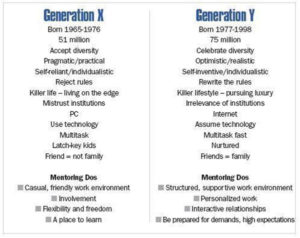
Is society blind to these glaring problems?  On the contrary, great effort and energies are being expended on exposing most of these goblins that seem to attack and devour our precious youth.  In South Africa, among Christian sources alone there is a massive arsenal of detailed research and statistics on major youth issues, seeking to understand, evaluate, and offer workable solutions (Codrington, 1999a; Price, 1998). One can now consult in-depth profiles of “Generation X” (“Busters,” born between 1970-90) and “Generation Y” (“Millenials,” born between 1990-2005) for exploring any aspect of South African youth culture.  Church growth analysts, demographic experts, and youth researchers are all being enlisted to give youth workers and parents the latest data on their teens.  You can now receive up-to-date forecasts on every possible influence your teen will encounter in a typical day.  As a result, many youth pastors/clergy are eagerly restructuring their entire ministries in both style and content to attract the postmodern young person (Zoba, 1997:18-28; Schwartz & Codrington, 1999:120-133; Codrington, 1999c).
1.2 Differing Diagnoses
As seen above, none can doubt that contemporary youth-problems are being well documented.  But are these same problems being equally well diagnosed?  All too often the experts are found disagreeing over the causes of youth problems, resulting in even further confusion over what are the best solutions.  The number of revisions in the standard Diagnostic and Statistical Manual in the last fifty years since it was published is one indicator of the ‘fog’ in today’s counselling (Almy, 2000:291).

Another evidence is the number of experts now starting to question standard diagnoses, such as the long-standing belief that low self-esteem is the root of many youth problems (Hewitt, 1998; Baumeister, 1993; Vitz, 1994).  Recent news articles have carried such titles as, “Losing Faith in the Self-Esteem Movement,” and “Self-Esteem’s Dark Side Emerges” (Chavez, 1996; Colvin, 1999).  These articles recount examples such as exams where students’ performance was inversely proportionate to their self-confidence (Colvin, 1999:3), and research showing that “high self-esteem is more often associated with violence than low self-esteem” (Chavez, 1996).

In one popular counselling book in South Africa written for “parents, teachers, and those in helping professions,” the very first chapter (taking up a quarter of the whole book) is a daunting description of the four different, often contradictory theories for diagnosing youth problems (Gillis, 1994:10-49).  The psychoanalysts think the answer lies in actively uncovering a teen’s unconscious hurts, while the person-centred (or client-centred) therapist passively listens and relates to the teen, believing that youth already possess the capacity to change.  Insight therapists (or Rational-Emotive Therapy) focus internally on changing thought patterns, while behaviourists focus externally on use of rewards and punishment to bring change.  The author then concludes by telling us that the counsellor must keep trying each approach until he sees what works.  But in the meantime, the dear youngster sits there like a guinea pig waiting to see which experiment succeeds (usually at no small cost either)!

Should we then be surprised that therapists and sociologists cannot agree on the remedy for youth problems when they’ve never first agreed on a diagnosis?  Everyone knows that diagnosis determines remedy.  After declaring that the patient has an ear infection, the doctor does not reach for the throat lozenges.  If he did, that patient would take it as a prescription to find a better doctor fast!  Who would keep going to a doctor who applied useless or superficial remedies based on a faulty diagnosis?  The success of the treatment depends primarily upon his skill in interpreting the problem.  Surely at some point an unhealed illness drives us to question the diagnosis!

Doubtless, today’s analysts have insured that we have a detailed grasp of all the symptoms of each ‘disease’ found among our troubled youth.  Now more than ever we stand staring with sadness at the infected, pitiful fruits dangling from the tree.  Yet we still await evidence of true healing.  We wait to see solid, lasting changes in the fruit our youth are bearing in their lives.  One searches hard for a movement of youth who are not merely learning how to stay out of trouble by coping with their circumstances but who are being equipped with true wisdom for how to live all of life.  One longs for more youth, as well as parents and counsellors, who are learning to recognise the root motives behind behaviour – the ‘whys’ behind what we do (Tripp, 1997:89-91).  Until this is grasped, we fear that few youth will be well armed for the future waves of temptations to be faced throughout life (Tripp, 1997:127-166, 191-209; Hine, 1999:296-304).

– Tim Cantrell, President and Professor of Systematic Theology, Shepherds’ Seminary

A Plea for Church Strengthening Movements in Africa (Part 4)

III. Our Strategy

The key to developing this urgently needed church-strengthening movement in the BUSA (or anywhere) is to equip churches and church planters to pursue a more biblical pattern of church planting and to not depart until the job is done. This equipping strategy could unfold in three phases:

A. A logical place to start would be to identify and develop hub churches in each area, churches that can serve as vibrant Antiochs (cf. Acts 11-14) for their area. These sort of ‘grandmother’ churches must understand and own the biblical pattern for church planting. When there is not a strong or potentially strong church in an area, every effort must be made (even if it means a few years of cross-cultural mission) to establish a strong indigenous church there as a hub. There is no substitute for strong churches. No seminaries, no conferences, no associations or coordinators, nothing can replace the biblical role and the long-term impact of a model, Antioch kind of church in each area.

B. Next, the established, stronger churches must teach and model for the younger mother churches and their church planters the clear biblical pattern for church planting. When we study Acts and Paul’s epistles, we find that the three main stages of effective church planting are laid out for us (Acts 11-14, 15-18):

1. Paul evangelised & gathered new converts.

2. He established them in the faith.

3. He entrusted leadership into the hands of qualified and capable local leadership.

The missiologist Van Rheenen (1996a) confirms this pattern: “Developing a strong movement of God in a new city or ethnic area requires the accomplishment of three essential missiological tasks. First, initial evangelism must lead to planting new churches. Second, Christians must be nurtured to maturity within these churches. Third, leaders must be [equipped] to evangelize and plant other churches, pastor and shepherd the community of believers, and train other leaders. …While other mission tasks may amplify these three central tasks, a strong movement cannot come into being without their accomplishment.”

C. Finally, we must help the younger mother churches and the church planters to implement each of these three biblical stages. The leaders of stronger churches must mentor and show these younger churches and leaders, step by step, how to biblically and practically carry out the evangelising-establishing-entrusting process in their own area. For example, in evangelising we must teach them to evangelise more strategically. In our region here, it seems that many of the churches in the black areas have started off on the wrong foot and laid a weak foundation by an evangelism that mostly targets women, youth, and children. I know this is tough because of the migrant worker situation, but in most cases there are still men there. But they must be sought out more intentionally.

One of our lecturers at Christ Seminary is Andrew Isaiaho from Kenya. Andrew joined us after fifteen years of pastoral and church planting experience in the African context. God used Andrew to effectively plant a healthy church in poor, semi-slum area outside of Nairobi, Kenya. He began in 1994 with a mid-week men’s evangelistic Bible study for the first six months. Only after a core group of men were converted and being discipled were the men urged to invite their families to come along for Sunday services. Now, after years of hard work, Andrew has left behind him a strong church led by a mature group of five biblically qualified elders and a growing flock of over sixty members. While planting this church, Andrew was bi-vocational, carrying another full-time job during the day so that he could provide for his family and not have to burden the young church plant.

Conclusion
My earnest prayer and plea is that these three issues – the severe needs, our biblical responsibilities, and the suggested strategies – will drive us to embark on radical church-strengthening movements all across Africa. In my research and discussions with key BUSA leaders over the past few years, this burden continues to weigh on my heart: In order for the gospel to steadily advance through the BUSA (or anywhere in Africa), mother churches must take responsibility for strengthening younger churches until they are well-led, mature, reproducing churches.

Evangelism and church planting must never stop. Expansion and multiplication must never stop. But, if we want it to honour Christ and bring lasting results, it must be married to a church-strengthening movement. Biblically, there should be no divorce: church planting and church strengthening should be one flesh. What God has joined together, let no man separate.

*For the full biblical research and the principles that I gleaned from Acts & Paul’s epistles, see my doctoral thesis entitled, “Building mature churches: a biblical basis and African case study in church planting and church-strengthening.” Please contact me at Tim@antioch.org.za to request a copy

– Tim Cantrell, President and Professor of Systematic Theology, Shepherds’ Seminary
A Plea for Church-Strengthening Movements in Africa (Part 3)

II. Our Responsibility

Biblical principles
In conjunction with my field research, I did in-depth exegetical research in Acts and Paul’s epistles to determine the biblical keys to building mature churches. It was a rich and rewarding study, and much was gleaned!5 What I repeatedly found was that strengthening churches was central to all of Paul’s labours in missions and church planting. We find the Greek word steridzo (to “stabilise, establish, or strengthen”) used four times in Acts (14:21-23; 15:41; 16:5; 18:23) and six times in Paul’s epistles (Rom. 1:11; 16:25; 1 Thess. 3:2,13; 2 Thess. 2:17; 3:3), all describing Paul’s efforts in nurturing young flocks. For Paul, ensuring that young churches were well-established was a key to the very advance of the gospel and fulfilment of the Great Commission.

Reed (2001:17) writes: “One of Paul’s highest priorities was establishing the young churches he had founded. He would even
leave wide-open doors for the gospel if one of his churches was in serious trouble (e.g., 2 Cor. 2:12-14, he left the open door to Troas because of his burden for Corinth). …For the gospel to progress with any stability, with any kind of depth, with any kind of foundation, these churches had to be flourishing and a base for the progress of the gospel.”

For Paul, the activity of “preaching the gospel” equally included both the evangelistic campaigns and the nurturing of new converts in healthy churches. In Romans 15:19 Paul makes a stunning claim to have “fully preached the gospel” across a region of almost 2,000 kilometres. This must mean that Paul was claiming to have left behind him healthy, well-led, reproducing churches in strategic city-centres–churches that were now able to reach their own regions for Christ. Bowers (1993:909-610) concludes: “A distinguishing dimension of the Pauline mission is that it found its fullest sense of completion neither in an evangelistic preaching tour nor in individual conversions but only in the presence of firmly established churches. …What lies, in effect, within the compass of Paul’s familiar formula ‘proclaiming the gospel’ is, I suggest, not simply an initial preaching mission but the full sequence of activities resulting in settled churches. …He was not only proclaiming and converting; he was also founding communities.”

O’Brien (1995:42) reiterates this crucial lesson from Paul’s church planting method: “From his practice of residential missions (at Corinth and Ephesus) and nurture of churches (1 Thess. 2:10-12), from his priorities (1 Thess. 2:17-3:13; 2 Cor. 2:12-13; 10:13-16), and from his description of his assignment (Col. 1:24-2:7; Rom. 1:1-15; 15:14-16) in relation to admonition and teaching believers to bring them to full maturity in Christ, it is clear that the nurture of emerging churches is understood by Paul to be an integral feature of his missionary task.”

Reed (1991:9) punctuates this point, emphasizing Paul’s plan to always establish a “beachhead of Christians” who could “go…and have an impact on their own community.” He knew that he had to stick with that plan, that the churches needed to be central. He also knew that if he kept going further and further out with the gospel and he did not have strong established
churches, his whole base would be eroded. If his base was eroded, the gospel would not progress and ultimately he would have to take the gospel to them again. And, he would not have the additional help and reinforcement or the models that were needed.”

God makes is crystal clear in His Word that we must do God’s business in God’s way, leaving the results and the growth rates in His hands. In the eyes of Christ, our Master-Builder, there is only one way to plant and build churches: “But each man must be careful how he builds… Now if any man builds on the foundation with gold, silver, precious stones, wood, hay, straw, each man’s work will become evident; for the day will show it because it is to be revealed with fire, and the fire itself will test the quality of each man’s work. If any man’s work which he has built on it remains, he will receive a reward. If any man’s work is burned up, he will suffer loss…(1 Cor. 3:10, 12-15).”

Some cautions
We must beware of a paternalistic or relativistic attitude that says, “Well, that weak little church is better than what they had before, or better than the other bad churches in that village”. Or, “As long as a few are saved, it’s all worth it”. Or, “This is normal, you usually only get a few good churches out of the lot”. Nowhere in Scripture do you find that shotgun approach of ‘plant many, get a few good ones’. We also must not be deceived into thinking that just because we don’t see much damage, there hasn’t been any harm done and we can just hurry on ahead to new works. A crack in a house’s foundation usually doesn’t surface for a while; but once it does, it can mean big trouble. Here’s what’s at stake if weak churches are not well-planted and strengthened. These are some of the long-term consequences:

• If these churches are not well-planted, it can dishonour the name of Christ in the community through false conversions and unstable churches filled with sin, conflict, and immaturity (cf. Col. 4; Titus 2).
• By not developing good leaders, we leave the door wide open to false teaching to corrupt the church and lead many astray. (Some of the Zionist churches appear to be prime examples of initially shallow church planting.)
• Hasty evangelism can harden people to the gospel through either giving them false assurance based on walking an aisle, or leaving them disillusioned by a false conversion.
• By not planting these churches firmly, we only create more work for the mother churches down the line when they have to go back and sort out the mess, resolve conflicts, and un-teach so much error. (This is precious time that could be spent advancing the gospel and planting new churches, if the job had been done right the first time.)
• If these churches are not well-planted, we set a poor example for the daughter churches who will then turn and follow this model by planting their own (granddaughter) churches in a hasty, ineffective way. So the cancer of mediocrity and instability (and often nominalism) spreads and worsens with each new generation.
• If we are not building quality churches, here is the most severe consequence: According to 1 Cor. 3, one day Christ will test the quality (not quantity) of our work, and we will have to answer to Him.

Let’s not forget that the Golden Rule also applies to church planting. In other words, plant the kind of church for others that you would want them to plant for you. Who would want to hire an architect or builder who admits that out of his last fifty buildings, only five of them have collapsed within the first two years after they were built?! Yet those kinds of statistics are commonly accepted among church planters. One wonders how this kind of hit-and-miss approach to church planting has become so acceptable? Think of how affectionately and earnestly Paul laboured for the maturity of each church he was involved with. Surely he would see such neglect of infant churches as synonymous with child abandonment, an awful practice in the ancient world and in heathen cultures that was outlawed long ago. As another African proverb says, “Only a foolish woman throws away her own baby.”

Maybe we in the BUSA should, instead, start saying, “Since 1990 we’ve started 350-400 churches or fellowships and we are still planting them until they can truly grow and flourish on their own”. The hour has come for launching an all-out, wholehearted effort at strengthening these young churches until they are well-led, mature, reproducing churches that exalt our Lord.

– Tim Cantrell, President and Professor of Systematic Theology, Shepherds’ Seminary

A Plea for Church-Strengthening Movements in Africa (Part 2)

I. Our Need (Continued)

  Solutions offered
One major solution to the instability of African churches is to develop trained pastors, since the majority of churches are still without one (both in Africa and worldwide) (Buys, 2002a)4. But training such pastors becomes difficult when there are few local churches mature enough to raise up qualified candidates and to apprentice them and model for them what biblical principles look like in practice. Rare is the seminary or college that can offer what a strong local church can in terms of integrated (theory, practice, and supervision) training. Studies also show that graduates who return to unstable churches often face such inertia that they never effectively implement change (Stamoolis, 2001:489).

Any diagnosis of these un-established churches must go beyond the obvious need for leaders. Mission groups must not only ask, ‘After a church is planted, then what?’ More must start asking, ‘How should a church be planted and nurtured to maturity until qualified local elders are entrusted with leadership?’ (Patterson, 1999:595-605). The lack of qualified pastors in churches is often only a symptom of the root problem: deficient church planting. In fact, a multitude of problems in the African church and society can be traced back to the planting of weak, ineffective churches. Just supplying more pastors or more churches is not the most effective solution, and it could even increase the problem.

But once the core problem of church health is addressed, many other symptoms will recede. Better churches produce better people, better leaders, better marriages, better parents, a better workplace and a better society. The need for stronger churches in Africa is the ‘longest pole in the tent,’ the one issue which affects every other issue, the one solution upon which all other solutions will depend.

A case study – BUSA
One African denomination that is facing many of these challenges is the Baptist Union of Southern Africa (BUSA). BUSA has seen both rapid growth and need for depth. In BUSA, we are seeking to find solutions to strengthen churches so that we can also pave the way for other African denominations that face similar challenges. Time and again I have witnessed the instability of African churches in our work at Christ Seminary in Polokwane. Over the past six years, I have visited many young churches and have seen firsthand their dire needs for nurture. I have also spent hundreds of hours in discussion with the leaders of these young churches and have heard of the challenges they face because they were not well established at the outset.

Since 1990, BUSA claims that 413 new churches have been started (Rae, 2003), which has more than doubled the size of the denomination (Robbins, 2003:157; Rae, 1999:164). Adding up other BUSA statements yield smaller, but still significant figures: 376 or 335 new churches (since 1990) (BUSA Handbooks, 2002 & 2003a; Rae, 2001:7). The BUSA president for 2002-2003 has said, “A new BUSA church is planted every thirteen days” (Coertze, 2003). A recent ecumenical publication on mission in post-apartheid South Africa highlights the BUSA as an example of effective church planting (Kritzinger, 2002:58; Robbins, 2003:157). But in order to deserve such praise, the BUSA’s proof must not be in just the numbers but in the quality of the churches being planted. Since these new churches represent over half of the BUSA, the health of these churches has serious bearing on the overall health and direction of the entire union.

The BUSA has acknowledged the lack of depth in many of its new churches, and has begun giving attention to nurturing them. For nine years, the BUSA had a General Secretary whose main burden was for more church planting (“95 [new churches] by 1995” and “201 by 2001”; Rae, 2003; Rae, 1999), which had been underemphasized in previous years. Now the current BUSA General Secretary, Rev. Scheepers, has brought a timely vision for strengthening these churches. This has been signalled by his thrust, called “Equip 2005”, which has generated helpful training manuals for the churches, along with workshops for the

church planters (BUSA Handbook, 2002:210).

Furthermore, this year Rev. Scheepers is launching “Impact 2010”, with a slogan calling us to “reach and disciple,” to “plant and to nurture” churches. This is an exciting emphasis on greater church-strengthening. The head of BUSA missions, Dr. Eric Robbins, also wrote, “Following the phenomenal growth of BUSA in recent years there is obviously a great need for discipleship, teaching, and consolidation of the work” (2003:157). Rev. Scheepers has said that he thinks the BUSA needs an entirely “new model” for quality church planting (2004). At Christ Baptist Church where I minister and where many churches have been planted or assisted over the past fifteen years, we too feel this critical need to strengthen weak church plants and improve church planting.

My research
It was because of these concerns in the BUSA and in our ministry up in the Limpopo Province that I embarked on doctoral research to see how we could improve the situation. I surveyed the leaders of about 250 of the churches planted since 1990, and I heard back from eighty-three of them. I combined this with many interviews of area coordinators and key church planters. If I had the space, I could mention many of the highlights and strengths in these zealous young churches. But in line with the purpose of this article, let me list some of the chief concerns that surfaced in this research:

• Over a third of these churches is being pastored by ‘remote control’. In other words, their pastor does not stay locally with their church, but either travels there on Sundays or weekends, or only goes two Sundays or less per month.
• Less than half of these pastors believe that preaching verse-by-verse through God’s Word is the best regular food for their flock. Over half said they’d rather choose what to preach along more subjective guidelines or just preach evangelistically.
• Less than one-third of these younger churches acknowledged any link with a mother church.
• Over half say their giving/tithing has shown no increase in the past two years (and what they are getting is tiny in most cases, far from being enough to live on).
• Only one-third of these pastors said he was sure that the majority of his members have a good grasp of the gospel.
• These churches have been in existence for an average of nine years, yet the average increase of adult members over those nine years is only eleven new members in total (they started at an average size of 20 and are now at an average size of 31 members). This would suggest that they are averaging about 1 new member added each year (about a 5% growth rate).
• The combined opinion of the area coordinators and numerous other key church planters and leaders is that only 20-25% of
these churches have become healthy or mature, responsible churches (even though these churches are an average of 9 years old by now). These same observers also estimated that just over half of these churches still do not have a capable pastor or leader who has received or is receiving some kind of adequate training (even if it is non-formal).
• Many of us who have spent time in some of the newer BUSA church plants in the Limpopo Province have noticed certain patterns: the tent evangelism draws many more decisions than real, lasting disciples, and it tends to attract mostly women, youth, and children (which doesn’t form a good long-term backbone for a church); there is a severe lack of men and of whole families; there is a lack of good leadership; there is weak or shallow teaching of the Word; there is a strong charismatic influence and reliance on emotion over truth; these churches are often crippled by a dependency mentality (waiting for outside funding) and a lack of real responsible ownership for the ministries and the mission of the church.

This brings to my mind the rebuke given by one contemporary missiologist (Reed, 1992:138, 143): “One of the great indictments of colonial [and modern] missions is its consistent failure to establish associations of independent, thriving, and reproducing churches, filled with real leaders, able to think theologically in their own culture”. An African proverb says, “You can never abandon your own born child”. Yet I fear that too often this is exactly what we do in church planting, leaving crippled infant churches by the wayside as we rush off to the next church plant.

Yes, obviously there are many other socio-economic and cultural factors that have contributed to the instability of these churches. But most of those factors are out of our control; and, these factors cannot be blamed for all the problems in these churches. So it is more helpful and more hopeful to focus on what we can do to improve the stability of these churches.

– Tim Cantrell, President and Professor of Systematic Theology, Shepherds’ Seminary

A Plea for Church-Strengthening Movements in Africa (Part 1)

*This article was written in 2004

It has been called the “surprise story” of modern missions–the emergence of ‘Christian Africa’ (Bediako, 2000:3-4). In the last century, Christianity in Africa has seen the fastest numerical growth of any continent ever in church history. Down in South Africa, we in the Baptist Union have enjoyed a taste of this rapid church growth. But such expansion also brings unique challenges. In this article I would like to explore these challenges, first on a wider scale and then zooming in on the BUSA, followed by some biblical solutions and suggested strategies. We must take a hard look at three critical issues that should compel us to launch a church-strengthening movement in the BUSA that will exalt Christ and bless the nations for generations to come.

I. Our Need

Exciting growth
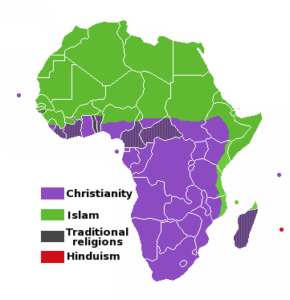
From a continent in 1875 that numbered its Christians in tens of thousands, to a continent with about 8 million professing Christians in 1900 (10% of the population), Africa now has close to 400 million who profess Christ (48.4% of the population, and 60% of sub-Saharan Africa) (Jenkins, 2002:3; Johnstone, 2001:19-21). Estimates are that at least 4,000 new professions of faith are made every day in Africa, and that this is now the most ‘Christian’ continent in the world (Bediako, 2000:3; O’Donovan, 2000:1). Nearly one in every five professing Christians in the world is an African (Johnstone, 2001:2,19).

In his book, The Next Christendom, Philip Jenkins (2002) states that the heart of global Christianity will not be in Europe or North America, but in Africa. He says, “in 50 or 100 years, Christianity will be defined according to its relationship with that [African] culture” (cited in CH, 2003:2). The August 2003 issue of Christian History “tells the story of sub-Saharan Africa’s ‘Christian explosion’ in the twentieth century—a century that brought Africa from the periphery to the center of the Christian world, largely through the efforts of native African evangelists” (Armstrong, 2003). The inside cover declares, “The rapidity of Africa’s twentieth-century ‘baptism’ was stunning. There’s no better place to see the future of the global church” (CH, 2003:2).

Obvious concerns
Surely this is a cause for rejoicing, for Christ is being proclaimed and the gospel is spreading (Php. 1:18). But there is also cause for caution. Understandably, gospel advances are not tidy and they take place through feeble, imperfect human instruments and often under adverse conditions. Much patience and trust in the Holy Spirit is required in the face of slow progress. Yet this does not erase serious concerns about the way the gospel is advancing in Africa. If Africa represents “the future of the global church,” it is an uncertain future.

African theologian Tienou (1998:6) states: “The evangelical dilemma in Africa can best be described as proclamation without reflection. One observer put it this way, ‘Africa has the fastest growing church in the world: it may also have the fastest declining church!’ Numerical growth far outpaces spiritual depth and maturity in African Christianity”. Tienou (2001:162) goes on to say, “I consider the deepening and the nourishing of the faith of those who identify themselves as Christians [in Africa] to be of the utmost urgency”. Van der Walt (1994:109) likewise warns, “A fat, but powerless Christendom – that is the danger facing us when Christianity grows as rapidly as it is doing at present on the African continent”. Many are now observing that Christianity is shifting southward and becoming increasingly non-Western (Maluleke, 2000:x; Jenkins, 2002:2). But Africa will also miss the opportunity to set the pace and the example unless her churches are better established in the faith.
Anyone doubting the shallowness of Christendom in Africa need only look at the moral and political chaos in countries where the
vast majority of the population has claimed the name of Christ for years. Probably the most graphic depictions of this nominalism are the horrific genocide in supposedly “80% Christian” Rwanda and the brutal bloodshed in the supposedly “96 % Christian” Democratic Republic of the Congo (Johnstone, 2001:19). Ott (2004) points out, “…the matter of church health in rapidly growing movements has not been adequately addressed. The classic church growth movement was more concerned with numbers than quality. Events such as the genocide among “Christian” tribes in Rwanda, the rampant nominalism and syncretism in Christian churches, are well know problems. … Rwanda is one example of very superficial Christianity having horrific consequences. Another example is the astonishing growth of AICs (African Independent Churches) and various independent movements that are for the most part quite heterodox, but attracting huge numbers of followers; many from established churches.”

Many today view the phenomenal growth of African Independent Churches as promising (e.g., Jenkins, 2002:68-69; Anderson, 2000), while others have exposed the widespread syncretism and false teaching (e.g., De Visser, 2001). As for nominalism, Brierly’s extensive study (Siaki, 2002:47) reports that only 49% of all those in Africa who claim Christianity actually hold membership in a local church. Another study reveals that in Kenya, “80% claim to be ‘Christian’, but only 12% are actually involved in a local fellowship” (Winter, 1999a:368). It is reported that in South Africa, out of the 30 million who claim Christianity only 6 million regularly attend church (Siaki, 2002:46).

Africa is not unique in this dilemma of breadth without depth. While the Western church declines rapidly, many of the churches planted in the ‘mission fields’ remain un-established in the faith (Reed, 2000:73; Johnstone, 2001:13-14). Reed (In preface to Hesselgrave, 2000a:9) warns: “…A growing number of us who were involved in attempting to reshape the missionary enterprise at the end of the twentieth century realize that something is drastically wrong with the contemporary Western paradigm of missions. We see entire movements of churches with an appalling lack of leaders. Almost all of these movements are on course for producing but a nominal fourth generation. Some argue that this downturn is inevitable, yet many of us believe that the biblical ideal suggests that the fourth generation of churches should be the strongest generation to date. With the coming postmodern global village, these churches must be sufficiently strong to realize the potential of fostering a worldwide expansion of the gospel such as has not been seen since the early church.

Possible causes

Ott (2004) attributes this nominalism in Africa mainly to “weak leadership and shallow discipleship”3. When professing Christians quickly revert to pagan behaviour in times of trouble, the gospel is only a veneer and has not penetrated deeply enough to transform their worldview. Van der Walt’s (2002:16) diagnosis is penetrating: “Because the Gospel was not brought as a new, total, encompassing worldview, which has to take the place of an equally encompassing traditional worldview, the deepest core of African culture remained untouched. Christian faith only influenced and changed the outer layers of African culture such as, for example, customs and behaviour. For this reason it often led to superficial Christianity – totally at variance with the nature of the Christian faith, which is a total, all-embracing religion, influencing the whole of life from a reborn heart – in the same way that a heart pumps life-giving blood to every part of the body. The average African convert did not experience the Gospel as adequate for his whole life, and especially not when it came to the most complex issues of life. For that reason we discover all over Africa today that Christians, in times of existential need and crisis, as in danger, illness and death, revert to their traditional faith and view of life. The Gospel has no impact in those areas where it really matters!”

– Tim Cantrell, President and Professor of Systematic Theology, Shepherds’ Seminary

Permanent Relevance (Part 1)

Have you ever heard a church leader say, ‘Beloved, let us aim to be as irrelevant as possible?’ Of course not. Everyone agrees that relevance is important. Like King David, we must “serve the purpose of God” in our “own generation” (Acts 13:36). Like the sons of Issachar, we want to “understand the times” (1 Chron. 12:32). Our hearts should break with compassion when we see many of the ways that our churches are failing to reach our world. Our ears should be wide open to learn all that we can about our culture(s), whether Western and postmodern or African and rural, or somewhere in between. Any church that shuts its eyes and ears to the white harvest all around is guilty of inexcusable irrelevancy. But strangely, relevance can elude those who pursue it hardest. Churches that chase after relevance end up having little lasting impact on society.

In his insightful book, Prophetic Untimeliness: A Challenge to the Idol of Relevance, Os Guinness notes: “After two hundred years of earnest dedication to reinventing the faith and the church and to being more relevant in the world, we are confronted by an embarrassing fact: Never have Christians pursued relevance more strenuously; never have Christians been more irrelevant.” Likewise, in his book The Gagging of God, D.A. Carson writes, “Study after study has shown that pursuing relevance may achieve a certain instant ‘success’.” Yet he states that such apparent success “is frequently the advance warning” to bitter failure in the long run. A prime example would be the many mainline churches that sought greater social impact and respectability, but ended up being devoured by liberal theology and denying the gospel.

Here is the decisive question: how do we achieve relevance in our churches? I look at our changing world with compassion but also with confidence that God has clearly shown the way to stay relevant and reach every generation. In this blog post, I would like to first clear the debris of dangerous attempts at relevance so that we can rediscover the solid foundation for lasting relevance. As Paul wrote in Romans 12:2, each new era brings with it new temptations to “conform to the world” and new opportunities to “be transformed by the renewing of your mind” so that we can know God’s will for us in our time.

Conforming to the World – Irrelevant relevancy

We must be careful of being naïve in the way we analyse cultural trends, as if the world’s values are neutral and harmless. We cannot simply say, ‘The world is changing so we must adapt’. Sadly, some today are rebuking the church for not keeping up with the world, instead of exposing the world’s hostility toward God and His truth. What a complete reversal of God’s strategy in Scripture! For both Israel and the church, God’s mandate has always been for us to reach the world by being holy, by living differently, not by trying to keep up with the world (e.g., Exod. 19:6; 1 Pet. 1:14; 2:12; Titus 2). We might be shocked to realise the evangelistic potency of a church where personal holiness is upheld, church discipline is practiced, and every member is known for purity.

We must strike the biblical balance: God calls us to passionately love a lost world, yet also to shun conformity to the world system whose views and values are driven by Satan and by a sinful, anti-God attitude (Jam. 4:4; 1 John 2:15-17; Rom. 8:5-8). Unbelieving human cultures are not ‘innocent until proven guilty’. God’s Word tells us to expect that every culture, in its own way, will be guilty of rejecting God’s authority (Rom. 1:18-32; Eph. 2:1-3; 4:17-19). It was true of pre-modern cultures and modern cultures; why should we expect postmoderns to be any different? Our societies are lost and must be reached. There is benefit to in-depth analysis that helps us understand the culture we are trying to impact. But what do we do with the resulting information and statistics? If we jump to a discussion of how the church must conform to the reality of this age, we will become a culture-driven church more than a Bible-driven church. The old adage in business, ‘The customer is always right,’ does not apply to ministry. We are on a slippery and deadly slope if our church becomes like a business, where the consumer (the audience) becomes sovereign instead of Christ and His Word. Should God’s people ask the world for instructions on how to run His church (cf. Isa. 8:19-20)?

When Christians engage the world, we are called to examine and expose all that opposes God and His Word (Eph. 5:11; Col. 2:8), rejecting what is evil and clinging to what is good (Rom. 12:9). Notice the crucial difference: one approach lets the latest statistics shape an entire ministry according to felt needs; the other approach let’s the statistics only deepen our compassion and sharpen our skill in illustrating and applying the authoritative Word of God. We must not naively think that every time we don’t get the numbers we want, we must change our methods. Tell that to Noah, Isaiah, Jeremiah, or Ezekiel. They saw little or no results, yet God called them to persevere and be faithful. True, some methods are needless obstacles to reaching unbelievers and must be discarded (1 Cor. 9). But a more careful look at Scripture will show that some methods are non-negotiable. Too often we underestimate how sufficiently and how specifically Scripture speaks to the so-called ‘neutral’ issues that seem negotiable, such as the way we do music, preaching, counselling, evangelism, and church growth (2 Tim. 3:16-17).


When a church starts conforming to the world, it is a subtle, gradual descent. It is rarely intentional; no conclusions are offered at first; only questions are raised, sometimes with a false appearance of humility. It’s a time-honoured tactic: “Did God really say? (Gen. 3:1).” “Can we be sure about what is right and wrong just based upon the Bible? How could we ever possess absolute truth, or a pure gospel, or a reliable hermeneutic for analysing the text of Scripture? Is there really a biblical view of issues such as church leadership structures or preaching methods; shouldn’t these be changing to fit with the times?”

If a church continues down a road of conforming to the culture, it will eventually drift far from Christ and His Word and fall into spiritual harlotry with the world. And ironically, a compromised church becomes an irrelevant church.


– Tim Cantrell, President and Professor of Systematic Theology, Shepherds’ Seminary

Why You SHOULD be a Closet Christian (Part 2)

 Biblical Instructions about a Quiet Time

We are helped both by biblical models as well as biblical principles. Christian, how could you ever enjoy the “day and night” meditation on Scripture that Joshua 1:8 and Psalm 1:2 speak about without some kind of daily habit? And who would not want to be that ‘tree planted by streams of water, yielding its fruit in season and prospering’? Or Psalm 119, filled with 176 verses from a man consumed with the Word of God and the God of the Word – verses that could never have been written if he had no devotional life.

Psalm 62 speaks of seeking God in silence, and Psalm 63 speaks of seeking God early and earnestly, hungering and thirsting for His presence publicly and privately. These are the kinds of longings that drive the believer into the closet to commune with Christ. The Apostle Paul speaks of constantly offering ourselves up as living sacrifices and renewing our minds, and praying without ceasing, and praying all kinds of different prayers (Rom. 12:1-2; 1 Thess. 5:17; Eph. 6:18-20). Hard to do this without a regular habit of some kind. Corrie Ten Boom said, “Don’t pray when you feel like it. Have an appointment with the Lord and keep it. A man is powerful on his knees.”

Paul also calls us to “discipline” ourselves “for the purpose of godliness” (1 Tim. 4:12). In my twenty-five years as a Christian, I’ve not met one mature believer who did not have regular devotions. J.C. Ryle states, “What is the reason that some believers are so much brighter and holier than others? I believe the difference in nineteen cases out of twenty, arises from different habits about private prayer. I believe that those who are not eminently holy pray little and those who are eminently holy pray
much.”

My brother or sister in Christ, how can you live a life of repentance and confession, without regular times of quiet soul-searching (1 Jn. 1:9; Ps. 139:23-24). How can you continue “drawing near”, as Scripture urges us, without private devotions (Heb. 4:16; 7:19; 10:1, 22; Jam. 4:8)? Don Whitney writes, “Can we expect the flames of our worship of God to burn brightly in public on the Lord’s Day when they barely flicker for him in secret on other days? Isn’t it because we do not worship well in private that our corporate worship experience often dissatisfies us?”

May the living God motivate you, and those around you, to become true ‘closet Christians’ who enjoy spiritual intimacy with their God. Murray-McCheyne said, “I ought to pray before seeing any one. …I feel it is far better to begin with God – to see His face first, to get my soul near Him before it is near another. …Ah! dear brethren, have you ever tasted this blessedness? There is greater rest and solace to be found in the presence of God for one hour, than in an eternity of the presence of man.”

– Tim Cantrell, President and Professor of Systematic Theology, Shepherds’ Se

Why You SHOULD be a Closet Christian (Part 1)

Here is one of those balloon-popping questions that tend to reduce swelling in the head: “So, how are your quiet times going lately? How has your private prayer and meditation on Scripture been?”

Among many Christians it seems that what was once assumed has now become optional. In the name of liberty, we are losing essential disciplines. In the Sermon on the Mount, our Lord assumes that we have a regular habit of private prayer: “…when you pray, go into your inner room [your “closet”, KJV], close your door and pray to your Father who is in secret….” (Matt. 6:6) When it comes to personal devotions, Christ commands you to be a kind of ‘closet Christian’ who regularly fellowships with Him. Oswald Chambers wrote, “It is impossible to live the life of a disciple without definite times of secret prayer.”

There is a breed of Christians and even pastors who snap back and say this is legalism. “Show me one verse in the Bible that says you should have a quiet time!,” they say. So I decided to take up that challenge. Here is a brief sketch of more than 30 different texts of Scripture that would be almost impossible to apply without some kind of daily quiet time. I’ve organized them under two major headings: biblical examples, and biblical instructions.

Biblical Examples of a Quiet Time

Think of the great examples in Scripture of regular devotion: Adam walked with God in the cool of the day (Gen. 3:8); Enoch and Noah “walked with God” and were known for the regular friendship with their Lord (Gen. 5:24; 6:9); Moses’ regular prayer life was an example to all (Exod 33:8); Job was known for his regular prayers for his children (Job 1:5); and no one had more predictable devotions than Daniel, as even his enemies testified (Dan 6:10,13).

No wonder then that Wilberforce once wrote in his journal, “This perpetual hurry of business and company ruins me in soul, if not in body. More solitude and earlier hours! …Surely the experience of all good men confirms the proposition that without a due measure of private devotions the soul will grow lean.”

Christ Himself got alone with His Father (Mk 1:35). Isaiah even prophesied of how Messiah would be sure to hear from God every morning: “…He awakens Me morning by morning, He awakens My ear to listen as a disciple” (Isa. 50:4). If the sinless Son of God needed this, how much more do we!

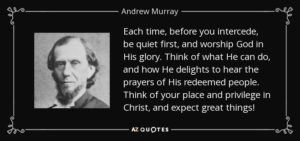
Andrew Murray wrote: “That is the secret of true prayer, of true power in prayer…and of power for service. There is no true…conversion…holiness…power…peace or joy, without being daily alone with God. What an inestimable privilege is the institution of daily secret prayer to begin every morning.”

The Apostle Paul also models for us a life of regular intercession for other believers. How could Paul have ever prayed for all the different needs that he lists without some kind of plan (Eph. 1:15-19; 3:14-21; Php 1:3-11; Col. 1:9-14; 1 Thess. 1:2-5; 3:9-13; 2 Thess. 1:3-12, etc.)?

– Tim Cantrell, President and Professor of Systematic Theology, Shepherds’ Seminary

Why Catechise?!: A Case for Rediscovering Catechisms (Part 3)

6. Catechise to keep core doctrines central.
Catechisms are not only a hedge against heresy; they are also a wedge that opens the mind to truth, the great truths, the main truths of the Bible.  What God has made most central and repeated in His Word is what we want to be most central in our faith and in our life together as a church.  Otherwise, we can easily be sidetracked and preoccupied by peripheral doctrines and pet issues and hobby-horses.  Catechising is a great way to equip and excite believers about grand truths such as God’s decrees, the atonement, and the offices of Christ as our Prophet, Priest and King.

7. Catechise to see the unity of the whole Bible.
The more a believer is grounded in the main themes of Scripture, the more he sees the glorious unity of the Bible as coming ultimately from one Divine Author.  When you can define and defend major doctrines from both OT and NT texts, you become more assured of the consistency, authority, and power of God’s Word.
8. Catechise to prepare for temptation and suffering.
Times of persecution may come, or confinement to a sick bed, when you cannot always read Scripture.  The only doctrines and truths and promises you may have available are what you’ve stored up by memory.  Or times of temptation may assault you in your most vulnerable moments, and you will be forced to choose right or wrong long before you can open your Bible.  Your only defence will be the Scriptures and doctrines you have stored up in advance for such battles. One old writer said this to encourage parents to catechise:  “If ever your poor infants be driven to wildernesses, to hollow caves, to faggot and fire, or to sorrows of any kind, they will thank God and you that they were well catechised!”  This would also apply to Christian students who go off to university:  When they are under fire for their faith and facing fierce battles with the sceptics of our day, they will need the strongest possible foundation in biblical doctrine.


9. Catechise to teach logical thinking.
In our age of information overload, logical thinking and coherent reasoning are in short supply.  Yet our God is not a God “of confusion”, and He calls us to be mature in our thinking, not fuzzy or unclear (1 Cor. 14:20,33).  We are made in the image of this logical God, and He calls us to love Him also “with all our minds” (Matt. 22:37) and to “think on what is…true” (Php. 4:8).  Pastors and elders are to set the example for all believers, being able to clearly articulate biblical truth, “to exhort in sound doctrine and refute those who contradict” (Tit. 1:9). A great tool for teaching inductive, logical thinking is the catechism.  The question-and-answer method trains children and disciplines all of us to read Scripture more carefully and to think precisely about Christian doctrine.
10. Catechise to unify homes and churches.
Unless we want churches with a shallow unity (around personalities, activities, appeasement, etc.), we will have to work at cultivating a deep, lasting unity around truth.  Nothing glues us together more in our marriages, homes, or churches, than shared beliefs and common convictions.  Scripture speaks repeatedly about churches having a “one heart, one soul, one mind, one spirit, one voice” kind of spiritual unity that is all too rare (Acts 2:42-47; 5:32; Rom. 15:5-6; Eph. 4:1-6; Php. 1:27).  But that kind of deeply knit community becomes more of a reality when we confess one gospel and share together in one common faith and set of core doctrines. 1 Cor. 1:10 mandates that, in our churches, we avoid divisions by thinking and speaking “the same thing”.  But that means we must be learning and believing the same thing, and catechisms are a great way to do that. Not only can a common catechism foster unity in churches and homes, but also amongst other churches.  It becomes easier to find truly “likeminded” churches when we know which churches take certain biblical truths seriously enough for them and their
children to be catechised in them.

Conclusion

Families are encouraged to use this booklet and learn this catechism as a regular habit at mealtimes or whenever they conduct family worship.  We have purposefully tried to preserve most of the original wording of the Shorter Catechism, which was intended for the whole family, not just for children.  It uses older English which will stretch all of us at times; but with a little effort, it can be explained and still understood by most, young or old, and the effort will surely be rewarded.  For smaller children, parents may want to start by teaching some of the simpler questions, or only a portion of the full answer, and/or some key memory verses (Or there are good mini-catechisms for small kids available as a preliminary step).
Churches may also use this catechism booklet as a teaching tool in a brief regular slot during small groups, Bible Hour (Sunday School) classes, and worship services.  Once older children and adults have memorised all the answers and key Scriptures, they can start over again and work on memorising additional Scriptures that support each answer.  In our home, our younger children recite the initial answers, followed by our older children then reciting the key supporting verse.

My wife and I grew up in churches unfamiliar with catechisms.  Yet we praise God for the seeds that were sown by parents and pastors that revered and modelled God’s Word, as well as a love for church history.  This eventually led us to rediscover the catechism as a great tool for passing on the heritage of sound doctrine to the next generation. Sincere believers are in for a surprise when they begin to study the Shorter Catechism.  You will soon find you are inhaling a very different kind of air from today’s Christianity.  Instead of clichés and shallow phrases, you’ll find sentences pulsating with life and truth in every word.  What a joy to stand with centuries of our Protestant forefathers and heroes of the faith in rehearsing again the great truths of the gospel, the heartbeat of our home and church life, and the best comforts for our souls!

– Tim Cantrell, President and Professor of Systematic Theology, Shepherds’ Seminary Africa